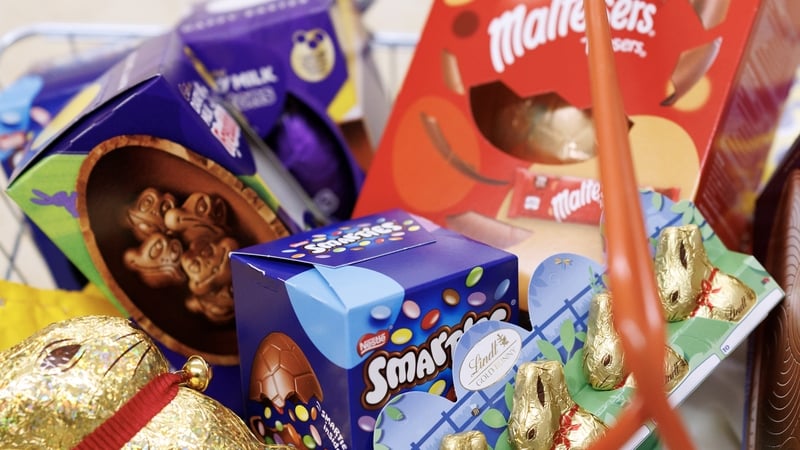

It's not your imagination – Easter eggs are definitely getting smaller.
Like most confectionary - and really lots of other grocery items – chocolate has been hit badly by inflation. But also shrinkflation and, many people believe, skimpflation too.
It is hard to get concrete figures to illustrate this – unsurprisingly, both chocolate-makers and major retailers don’t want it to be too easy for you to compare prices now with how they were a few years ago.
But it is possible to find a few examples to illustrate the shift. For example, the Cadbury’s Celebrations Large Easter Egg.
In 2021 that weighed a total of 248g. This year, the same egg is weighing in at 189g. That’s a roughly 24% reduction in five years – with consumers getting one less chocolate and a smaller egg.
A small Mars or Cadbury’s Easter egg, meanwhile, would have weighed around 130-140g grammes in 2021 but today they’re around 90-95g. That’s a roughly 33% decrease in size.
That’s shrinkflation at play – where the product gets smaller over time, so you’re getting less for your money.
And this has been reflected in every day confectionary products too – especially multipacks, where it’s a bit easier to hide the shrinkage on the shelf.
A four pack of Snickers bars, for example, are around 28% smaller than they were a decade ago. Yorkie Bars are around 20% smaller. Toblerones have been reduced by 25% - that’s something they tried to mask by increasing the gaps between the 'alps’ in each bar.
There are some who say chocolate bars and Easter eggs should be smaller…
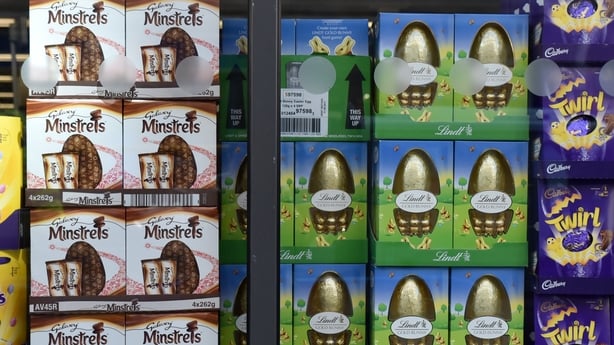
There is an argument that, by making eggs and bars smaller, people are consuming fewer calories on treats and junk food, which means they’re doing less damage to their health.
And there have in fact been efforts by governments and semi-State bodies over the years – including the Food Safety Authority of Ireland – to encourage companies to ‘reformulate’ their products in order to reduce the amount of sugar, fat, saturated fat and salt in processed and ultra-processed food.
And at times this has been the cover chocolate companies have used for making their products smaller. In 2020, Mondelez – which owns Cadbury’s – announced it had removed 10 billion calories from the UK market by making all of its multipack bars 200 calories or less.
Really, though, only a small bit of that may have been done by doing things like reducing sugar in the product. The vast majority of that 10 billion was achieved by shrinking the bar itself.
And it is perfectly reasonable to say that you’re shrinking a bar in order to make it less unhealthy – if you’re shrinking the price alongside that.
But if you’re not, then you’re effectively taking the opportunity to charge customers more.
And did they cut prices?
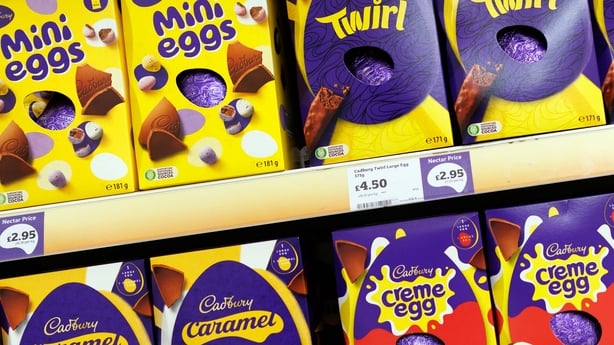
No. In reality they raised prices. That means we had shrinkflation and regular inflation at the same time.
To go back to that example of the large Cadbury’s Celebrations Easter Egg, one of the large retailers was selling that for €6 in the lead up to Easter 2021. The same retailer is selling it for €8 this year.
That’s a 33% increase in the unit price over five years.
The egg was offered as part of a multibuy deal both years. In 2021, you could buy three large eggs for €9, while this year it was three eggs for €10.
So that’s an 11% price increase, even if you’re availing of the deal.
And if you factor in the price difference, alongside the fact that the egg itself is smaller, you’re talking about a 45-75 % price increase on a per-gram basis over the past five years.
That roughly tallies with the Central Statistics Office’s Consumer Price Index, which indicates a 51% increase in chocolate, cocoa and cocoa-based products since February 2021.
In the case of the smaller eggs, they were available in a five for €5 deal in 2021; today they’re sold in the same shop in a three for €4 deal. That’s a 33% jump in the cost of that offer over five years.
And when you factor in the smaller contents, you’re essentially looking at a doubling in the cost per gram since 2021.
So what’s the rationale for these rising prices?
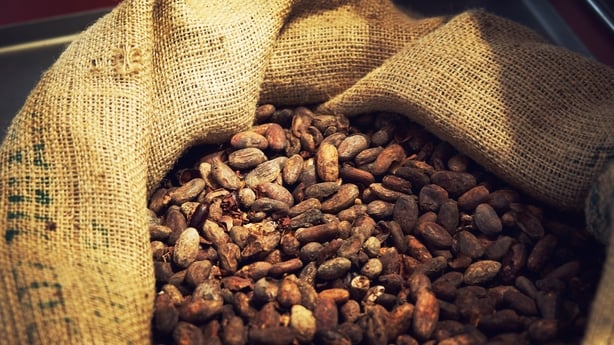
The chocolate companies will say that the cost of producing a bar has gotten considerably higher in recent years – and that is true.
If you think of the three, main ingredients that go into a mass market bar of chocolate – cocoa, sugar and dairy – they are all considerably more expensive than they were in 2021.
On the commodities markets, depending on which contract you look at, cocoa is currently priced around 30-38% dearer today than it was this time five years ago.
Sugar prices are also higher – but by a less extreme 9.2%.
The current price increases are also quite modest compared to what was seen in and around 2022-2023. That would have been post Russia’s invasion of Ukraine, and around the time that many post-lockdown supply chain issues emerged.
There have also been multiple extreme weather events in parts of Africa and South America in recent years, which impacted crop yields. As a result both sugar and cocoa spiked in price for a time, but it has moderated somewhat since then.
When it comes to dairy, meanwhile, the CSO’s wholesale price index puts that 24% higher than it was in February 2021.
All of which has to get factored into the cost of production.
And the other thing to bear in mind is the energy costs – because of course this kind of food manufacturing is energy intensive, and the cost of energy has risen considerably in the past five years.
Despite this, of course, major chocolate companies continue to be very profitable.
Mondelez - which owns Cadburys, Milka, Toblerone and Oreo - had a full year adjusted profit of $12.3 billion last year. Nestlé - which makes everything from KitKats to Smarties to Milky Bars - made more than CHF9 billion.
(Though it should be noted that both companies do have operations beyond chocolate and confectionary).
Many people believe that as well as making their products dearer and smaller, many chocolate brands have also made them worse-tasting too…
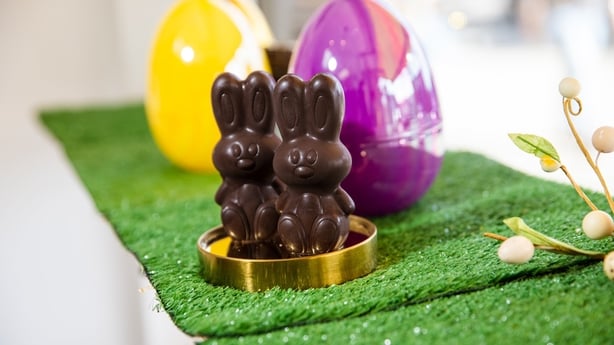
Yes, this is what’s called ‘skimpflation’ – which is where a company sources cheaper, lower-quality raw materials for their ingredients. Or maybe entirely swaps some ingredients out in favour of cheaper alternatives.
In some cases it can also be about mixing other things in with the chocolate in order to maintain or bulk up the weight without raising the cost. For example biscuit or honeycomb would be cheaper than proper chocolate, so having chunks of that in there will cost less than having just chocolate.
This is part of the reason why Easter eggs with bits inside have become so much more common.
Skimpflation is also a hotly contested because people will swear that the chocolate that they used to know and love has been changed for the worst.
Many people today insist, for example, that Cadbury’s Dairy Milk doesn’t taste the same as it did before – even though Mondelez says its recipe hasn’t changed.
However there is evidence that something has changed in this iconic chocolate.
In a 2024 post, one Reddit user shared pictures of an old Dairy Milk he’d found – made in 2005 – which was posted side-by-side with a modern version of the same bar.
One notable difference in the ingredients list was that, while both contained vegetable oil, the newer one specified palm and shea oil made up part of that.
(Under EU rules, vegetable oil can only make up a maximum of 5% of a chocolate bar – so that’s a relatively small ingredient overall, though that’s not to say it’s not an important one.)
Another difference on the label was that the milk in the newer bar had an asterisk next to it – which indicated that dried or powered milk was used. That distinction wasn’t made in the 2005 version.
The newer bar also had more cocoa butter than cocoa mass in it – in the 2005 version it was the other way around.
But the thing is, even comparing the bars’ ingredients lists doesn’t really give us a full picture – because it doesn’t include exact percentages. Products only need to list ingredients in order of their prominence – so the main ingredient comes first, the second biggest ingredient comes next, and so on.
That means that, even if the ingredients themselves haven’t changed, the ratios could have been shifted substantially in either direction without anything changing on the label.
And that could be enough to impact the end product.
And, of course, we also don’t know much about the quality of the ingredients in each bar. It may be the same, but it is possible that it’s a lower quality version that cost them less to source.
There is a suggestion online that Cadbury has changed Dairy Milk so much that it actually can’t call itself milk chocolate any more – is that true?
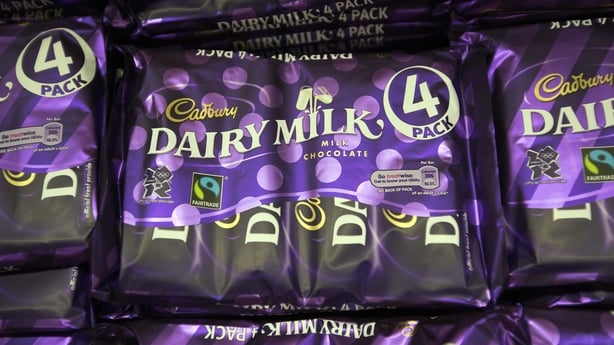
‘No’ is the short answer.
‘Not quite’ is the slightly longer answer.
This relates to EU Directive 2000/36/EC – which sets out the minimum standards that products have to meet before they can use labels like ‘milk chocolate’, or ‘white chocolate’.
It was an attempt to resolve a 30-year battle between member states over what was and wasn’t chocolate – because for many years, some countries had actually banned the likes of Cadbury’s because they argued that it wasn’t really chocolate.
Under that EU directive, there is a requirement to limit vegetable oil in milk chocolate to no more than 5% – and to make clear when it is used instead of cocoa butter.
And one of the other requirements is that you have to have 25% cocoa solids in order to call yourself ‘milk chocolate’… but Dairy Milk only has 20% cocoa solids.
However, the directive also includes a special carve-out which allows for bars with just 20% cocoa solids to call themselves milk chocolate in Ireland and the UK.
If they’re selling the same bar in other parts of the EU, however, they have to use the term ‘family milk chocolate’.
And while some claim a Dairy Milk wrapper doesn’t include the words ‘milk chocolate’, it actually does. It’s just tucked away on the back, at the top of the ingredients list.
How else are we being short-changed by Easter eggs?
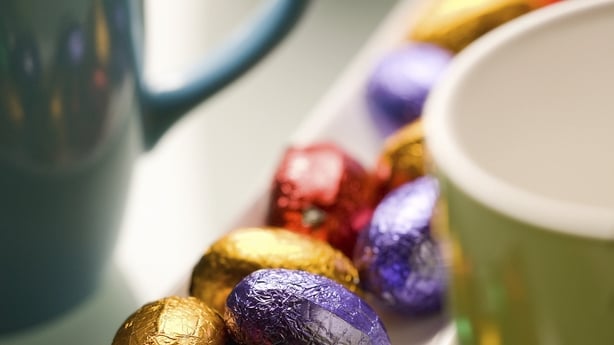
As recently as a few years ago, Easter eggs would often include a "free" gift – like a mug, an egg cup or a plate.
But nowadays, there are no freebies to be found.
When asked why this was the case, neither Mondelez nor Mars responded. Nestlé did issue a statement, stating that Easter eggs have gone through many evolutions over the years and the ditching of the mug was just the latest.
It may well be the case that the cost of the mug itself is a factor in their demise – however for a company bulk-buying tens, hundreds of thousands or even millions of mugs, the cost-per-unit of a small mug would be a few cents.
Given that it’s an attractive selling point – and one that would give them a unique edge in the modern market – that seems like a cost worth incurring.
However the likely real reason for the demise of the Easter egg mug is the one thing that we have not mentioned so far – transportation costs.
Some of the mugs that used to come with an Easter egg would weigh 300-400g a piece. Even a smaller one might weigh 200g.
That’s not a huge amount on its own – but it is enough to potentially double the weight of each product.
That means you’re increasing the amount of energy required to move it and – when multiplied over a large shipment – that’s a significant increase in shipping costs.
Especially in an era of inflated fuel prices.
Containing a mug may also have forced companies to use slightly bigger boxes than they otherwise would. Again, not a dramatic change, but potentially enough to ensure that you can’t fit as many units into each shipping container or truck. That also pushes up the shipment costs.
And that’s why, sadly, the days of the Easter egg mug are likely behind us.