


The ESB Group has reported lower profits after tax for last year due to the "unprecedented impact" of Storm Éowyn.
ESB said its profits for the year to the end of December fell by €70m to €636m from €706m in 2024.
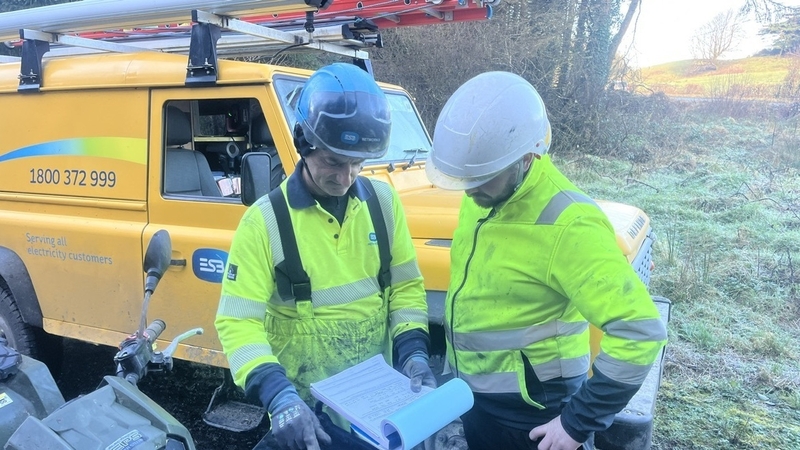
It reported additional operating costs of €95m in reconnecting customers on the island of Ireland and remediating the damage to networks infrastructure after the storm last January.
In its results statement, ESB said that international energy prices remain volatile and are at levels significantly higher than experienced before the energy crisis of 2022-23. It is very conscious that energy prices remain challenging for customers, particularly since the current Iranian conflict started, it added.
Asked about how wholesale energy prices could be affected in the near future, ESB's Chief Financial Officer Paul Stapleton told RTÉ's Morning Ireland that the wholesale price of gas is "the best indicator of the impact" on Ireland's energy costs with "huge volatility" in the price of gas seen over the last four weeks.
"What happens next in terms of wholesale electricity prices really depends on the war situation. If it's prolonged, then ultimately that would put pressure on prices and ultimately, that would feed through to retail prices," ESB's CFO said.
We need your consent to load this rte-player contentWe use rte-player to manage extra content that can set cookies on your device and collect data about your activity. Please review their details and accept them to load the content.Manage Preferences
"If it's short-lived, if it winds up quickly, and if there's a restoration to normal energy flows quickly, then it would be less of an issue."
ESB said there were over 38,000 residential connections made by ESB Networks last year, up 18% on 2024.
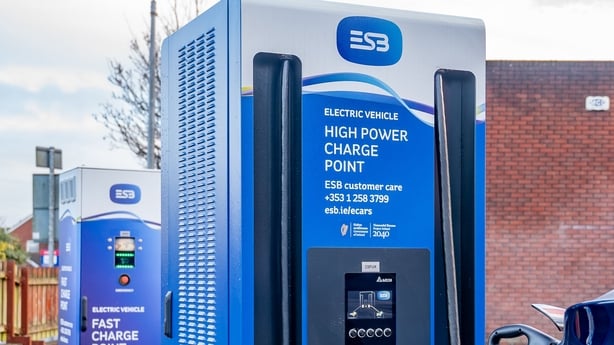
2025 also saw notable landmark milestones for ESB Group in the transition towards net zero carbon emissions, surpassing over two million smart meters installed in Ireland and the ending of generation using coal at Moneypoint power station as part of the longer-term transformation of the Co Clare site into a renewable energy hub.
It also secured the rights to develop the 900MW Tonn Nua offshore wind project off the coast of Waterford with Ørsted, while the company's growing solar portfolio includes 700MW currently in development.
ESB also noted that its employee numbers grew to over 10,000 in 2025.
The company said it is recommending a dividend of €149m from its 2025 profits, bringing its total dividends to €1.4 billion over the past decade.
The company added that it contributed €3.4 billion to the Irish economy in 2025 in the form of payroll, taxes, dividends and purchases from domestic suppliers.
Meanwhile, the energy company said that 2025 was another year of record levels of capital investment for it.
The total investment of €2.7 billion included over €1.7 billion investment in electricity networks in Ireland and Northern Ireland, over €600m invested in renewable generation projects - both wind and solar - and over €300m in dispatchable generation projects and other investments.
It said that further investment is required in the coming years to meet growing demand, with investment of about €20 billion planned across ESB Group over the next five years, including up to €16 billion in the electricity networks on the island of Ireland.
"We've just got regulatory approval at the end of last year for a €13 billion investment programme in the grid over the next five years," the company's CFO told RTÉ.
Asked about the reported delays in delivery of new homes due to lack of electricity connection in some areas, Mr Stapleton said ESB is "adding more capacity."
"The vast majority of houses are connected on time. There are a couple of areas where there's tight capacity on the grid, where there are delays because additional infrastructure has to be provided. But all connections ultimately get delivered," he said.
Mr Stapleton said the 2025 results reflect ESB's continued commitment to delivering substantial investment in critical energy infrastructure for the Irish economy, society and its customers.
"We are rising to that challenge in the context of housing connections and economic growth, climate change, and our net zero carbon ambitions," he said.
