


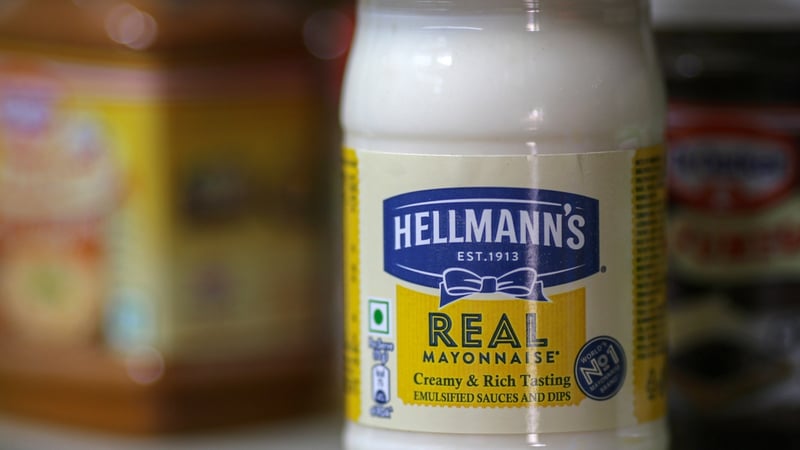
Unilever is in talks to sell its foods business to smaller rival McCormick & Company, potentially marking a major shift for the British consumer goods company as it seeks to focus on higher-growth household and personal care businesses.
London-listed Unilever, owner of Hellmann's mayonnaise, Knorr cubes and Marmite spreads, said today it had received an offer from spice maker McCormick.
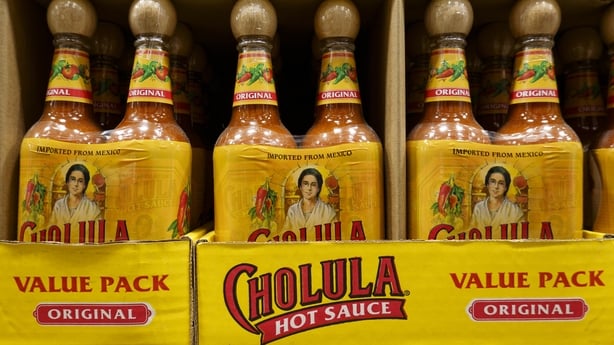
McCormick, which owns the Cholula hot sauce brand, confirmed it was engaged in discussions with Unilever regarding a potential transaction involving the food business.
The talks are an acceleration of Unilever CEO Fernando Fernandez's plan to shift Unilever towards faster-growing non-food categories following the spin-off of its ice cream business last year.
"We think it is sensible that Unilever are looking at options for their food business," said Richard Saldanha, global equity portfolio manager at Aviva, a Unilever investor.
"It's clear the company wants to focus on areas such as personal care and beauty where underlying category and volume growth are more attractive," he said.
Unilever's food business made up about a quarter of its total sales in 2025, generating more than €12.9 billion last year.
But the division is growing more slowly than Unilever's overall business and it faces headwinds from a move away from processed foods.
Politicians, including US Health Secretary Robert F Kennedy Jr, have warned about their health risks and while many consumers are turning to GLP-1 weight-loss drugs, which mean people eat less.
After building up scale across product categories in the 1990s and early 2000s, many consumer goods and retail companies are trimming portfolios and changing leadership structure in response to challenges from tariffs, tepid global consumer demand and, more recently, rising energy prices.
"The benefits of scale across categories no longer outweigh the drawbacks of complexity," Bernstein analysts said in a note.
Analysts at Barclays estimated the enterprise value of Unilever's food division at between €28 billion and €31 billion.
That could represent a big mouthful for McCormick to swallow. The US company has a market capitalisation of about $14.5 billion, making it much smaller than the potential value of Unilever's food business. Unilever's overall market cap is about $136 billion.
Tineke Frikkee, a portfolio manager at W1M, a Unilever investor, questioned the value for investors of the potential transaction.
"This potential deal seems complex, McCormick is much smaller than Unilever Food - Unilever Food generates around three times the profit of McCormick - so unclear what value can be created as a combined entity, and what structure can be proposed that offers value to shareholders."
The talks surprised some observers coming just a few months after Unilever completed its ice cream business spin-off and listing, a lengthy process that weighed on the stock.
McCormick's offer was unsolicited, according to one person familiar with the situation.
The two companies said there was no certainty that a deal would be agreed and provided no financial details.
Some analysts and bankers said a deal could be structured as a "Reverse Morris Trust transaction", which offers a tax‑efficient way for a company to sell a business.
"A deal would likely be structured along the lines of a Reverse Morris Trust transaction, with Unilever essentially spinning off its Food division, to then merge with McCormick and Unilever shareholders retaining the majority of the combined entity," Bernstein analysts said in their note.
The companies' confirmation of the discussions came after the Wall Street Journal reported last night that Unilever was in talks to separate its food business and combine it with spice maker McCormick.
The Financial Times reported earlier this week that Unilever had weighed merging its food assets with Kraft Heinz's condiments business but the merger talks had ended.
