


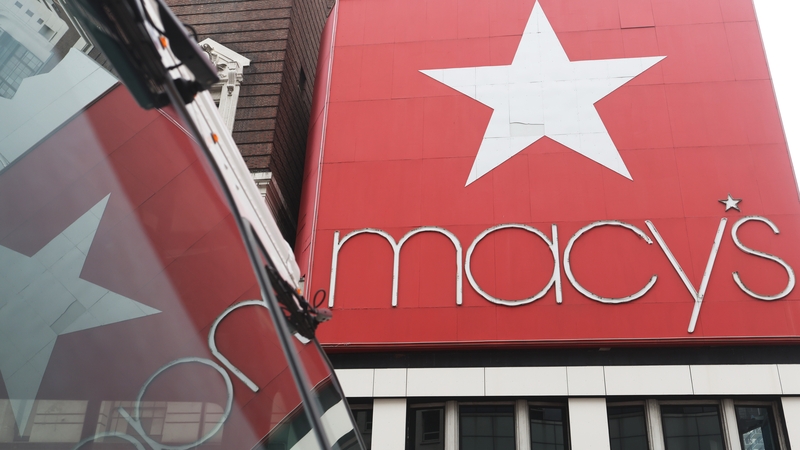
Macy's said today it expects the hit from US import tariffs to ease in the second half of the year and reported better-than-expected holiday-quarter results, as turnaround efforts under CEO Tony Spring takes shape.
Shares of the department store chain were up 9% in premarket trading even as Macy's said it was taking a "prudent approach" to its outlook, as it forecast a fall in annual revenue and profit, citing macroeconomic and geopolitical risks that could affect consumer spending.
The shares have fallen about 23% this year.
Under Spring, Macy's has focused on more full-price sales, reinvesting in high-potential locations, while shuttering underperforming stores, improving its product offerings and loyalty programmes.
"We are offering more relevant brands, stronger storytelling and investing in our colleagues so we can better serve the customer," Spring said.
In the quarter, sales at the Macy's brand declined 3.2%, including the impact of store closures, though comparable sales rose 0.4%. Higher-end brands performed better, with Bloomingdale's posting sales growth of 8.5% and Bluemercury rising 2.5%.
Excluding items, Macy's reported quarterly earnings per share of $1.67, compared with expectations of $1.53.
For the year, however, the department store operator joined retailers from Walmart to Kohl's, in taking a cautious approach.
Macy's now expects annual adjusted profit between $1.90 and $2.10 per share, compared with $2.15 a year earlier and analysts' average estimate of $2.17, according to data compiled by LSEG.
It said tariff pressures could weigh on margins in the first half of the year, with the largest impact expected in the first quarter.
The company's reliance on manufacturing in China exposes it to import duties. While Washington has moved to a uniform 10% tariff following a Supreme Court ruling that struck down broader U.S. levies, companies could still face near-term pressures from inventories sourced at higher rates.
Macy's expects 2026 net sales of $21.4 billion to $21.7 billion, down from $21.8 billion in 2025. Analysts were expecting $21.42 billion.
