


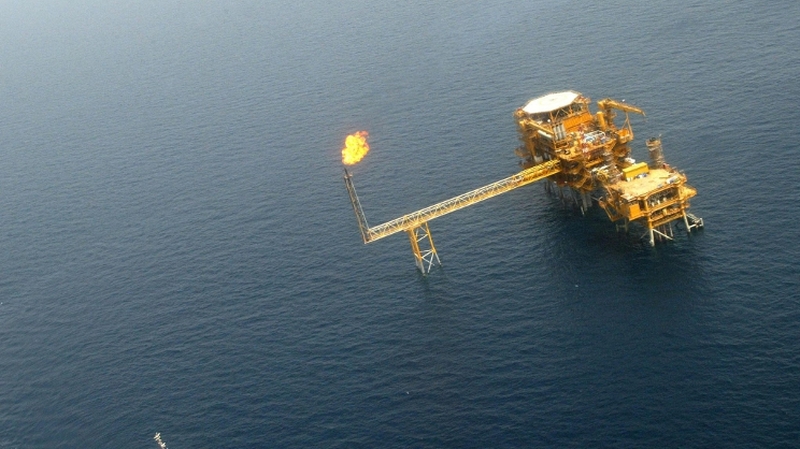
Brent crude prices rose more than 4% today after Iran's Revolutionary Guards threatened several energy facilities across Saudi Arabia, UAE, and Qatar in retaliation for an attack on its energy sites, heightening the risk of further disruptions to energy supplies in the region.
With no signs of de-escalation in the Iran conflict, benchmark Brent futures prices have settled above $100 per barrel for the past four sessions.
Brent futures were up $4.53, or 4.4%, at $107.95 a barrel this afternoon, having risen to as high as $108.60 earlier in the session.
US West Texas Intermediate crude gained $1.91, or 2%, to $98.12.
"The attacks on Iran's South Pars field were boosting oil and gas prices, and any further escalations of attacks to energy infrastructure would continue to raise prices", SEB analyst Ole Hvalbye said.
Iran's Fars news agency said today that some tanks and gas facilities in the country's Asaluyeh refinery had been hit.
In Iraq, North Oil Company sources said exports had resumed via pipeline after Baghdad and the Kurdistan Regional Government agreed yesterday to restart flows.
Two oil officials said last week Iraq was seeking to pump at least 100,000 bpd through the port.
"Despite this development, supply relief remains limited, with Iraq's production at roughly one-third of pre-crisis levels and tanker traffic through (the Strait of) Hormuz still largely restricted," MUFG analyst Soojin Kim said.
Oil production from Iraq's main southern oilfields, where most of its crude is produced and exported, had plunged by 70% to just 1.3 million bpd, sources said on March 8, as the Iran conflict effectively shut the vital Strait of Hormuz through which some 20% of global oil passes.
The US military said yesterday it had targeted sites along Iran's coastline near the Strait of Hormuz because Iranian anti-ship missiles posed a risk to international shipping there.
Iran confirmed yesterday that its security chief Ali Larijani had been killed in an Israeli attack.
Larijani's death and the US military's strikes on Iranian coastal positions near the strait raised some hopes the conflict could end sooner, said Mingyu Gao, chief researcher for energy and chemicals at China Futures.
Meanwhile, Libya's National Oil Corporation said earlier today that flows from the Sharara oilfield were being gradually redirected through alternative pipelines after a fire broke out.
US crude stocks rose by 6.56 million barrels in the week ended March 13, market sources said, citing API figures yesterday, well above a rise of about 380,000 barrels seen in a Reuters poll.
