


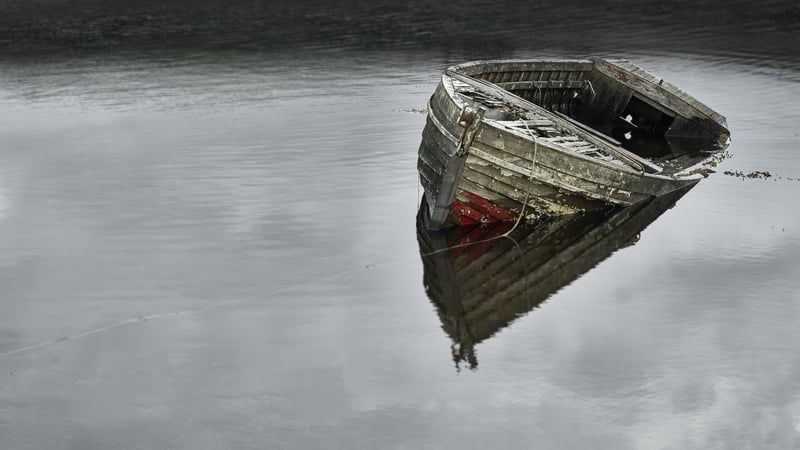
More than €110,000 has been spent removing abandoned boats from canals, lakes, and rivers over the past three years.
Waterways Ireland said nearly 50 vessels had been left dumped in waterways between 2023 and 2025.
It said they spent considerable resources trying to trace owners to take responsibility for their boats but that it sometimes was not possible.
Waterways Ireland said there were currently seven vessels listed as abandoned on rivers and lakes around Ireland.
It said two of them were on the River Barrow, two on Lough Derg, two on Lough Ree, and one on the Upper Shannon.
The agency said 26 boats were removed from waterways in 2023 at a cost to the taxpayer of just over €33,000.
In 2024, nine vessels were abandoned and the cost of removal operations came to more than €48,000.
Last year up to mid-November, 14 boats were removed with costs of around €29,000.
Across the three-year period, the average cost of removing an abandoned boat worked out at around €2,250 per vessel.
Abandoned boats can pose hazards for other users of rivers and canals if they sink, drift, or obstruct navigation channels.
They can also create serious environmental risks if vessels deteriorate and leak fuel, oils, or other fluids.
Waterways Ireland said it had legal responsibility to ensure boats were not left abandoned on waters under its remit.
"In many cases it is not possible to trace owners or recoup costs incurred in vessel removal and disposal," a spokesperson said.
They said sunken and abandoned boats had to be removed to ensure safety for navigation and to protect the environment.
"Waterways Ireland encourages responsible boat ownership through vessel registration and tracks the transfer of vessel ownership," the spokesperson said.
"The Inspector of Navigation is available to advise boat owners regarding safe disposal of vessels before they become a risk to the waterway environment, wildlife and other users," they added.
Reporting by Ken Foxe
