


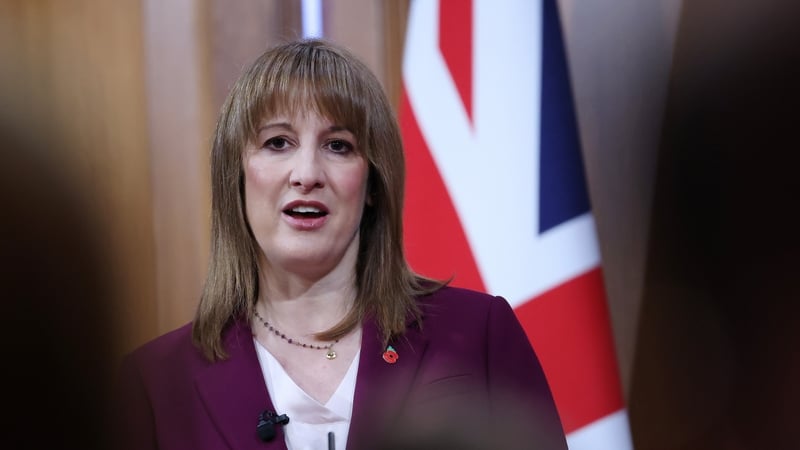
The UK government has today cut its 2026 growth forecast, as Britain's finance minister delivered a fiscal update overshadowed by concerns over the economic fallout from the Iran war.
The Spring Statement spending update came as the UK government struggles to boost sluggish economic growth, now threatened further by the widening Middle East conflict pushing up energy prices.
Finance minister Rachel Reeves said the UK government's economic plan was "even more important in a world that in the last few days has become yet more uncertain with unfolding conflict in Iran and the Middle East".
Britain's economic growth is expected to slow to 1.1% in 2026, down from the previous estimate of 1.4% made in November when Labour presented its annual budget.
The UK economy grew 1.3% last year.
However, the Office for Budget Responsibility, the UK's spending watchdog, upgraded the country's growth forecast for 2027 and 2028 to 1.6%.
The figures were finalised before the US and Israeli launched attacks on Iran on Saturday and Tehran's retaliation across the Middle East, meaning they could soon become outdated.
"Conflict in the Middle East, which escalated as we were finalising this document, could have very significant impacts on the global and UK economies," the OBR said in its March report.
Disruption to crucial oil and gas supplies in the region has fuelled fears of a fresh energy crisis that could ramp up inflation.
The Bank of England last month forecast inflation to cool towards its 2% target in April, as easing energy bills help to offset rising water bills and other elevated costs.
The Bank of England left its benchmark interest rate at 3.75% in February but signalled that further cuts were ahead.
Analysts have since scaled back expectations for interest rate cuts in 2026 as European energy prices sky-rocketed and oil prices surged this week.
Prime Minister Keir Starmer's Labour party has struggled to revive Britain's sluggish economy since winning a general election in July 2024, having raised taxes in its two annual budgets.
The UK government said today that unemployment, already at a five-year high of 5.2%, is expected to peak later this year before gradually declining up to 2030.
