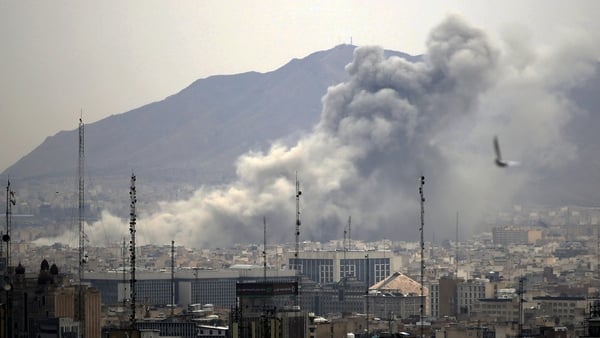

European gas prices have surged by 46% following a decision by Qatar Energy to halt production at a major liquefied natural gas (LNG) plant due to attacks in the Middle East.
Europe has been increasing imports of LNG over the past few years as it seeks to phase out Russian gas following its invasion of Ukraine.
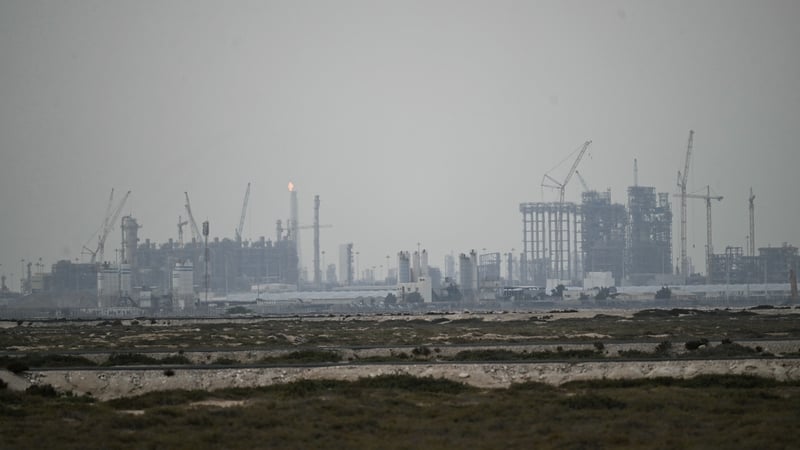
The benchmark front-month contract at the TTF hub was up €14.52 at €46.52 per megawatt hour this afternoon following a decision by Qatar Energy to halt production at Ras Laffan Industrial City.
It followed drone attacks by Iran on Qatar.
The plant supplies 20% of the world's LNG.
Much of Ireland’s supplies are pipeline gas from interconnectors with the UK as opposed to LNG.
However, any disruption to supplies could affect the wider gas market.
Energy companies in Ireland frequently book supplies in advance at fixed prices.
But costs in Ireland are considered relatively high in comparison to other EU countries.
Bank of Ireland chief economist Conall MacCoille said whether consumers are affected in Ireland "depends on how much companies are locked in on prices and whether there is a persistent increase in prices."
Around 20% of the world’s LNG transits through the Strait of Hormuz and a prolonged suspension or full closure would increase global competition for other sources of the gas, driving up prices internationally.
"Disruptions to LNG flows would reignite competition between Asia and Europe for available cargoes," said Massimo Di Odoardo, vice president, gas and LNG research at Wood Mackenzie.
Europe is also relying on LNG imports to help fill its gas storage sites which have been depleted over the winter and are currently around 30% full, the latest data from Gas Infrastructure Europe showed.
A European Commission spokesperson told Reuters that the EU's gas coordination group, which includes representatives from member state governments will meet on Wednesday to assess the impact of the widening conflict in the Middle East.
It monitors gas storage and security of supply in the EU and coordinates response measures during crises.