
Hoteliers say mounting business costs will represent a "major challenge" for the industry this year.
Global uncertainty has also been cited as a primary concern facing the sector, as the annual conference of the Irish Hotels Federation (IHF) in Killarney in Co Kerry starts today.
Nine in ten hoteliers (92%) say they are worried about the international economy and the potential impact of political uncertainty in key markets.
New research, carried out by the IHF, also revealed that 76% of its members are concerned about the outlook for the Irish economy over the next 12 months, "as consumer finances remain under pressure and international developments pose potential risks".
Speaking on RTÉ's Morning Ireland, IHF President Michael Magner said Ireland "is an outlier in terms of costs, particularly in the area of energy and insurance, and generally across all services".
The findings follow what has been described by the IHF as "a robust performance" by the Irish hotels sector in 2025.
The average national hotel room occupancy stood at 76% last year, up 1% on the previous year, with most regions recording an increase.
However, there was a "significant regional disparity" with occupancy levels ranging from 70% in the border region to 83% in Dublin.
Despite the cited challenges, the industry appears to maintain "a cautiously optimistic outlook".
Just over half (51%) of hoteliers reported a positive outlook for trading conditions over the next 12 months, with just 13% negative.
The IHF president said the sector is "cautiously optimistic for the coming year, as forward bookings suggest business levels will remain stable in 2026".
Mr Magner said the optimism comes despite what he said are "significant headwinds".
We need your consent to load this rte-player contentWe use rte-player to manage extra content that can set cookies on your device and collect data about your activity. Please review their details and accept them to load the content.Manage Preferences
"Chief among them relentless increases in the cost of doing business, which is already exceptionally high by international standards," he stated.
He said it requires "a renewed, national focus on cost competitiveness" both within the tourism industry and across the wider economy.
"Thankfully, the Government's decision to restore the 9% rate of VAT on hospitality food services from July will partially offset these increases for food-led businesses operating on some of the tightest margins of any sector," Mr Magner said.
The data from Eurostat shows that hotels and restaurants in Ireland are second-most expensive in the EU, surpassed only by Denmark.
"The cost of doing business invariably leads to pricing challenges," Mr Magner said, adding that "notwithstanding that, Ireland offers a very high quality hotel and guesthouse product."
The survey carried out in advance of the IHF’s 88th annual conference also found that 75% of hoteliers plan to increase capital investment during the next year.
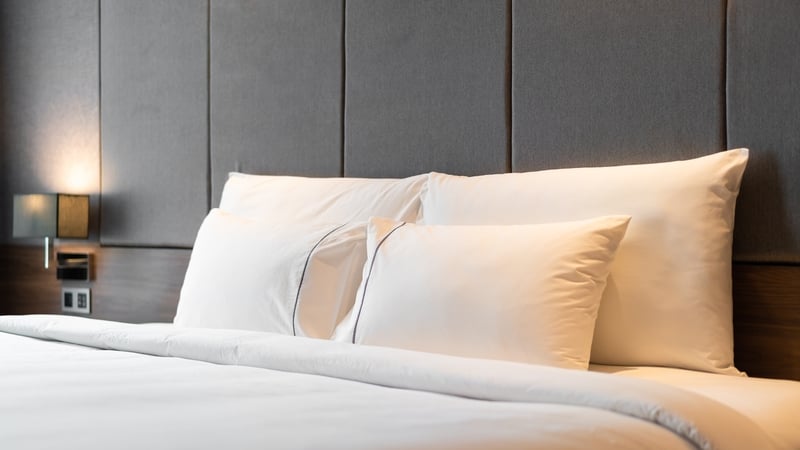
The key areas of planned investment include "projects involving guest bedroom refurbishment (61%) and upgrades to restaurants, bars and common areas (47%)".
The IHF said 53% of hotels indicated that they plan to increase investment in sustainability in 2026, with a further 32% saying they are "actively exploring new options to enhance sustainability".
Among those investing, key targets include "renewable energy and energy efficiency solutions (60%), food waste reduction (33%) and water conservation measures (26%)".