


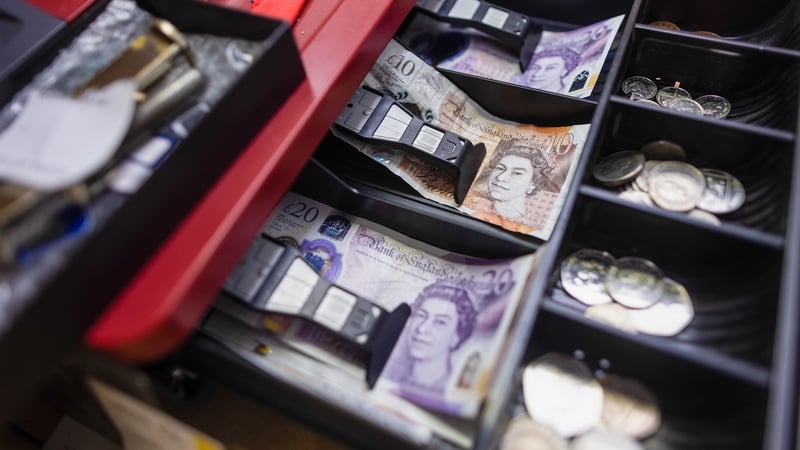
British retail sales volumes rose in January at the fastest annual pace in nearly four years, according to official data that suggested consumers are becoming more happy to spend after a weak end for the economy in 2025.
Retail sales volumes - which cover purchases made both in-store and online - rose 4.5%, compared with a year earlier, the biggest increase since February 2022 and beating all forecasts in a Reuters poll.
Compared with a month earlier, sales volumes were up 1.8%, beating the median forecast for a 0.2% increase, and much stronger than December's 0.4% rise.
The monthly jump reflected strong sales of artwork and antiques, alongside continued demand from online jewellers, the Office for National Statistics said. Some analysts have attributed this demand to gold purchases from investors seeking to capitalise on soaring prices for the precious metal.
Overall sales volumes, excluding petrol, were up 2.0% in January from December.
In cash terms, spending excluding fuel was up 6.5% on the year, the biggest rise since June 2023.
Sterling strengthened against the US dollar after the figures were published by the ONS today.
January's month-on-month rise was the fastest since May 2024, before Prime Minister Keir Starmer came into power, and marked a pickup after a sense of gloom about the economy last year.
"The huge 2% m/m increase in retail sales volumes excluding fuel in January suggests that consumers are opening their wallets again as budget uncertainty recedes," said Thomas Pugh, chief economist at RSM UK.
"It is also a good sign that the economy is bouncing back strongly at the start of this year after a soft end to 2025," he added.
Retail sales volumes for the three months to January rose by just 0.1%, compared with the three months to October 2025.
Recent trading updates from major British retailers have been mixed.
Food retailers reported higher sales in value terms, but volumes fell once inflation was stripped out. Homewares group Dunelm highlighted a positive customer response to new spring ranges.
Britain's economy barely grew at the end of 2025, figures showed last week, and the Bank of England this month cut its forecast for growth for 2026 to 0.9% from 1.2%.
However, some business surveys have pointed to a pick-up in activity at the start of 2026.
The Bank of England is mostly expected to cut interest rates by a quarter of a percentage point to 3.5% in March as it responds to a cooling in inflation and a jobs market slowdown.
