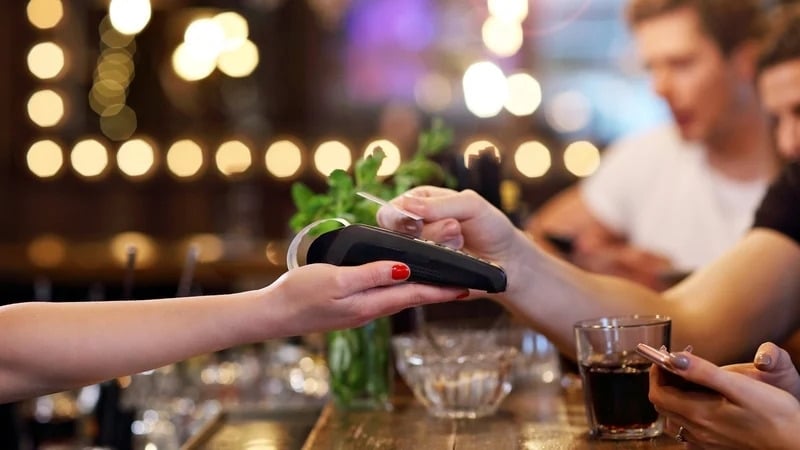

Three out of four people would like to see businesses make it easier to opt out of tipping, while two thirds of consumers believe tipping is becoming "less voluntary", according to new research from the Competition and Consumer Protection Commission (CCPC).
The CCPC study also found that a fifth of people have recently paid a bill that included an unexpected extra charge, and that one in four people who have encountered standalone tipping terminals have tapped them by mistake.
The consumer watchdog's research suggests most people (nine out of ten) leave a tip at least some of the time, and women and those over 35 are the most likely demographic to tip.
It also indicates people are most likely to tip when sitting in a café or restaurant, and least likely to tip for delivery services.
Half of those who tip in a café or restaurant said they tip between 10% and 14% of the value of the bill.
However, nearly six out of ten people surveyed said sometimes they feel they have to leave a tip, even though they would rather not do so.
Together with its study on tipping, the CCPC has also issued guidance for restaurants, cafés, hair salons, and other service providers to reflect what it called the changing landscape of tipping due to technology.
The guidance includes making tipping on a payment terminal easy to avoid, preventing accidental tipping by keeping tipping terminals separate and clearly labelled, clearly communicating mandatory service charges in advance, and never automatically adding optional service charges to a bill.
Director of Research, Advocacy and International at the CCPC Simon Barry said because "newer technologies like payment screens and tipping terminals are changing the way we tip for services, it's important that businesses using these technologies do so in a way that protects the consumer's right to decide whether and how much to tip.
We need your consent to load this rte-player contentWe use rte-player to manage extra content that can set cookies on your device and collect data about your activity. Please review their details and accept them to load the content.Manage Preferences
"Transparency is vital. Any mandatory service charges must be flagged well in advance, optional charges must never be automatically added to bills, and tipping terminals should be placed away from payment terminals to avoid any confusion," Mr Barry added.
Ipsos B&A carried out the research on behalf of the CCPC, interviewing 1,048 people last October.