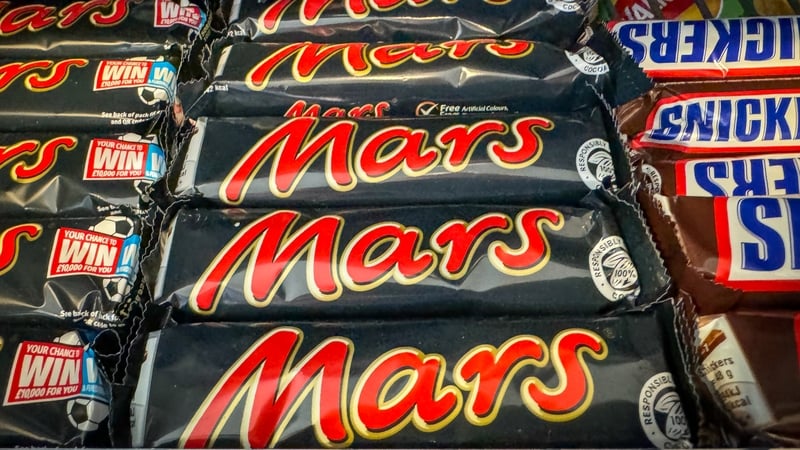

When you hear the brand 'Mars', you almost certainly think of chocolate - most likely the Mars Bar itself. Maybe you also think of Snickers, or M&Ms, or even the Milky Way and Twix.
Of course the company does have plenty of other chocolate and sweet brands in its stable - like Bounty, Galaxy, Malteasers, Skittles and Starburst.
But it might surprise you to learn that Mars' reach goes far beyond the confectionary aisle.
They also own Wrigleys chewing gum - including brands like Orbit and Extra - and Kind, which specialises in low sugar, nut-based snack bars.
There are food brands, like Ben's Original rice, and pasta sauce brand Dolmio.
And just a few weeks ago they substantially increased their grip on groceries, by closing a deal to bring Kellanova into the group.
(Almost the opposite of Mars, Kellanova is a company you've never heard of that you probably know really well. It owns Kelloggs' cereals outside of the US - meaning it includes the likes of Corn Flakes, Rice Krispies and Coco Pops here in Europe. It also owns products like Nutri Grain, Pop Tarts, Rice Krispie squares and Pringles. And they're all now part of Mars).
But as surprising as it may be that Mars owns all of this, what's even more remarkable is the fact that - at least until quite recently - all of those brands made up the minority of its business.
So what’s the biggest part?
Most of Mars Inc's revenues actually come from pet care, because its owners realised long before most that people would pay lots and lots of money to keep their pets healthy and happy.
In fact, Mars' involvement in pet food actually goes back further than some of their best-known chocolate brands.
Today, Mars owns famous pet food brands like Pedigree, Cesar, Whiskas Kit-e-Kat and Royal Canin.
It also owns a huge number of veterinary hospitals across North America and Europe - including a handful in Ireland - and as of last year, this pet-focused bit made up 60% percent of its annual revenue worldwide.
So how did Mars become this giant group?
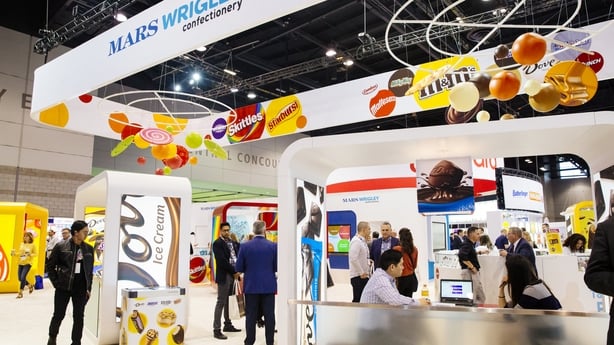
There are two key figures in all of this - Frank Mars, the original founder of the company, and Forrest, his son, who turned it into the global conglomerate it is today.
Frank Mars started the Mars company in Minneapolis in 1920, it was actually his fourth attempt at starting a confectionary company.
The context is important here because, at the time, chocolate was a relatively niche product in the US. Making chocolate required a lot of expertise and specialist equipment, which was far more common in Europe, where the likes of Nestlé and Cadbury were already well-established.
There were chocolate makers in the US, but really it was only Hershey's that was doing it at any scale.
Despite this Frank saw the product's potential, and hit upon the idea of using Hershey's chocolate to make what was initially known as a "combination bar".
Unlike the more common solid piece of chocolate, this is a bar that has different elements inside - like mallow, nuts or dried fruit - and is simply coated in chocolate.
And this type of bar actually becomes quite popular with the US army, because it's seen as a way of packing lots of different nutrients into something that's shelf-stable, transportable, and portable.
It's almost thought of in the same way that we would now think of energy and protein bars.
So in 1922, Frank launches the Mar-O Bar - which is sold as a whipped cream bar. But it doesn't do particularly well at first.
A year later he reconnects with his estranged son Forrest - who’d been sent away after he divorced from his first wife - and they hit upon the idea of making a bar that tastes like a malted milkshake.
This leads to them creating the Milky Way, which includes nougat and caramel covered in chocolate. You may think that sounds more like a Mars bar than a Milky Way bar, but there is a reason for that.
Crucially, though, the Milky Way becomes a hit and sales start to boom.
Forrest is really the driving force here, he's obsessed with productivity and modern manufacturing. In fact after the bar's initial success he convinces his father to relocate the business 630km east to Chicago. This is so that they can be closer to a railroad, which will make its supply chain and distribution network easier to manage.
But the move also sews the seeds of a major rift between father and son.
Why is that?
Frank is put in charge of building the new factory in Chicago, and he follows Forrest’s direction in terms of what’s inside, which is all cutting edge machinery and processes.
But he also spends a lot of money making the factory look nice externally too, which Forrest sees as a waste of time and money.
And this highlights a growing gap in priorities between the two. Because by this stage Mars is making lots of money, enough that it has everything from a private plane to a ranch.
And to Frank, that’s more than enough.
But Forrest isn't happy to sit back and enjoy the wealth they've already created - he is empire-building.
And that difference ultimately comes to a head in 1932, Frank and Forrest have a blow-up row, and Forrest leaves the family business and moves to Europe.
They actually never speak again. Frank dies two years later and Forrest doesn't return for the funeral.
What Forrest does do, though, is go to Switzerland to work on the factory floor in Nestlé and Tobler (maker of the Toblerone) to learn the one confectioners' skill Mars had not yet mastered - making chocolate.
He then moves to Slough in England and sets up his own company, using the two things his father gave him when he left the US. They are $50,000, and the rights to make the Milky Way bar outside of the US.
So, Forrest launches his version of the Milky Way in the British market and tweaks it for British tastes, including striking a deal to use Cadbury's chocolate. And he calls it a Mars Bar.
That's why the thing we call a Mars Bar is generally known as a Milky Way in the US.
But it's also around this stage that Forrest buys a pet food company - Chappel Brothers. Bear in mind, pet food was a pretty new concept in 1934, most people would have fed their pets scraps and leftovers at the time. But Forrest sees an opportunity to diversify and it pays off. The pet food arm quickly becomes profitable, and lets him grow the chocolate business.
Quickly he adds new lines like Malteasers, which were originally sold as 'energy balls' for women trying to slim down.
Did World War II interrupt his empire-building?
Initially, yes.
As part of the war effort, Britain introduced a heavy tax on foreign residents, and so Forrest decides to head back to the US.
Forrest actually claimed this tax was introduced at the behest of rivals Cadbury’s and Rowntree, who were worried about their market share. Though he never actually backed that up with any evidence.
What is remarkable, though, is how he went back to the US with no doubt that his British business would keep running smoothly without him.
And it did.
That's in large part due to the strong culture he created there. He paid well, with the pay heavily dependent on company, rather than individual, performance. He was also quality-focused, to the extent that he gave every worker on the production line the authority to bring the factory to a halt if they found an issue with a product.
He also didn't believe in executive perks like reserved parking spaces or private offices. In fact the Mars workplace was open office, decades before that concept became popular globally. And he hated meetings too - Mars did have a conference room but they didn't put doors on it to make sure everything was done transparently (and quickly).
All of that went towards keeping the company running smoothly in the UK while Forrest heads back to the US. And he takes the opportunity to start yet another company.
What did this company do?
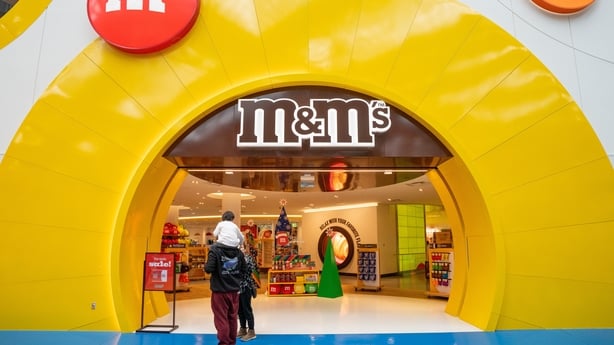
It's chocolate again, but in a very different guise.
While in Europe Forrest had found a different type of sweet - called a dragée. These are pieces of chocolate coated in a sugar shell.
He claims to have discovered them during the Spanish civil war, where he saw soldiers enjoying them… though it's also likely he spotted Rowntree’s new 'Smarties' chocolates before he left England.
He takes the idea to the CEO of Hershey's - William Murrie - and talks him into forming a partnership. Murrie doesn't own Hershey’s so this is an opportunity for him to significantly boost his net worth, but in order to not compromise his day job, he suggests Forrest partner up with his son, Bruce.
The two set up a new company, with Forrest taking an 80% stake and Bruce taking the rest, and they call it Mars & Murrie, or M&M for short.
And this partnership turns out to be a really shrewd deal.
Because not only does it give M&M access to a supply of Hershey’s chocolate, it also gives them access to one of Hershey’s biggest customers - the US army.
And when the US enters World War II shortly after, they become big buyers of M&Ms. In fact the sweets are sold exclusively to the army for around three years before they hit consumer shelves.
But the link to Hershey’s gives M&M another crucial competitive advantage. The US's entry into the war brings rationing with it, which leads Hershey's to cut its sales to most customers, including Mars Inc. But it doesn't ration its supply to M&M.
Despite this, M&Ms don't prove to be a hit when they eventually launch to US consumers. Forrest blames this on his partner Bruce, who he essentially bullies out of the company, and then buys his stake.
And here he shows how ahead of the curve he is once again here, bringing in marketing to figure out what to do with the product and launching TV ads around kids programming in order to drum up sales. This is where we get the 'melt in your mouth, not in your hands' slogan that ended up being used with M&Ms for decades.
And by the early 1950s, M&Ms has become the biggest selling chocolate brand in the US. It becomes so popular they start facing copycat products, which is what leads them to start printing Ms on the sweets, so people know which one is authentic.
But what about his family firm - the original Mars Inc?
By this stage Mars Inc wasn't in great shape; at a time when the market is booming, its sales are falling.
So Forrest makes his play to take control.
After Frank's death Forrest inherited one third of Mars Inc, so he uses that to demand a role in the struggling company. He sets up an office in their headquarters, sending the board regular memos about how bad of a job the CEO - who happens to be his brother-in-law - was doing.
He then convinces his sister Patricia to sell her stake to him, which she does on the condition that he keeps her husband as CEO.
Forrest then goes around buying up the remaining outstanding shares from small holders, making him the sole owner. And then he rolls all of his other businesses into Mars Inc, including the British operation, M&Ms and the pet food business.
A year later his sister Patricia dies, and he takes the opportunity to fire her husband and appoint himself as CEO of the entire business empire.
It’s also around this time that Forrest fulfils a long-held ambition, telling Hershey's he is ending their partnership and switching to in-house chocolate instead.
Hershey's thought this was a crazy move. Mars was buying its chocolate in huge volumes at this stage, and trying to match that would take a huge investment. The fact that Mars was starting from zero and had no real experience of this type of production would mean it would take a decade before Mars would see a return on its move.
But, of course, Forrest's obsession with efficiency and cutting-edge manufacturing means the move pays off far sooner than that.
Crucially it let Mars absorb another bit of margin, and it gave them better control of their supply chain. They even set up a commodities trading division to handle the buying and selling of raw materials like cocoa, which apparently has made them billions in profit over the years.
So what happened to Forrest?
Remarkably given his aggressive approach to business, he retired in 1973, aged 69. That's just a few years after he unified the businesses. At that stage he handed the company over to his three children.
Of course he didn't sail off into the sunset. In 1980 he set up Ethel M - a premium chocolate brand named in honour of his mother. That had such success it was ultimately acquired by Mars Inc in 1988.
After that, Forrest was said to regularly contact his children to tell them about all the mistakes they were making with the business.
He died in 1999 aged 95.
His children have have plenty of success in the decades since he handed over control, acquiring more brands and manufacturers, in both chocolate and pet food.
And while both ended up being strong growth markets, they've also proven to be recession-proof. It turns out people don't stop buying chocolate, or feeding their pets, in a downturn.
Forrest's children have also globalised the business - expanding into new markets and consolidating their position in others. That globalisation programme is also why we've seen some brands unify over the years, with Marathon bars becoming Snickers and Opal Fruits becoming Starburst.
And while so much has changed since 1920, Mars has also managed to keep some of its core products close to their roots.
It may be a long time since the 'combination bar' was treated like an energy bar, but slogans like 'Mars a day helps you work, rest and play' and 'you’re not you when you’re hungry' still have echoes of that selling point to them.
Mars also continues to position itself alongside the likes of the Olympics and the NFL, long after ad rules allowed them to suggest that these bars were anything an elite athlete would benefit from.
And remarkably it's still in the hands of the Mars family…
Yes, this is really an incredible achievement, because it’s so hard for a company to stay private and to grow at this kind of rate.
Generally, at some stage, companies sell shares in order to cash in and get better access to capital.
But today Mars is still 100% owned by Frank's descendants.
John and Jacqueline Mars - son and daughter of Forrest - each have a one third stake, and that means they're estimated to each have a net worth of $41 billion, according to Forbes.
The remaining third is split across the four children of Forrest's other son - Forrest Junior - who died in 2016.
They are Pamela, Victoria, Marjike and Valerie - who have a net worth of more than $10 billion each.