
If you were to judge the recent Beckham-Peltz spat solely on who had the bigger profile, it's fair to say that - on this side of the Atlantic at least – David and Victoria would be the easy winners.
But if it came down to who had the bigger bank balance, the Beckhams have to make do with second place. And it’s not even close.
Of course the Beckhams aren’t short of a few bob – they still making millions a year through various investments and businesses.
That includes Victoria Beckham’s fashion brand, David Beckham’s investment in Inter Miami (currently home to Lionel Messi) - as well as the endorsement deals both have with other firms.
It’s hard to find an exact figure, but the Beckhams’ net worth (combined – because they’re kind of a package deal) is thought to be somewhere in the region of $500-600m
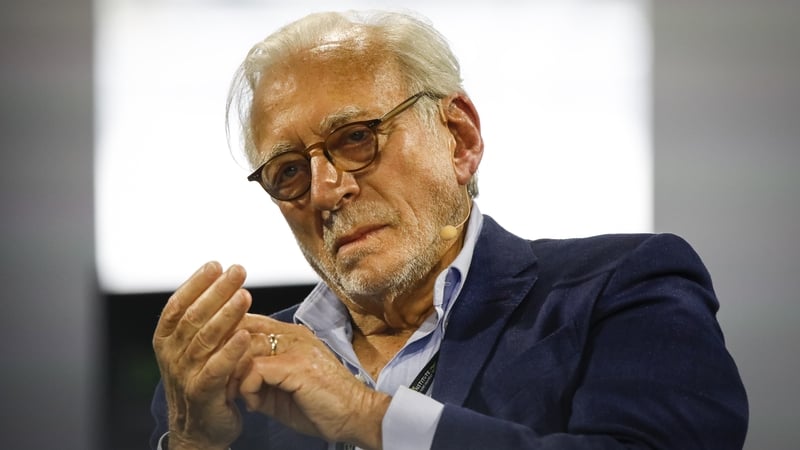
But that pales in comparison to Brooklyn Beckham’s father-in-law - Nelson Peltz. He has an estimated net worth of around $1.6 billion, according to Forbes.
So roughly three times what the Beckham’s are worth.
It’s also worth pointing out how very different the foundations of those two figures are.
Peltz’s worth is based on the millions he’s made running companies through the years, as well as the investments he currently has in some very big business. Of course those investments aren’t shock-proof, but they’re at least somewhat related to tangible assets.
Some of the Beckhams’ wealth has a link to very real world things too – but really much of their net worth is based on something far more intangible; their image and reputation.
Much of their earnings – and potential future earnings – are about how much they can make by being the face of a watch brand or an aftershave line. As we have seen with others, that’s a relatively fragile metric – as a minor scandal, or even a shift in the culture, can severely damage that in a way that even a broader economic downturn cannot.
So where did Peltz make his money?
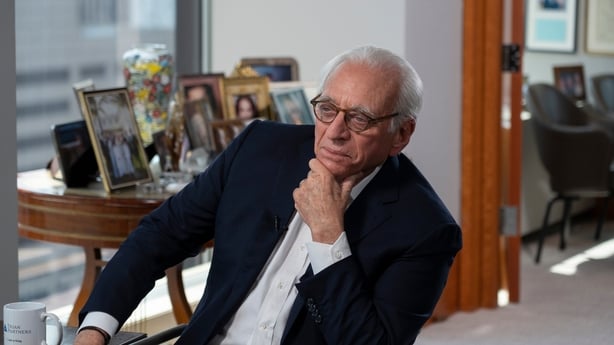
Well it’s not quite a rags to riches story – Peltz was born into a fairly well-off family.
His grandfather had established a food distribution business called A Peltz & Sons, which his father eventually took over. He says it was making around $2m in revenue in or around the '50s and ‘60s, which is a lot of money for the time.
It is revenue, rather than profit, but Peltz says it was enough to support the family of five "beautifully".
And it was enough for him to be sent to a private school in New York, and then onto a respected business school in Pennsylvania – called the Wharton School.
But Peltz said he felt like it wasn’t for him, and he got bored of it quite quickly.
Instead, he dropped out and travelled up the east coast to Maine, where he became a ski instructor. In his words he became a "ski bum". That continued through to the spring of the following year, when the snow melting left him out of work.
He then got an offer of another instructing job, this time in Oregon, and all he needed was $200 to get him to the west coast.
To get that he asks his dad if he can work as a driver for the company for a few weeks. But after a few days, Peltz said he started to point out all of the things they could be doing better.
His dad suggests he stay where he is and start putting his ideas into practice – and Nelson agrees.
And that’s the start of his career as a businessman…

Yes, he and his brother Robert are essentially given free reign by their dad to make changes to the business. Over the next decade they take quite an aggressive approach with it.
They shift more towards frozen foods, they start to buy up smaller food businesses and they ultimately morph A Peltz & Sons into a company called Flagstaff Corporation – which boasted sales of around $150m by the early 1970s.
That floated on the stock exchange in 1972, and Peltz sold his entire stake in it in 1979 – representing his first major cash-out.
(As it happens, Flagstaff went into bankruptcy protection just two years after Peltz left - and he was asked to come back and save the business. Which he did).
Following Flagstaff, Peltz and his business partner Peter May then set about looking for new businesses to acquire – with a focus on struggling firms that they felt had turnaround potential.
And to help fund that they used what are known as junk bonds.
These are essentially a highly leveraged, high risk loan for a company that has shaky financials or an unclear path to growth. For taking on that level of risk, the lender is promised a high interest rate in return.
And, for Peltz, it works.
The main deal they make in this period is Triangle Industries – a vending machine company – which they buy into and then start adding other acquisitions to, eventually creating the biggest packaging business in the world.
Triangle was worth $80m when they bought it, and they sold it five years later for $4 billion – though within that sale value was some of the large-scale investments they made in other firms. Still, though, they made a very healthy return on the business.
And it’s through these experiences that he and May develop what they call their ‘sales up, expenses down’ philosophy. It sounds perhaps like an obvious approach, but essentially it boils down to simplifying management structures, giving divisions more autonomy to make decisions, and doing whatever is right for the brand to sell more.
And it highlights his focus really through to this day, which is about trying to cut out what he sees as waste – and finding ways to boost sales, whatever that might mean for the particular company.
Which brings us to Snapple…
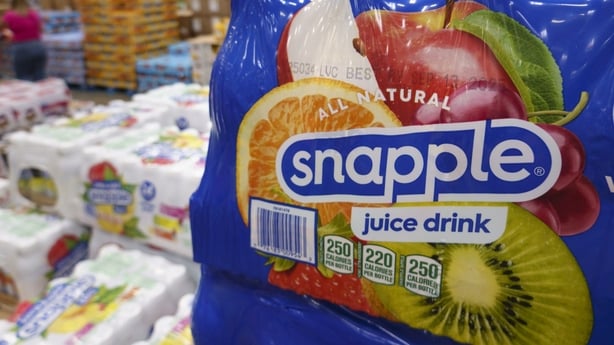
Yes, this is perhaps his crowning achievement.
To this day it is considered one of the great business turnaround stories, and it helped cement Peltz’s reputation as the ‘turnaround king’.
Snapple was set up in 1972 and in its early life had an image as being an indy alternative to some of the major drinks brands, with an irreverent marketing style that often poked fun at the competition. Somewhat similar to Ben & Jerry’s.
But, like Ben & Jerry’s, it eventually got so big that those major brands took notice – and investors moved in. Eventually it was sold to the Quaker Oats Company in 1994, for $1.7 billion.
The logic here was that Snapple had the same kind of wholesome image as oatmeal – and it would slot in alongside Quaker’s other drinks brands like Gatorade and Tropicana. But it turned out to be an absolute disaster for them.
Quaker hold onto Snapple for just over two years, losing a huge amount of money in the process.
In 1997 Peltz and May, through their investment vehicle Triarc, move in and buy the brand for $300m. That’s a $1.4 billion write-down for Quaker after just over two years.
And Peltz quickly sets to work undoing a lot of what Quaker had done – like trying to force it into Gatorade’s distribution network, rather than its old one built on independent retailers. He goes back to some of the old marketing techniques it used to use, and starts bringing out lots of new flavours to drum up consumer interest.
And three years on, Snapple changes hands once again – this time becoming part of Cadbury’s Schweppes, for $1.45 billion.
That’s nearly five times what they bought it for in ‘97, with Peltz himself reportedly walking away with $450m from the deal.
So that’s 26 years ago – what has he been doing since?
Peltz has continued to invest in food and drink businesses through Triarc - namely fast-food chain Wendy's.
But in more recent years Peltz has also shifted focus to become what’s called an activist investor. This essentially involves buying a small stake in a company and using that to try and pressure it into taking some action.
That could be something like improving an environmental record or making a supply chain more ethical – or it can be about cutting costs or selling off entire divisions in order to streamline the business.
Generally it’s something the investor thinks will improve the company’s performance and, in turn, the value of its shares. That then allows them to sell their stake for a profit.
And over the years, though their company Trian Investments, Peltz and May have taken stakes in everything from Cadbury Schweppes to Kraft Foods, to Heinz, to P&G to Unilever to General Electric.
He’s often engaged in what are called proxy battles – which is where shareholders try to take control of a company, or try to push some of their allies onto a company’s board in order to gain more influence over its direction.
And Peltz has really enhanced his sharp-elbowed reputation through this part of his career.
He was asked at one stage if he was a bully and he said that was probably fair – "what’s the point in being a billionaire if you can’t be a bully", he said.
But he doesn’t always get his way…
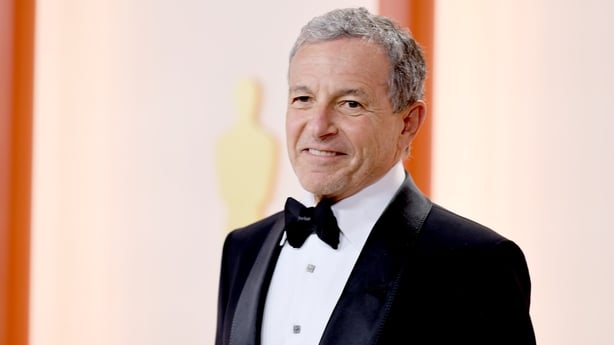
No – one of his more recent proxy battles was against Disney.
He took a small stake in the entertainment giant and pushed to get on the board – he also mounted a campaign to oust Bob Iger as CEO.
But he failed on both fronts, not least because Iger retained the support of the Disney family, which is as symbolically important as anything else.
But what was perhaps strange about his campaign was how Peltz seemed to make it as much about the US culture wars as anything else – with Peltz suggesting the company’s struggles as the box office was down to it going ‘woke’.
In an interview with the Financial Times he said "Why do I have to have a Marvel that’s all women? Not that I have anything against women, but why do I have to do that? Why can’t I have Marvels that are both? Why do I need an all-Black cast?"
These comments seemed to be a reference to Marvel’s Black Panther 2 and The Marvels, both of which hadn’t done very well in cinemas – though neither had an all black or all female cast (they did have black and female leads – which is perhaps the source of Peltz’s irritation, though they also were part of a slate of releases led by white and male actors... which is what Peltz said he wanted).
Regardless, he ultimately failed in his attempt to get rid of Iger, and he didn’t get a seat on the board.
In its defence against his moves Disney did set about a programme of cost-cutting, though, to help improve its finances.
And that ultimately helped Peltz’s firm to make an estimated $1 billion profit on its Disney stake when he sold it up in 2024.
Judging by his stance on the culture wars, is it safe to assume his broader political outlook?
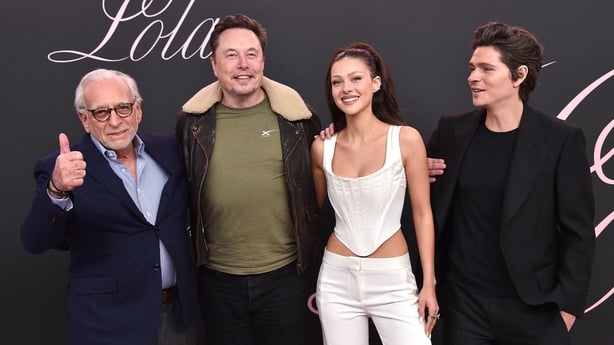
Well he has described himself as a centrist and, like a lot of American businessman, he has donated to politicians on both sides of the divide.
But really he has aligned himself far more to the Republican party over the years, including fundraising for George W Bush and contributing towards his inauguration.
In more recent years he’s positioned himself next to Donald Trump and MAGA arm of the Republican party. In fact he’s physically quite close to Trump, in that his Florida mansion (where Brooklyn and Nicole had their wedding) isn’t too far away from Mar-a-Lago.
He said he didn’t vote for Trump in 2016 but did fundraise for him in 2020. That support is something he expressed regret around following the January 6th attacks. He then went so far as to back Ron Desantis during the Republican Primaries for the 2024 election.
But once it became clear that Trump was going to win that race, he got over his misgivings and rowed in behind him again, saying he’d probably vote for him but wasn’t happy about it. His reasoning was that his concerns over then Democrat nominee Joe Biden’s mental condition outweighed his discomfort around January 6th.
And even that reluctance seemed to fade away quite quickly – to the extent that he indirectly claimed credit for Trump’s re-election.
That's because he says he was the matchmaker between Trump and Elon Musk – who's significant financial support is broadly recognised as crucial to Trump’s reelection.
And so Peltz, has argued, without his involvement, Trump may have lost the race.