
Tariffs are bad policy, bad for business and bad for consumers, but uncertainty associated with new threats is even worse.
US President Donald Trump's renewed tariff threat on European countries over Greenland has reignited debate over "sell USA" trades.
The dollar has dropped while European currencies rise - and gold has reached another record high.
Ireland is not one of the targetted countries but if last July's EU-US trade deal gets cancelled there could be a levy on the whole of the EU - including us.
Donald Trump said he "will 100%" follow through on his threat to impose tariffs on European countries who oppose his demand to take control of Greenland.
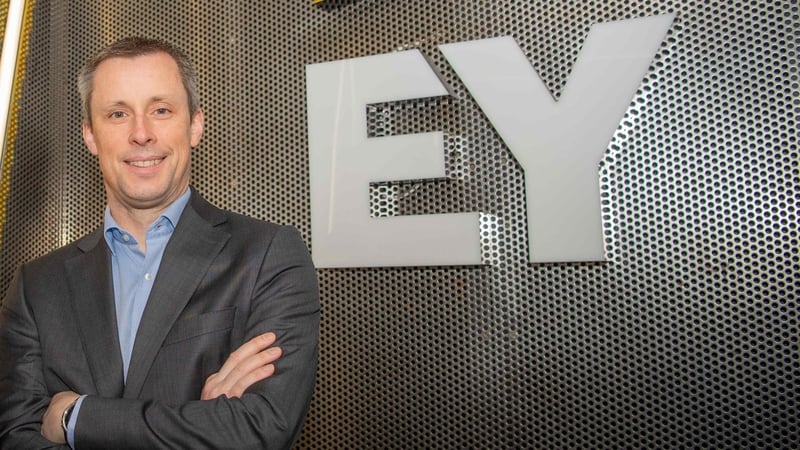
EY Ireland Partner and Co-Head of Geopolitical Strategy Simon MacAllister said to some extent the tariffs are a distraction from President Trump's objective around Greenland.
"The current analysis is that there's no strong legal basis for those tariffs, initial tariffs last year were on a weak basis and the Supreme Court is due to rule on that soon, but I think the basis for these ones is even weaker and there's no way to target individual EU countries, absent some very specific circumstances which aren't there at the moment," he explained.
We need your consent to load this rte-player contentWe use rte-player to manage extra content that can set cookies on your device and collect data about your activity. Please review their details and accept them to load the content.Manage Preferences
"If the Supreme Court rules against him, he will probably try and find another way of levying a cost in some way on trading partners," said Mr MacAllister.
This time last year businesses were in limbo preparing for tariffs, then making decisions following the EU-US trade deal in July.
Mr MacAllister said there could be a temptation to freeze in the face of uncertainty, but advises businesses to focus on what they can control.
"We've seen people reconstitute supply chains, change who their trading partners are, shorten supply chains in particular, so building resilience into them at the expense of cost, so these things are a trade-off, but making sure your supply chain is able to resist shocks and that your broader organisation is built in a way that you can try and be a bit more agile to these sorts of shocks, which are just continuing," said Mr MacAllister.
"The tariff piece in the last week is only one of them, the world continues to be a very dynamic place," he added.