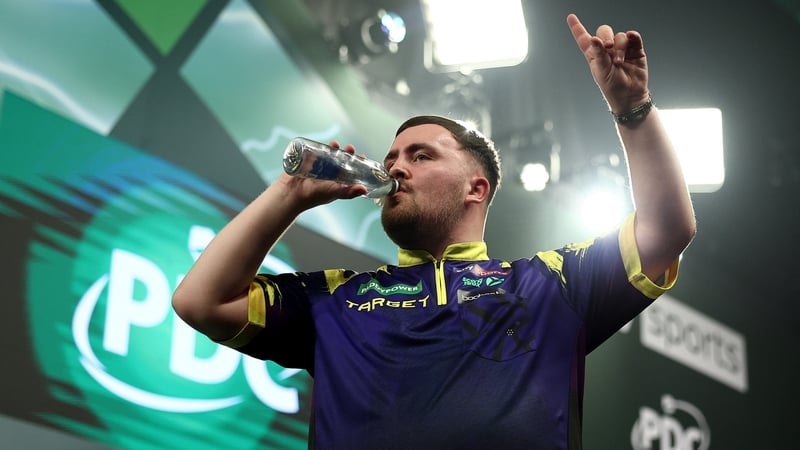

It's been a remarkable few days for Luke 'The Nuke’ Littler.
Last weekend he pocketed a cool £1m on the back of his fairly comfortable victory over the Netherlands’ Gian Van Veen in the World Darts Championship final.
(That’s double the prize money he took when he won the same competition last year – it just so happened the competition’s prize pot was increased substantially this year, the first time it’s been increased since 2019.)
Then, just days later, it was announced that he’d signed a new sponsorship deal with darts brand Target, which could be worth up to €23m over the next decade. It represents the biggest ever endorsement deal for the game – and reflects just how important the 18-year-old has become to darts in a few short years.
But while Littler is undoubtedly the main draw at the moment, his ascent has also coincided with a general uptick in the popularity of the sport – one that has seen it draw in more fans (and money) than ever before.
Just how big has darts become?
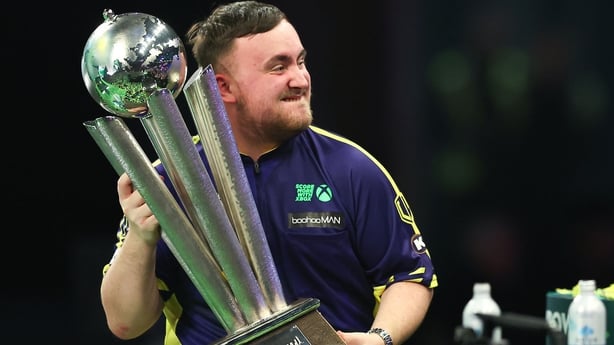
It’s going through something of a golden age at the moment – perhaps you could say a second golden age, after its first explosion on British TV in the 70s and 80s.
The final on Saturday last had a peak audience of 2.7 million people in Ireland and the UK, according to Sky Sports. An impressive number for a pay-per-view channel – though it’s actually down on recent years. Closer to five million tuned in to watch Littler’s first final tilt in 2024. When more than three million tuned in last year to see him lift the trophy for the first time, it made it Sky’s most-watched non-soccer event over the previous 12 months.
And that helps explain why Sky recently paid £125m for a five year extension to its rights deal to show the championship. That’s more than double what they were paying before.
And while we tend to see the darts through a British prism it does have a sizable global audience.
There’s a big following in the Netherlands, where lots of top players (including Van Veen) are from. It’s quite big in Germany too – its Sports1 channel carried the tournament this year and had an average of two million viewers for the final. That puts it on a par with the UK and Ireland viewership.
And the sport has a rapidly growing audience outside of Europe – including the likes of the US and Japan.
It’s a far cry from the days of Jocky Wilson and Eric Bristow, isn’t it?
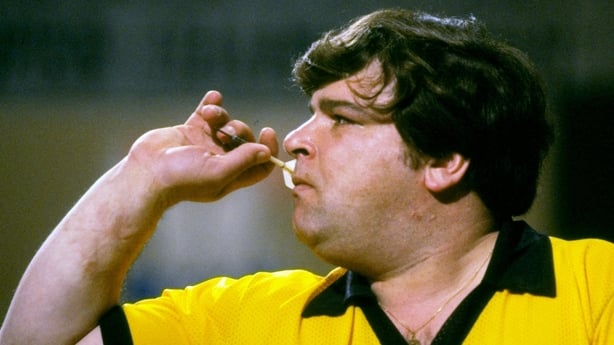
Yes – and what’s remarkable is that the fundamentals of the game haven’t really changed all since then – bar some minor tweaks. What has changed, though, is the scale and image of the sport around the world.
While darts did have a first golden age in the 1970s, its popularity did plummet towards the end of the 1980s – in part because of the image it had cultivated.
Many will remember the smoke-filled halls where audiences could hardly see the board through the smog, with the players sinking pints between throws. That was something that was made fun of by a Not The Nine O’Clock News sketch – which saw big-bellied players lining up to aim for double brandies rather than double 20s.
The skit was so on-target that some in the sport actually blamed it for the sport’s decline in that period.
And darts’ nadir came in the early 1990s – where dwindling interest from broadcasters and sponsors meant some of the top players, who had previously been able to make a living from playing, started to struggle to do so.
And it’s this financial crunch while led players to stage what was essentially a revolt against their governing body, the British Darts Organisation.
This is a critical moment in the history of darts, isn’t it?
Yes – it’s a crucial turning point for the sport.
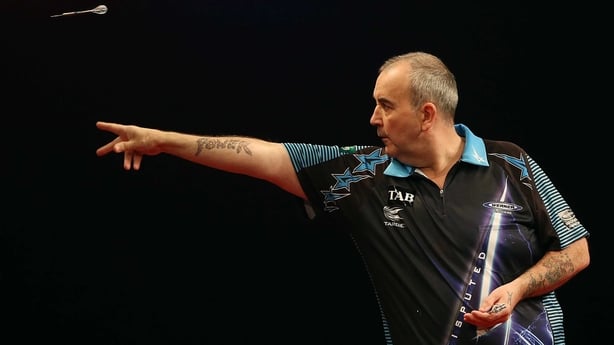
In the early 90s a bunch of players, led by Phil Taylor, set up the World Darts Council – a rival organisation to the BDO.
They did so because they felt that the BDO was mis-managing the sport, and wasn’t trying hard enough to drum up money and audiences for it.
In some ways, initially at least, it was more like a players’ union – at first members still took part in BDO competitions.
But when the BDO tried to clamp down on the WDC, that sparked a proper split between the two – the WDC became the Professional Darts Corporation, and that started the ball rolling for what we see today.
But how did we get from that break-away group to Luke Littler bagging a cool million pounds in a single tournament?
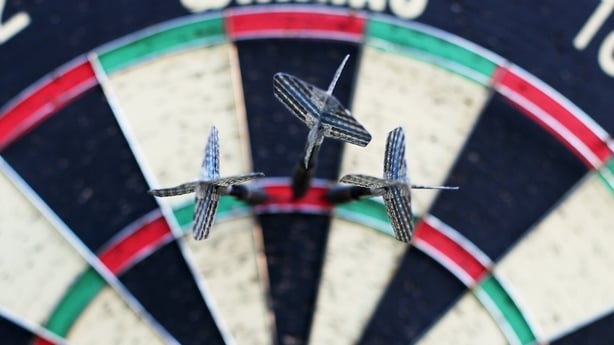
Well it has been a long road – the first televised PDC event was the Lada UK Masters in 1992, while the first World Darts Championship took place in 1994. So what we saw this year is more than 30 years in the making.
But a number of factors did align for the PDC in its early days, which helped its rapid growth – and of course much of that comes down to money.
Sky Sports came on board as a broadcaster in the early 90s – which was probably seen as a risky move by the PDC at the time.
Sky was only a new broadcaster back then – and the concept of pay-per-view television was still relatively new to British audiences. By signing up with Sky – rather than the BBC or ITV – many will have felt the PDC was condemning itself to a small audience being delivered by an inexperienced channel.
But of course the PDC was lured to Sky because it was willing to pay more than the likes of the BBC and ITV – in large part because it had a whole sports channel that was crying out for programming.
For Sky, signing up the PDC gave them competitions that could fill hours of programming for a week or two at a time – not to mention all the highlights and repeats – which was (and remains) very valuable to them.
The fact that relatively big names like Phil Taylor were involved was no harm either; nor was the PDC’s rebellious image – which would have added to Sky’s upstart credentials as it sought to take on the traditional broadcasters.
But all of this ended up being quite useful to the PDC too – because it meant all of the matches in their tournaments were available to anyone who wanted them; not just a highlights reel at the end of the day that would have been available on a free to air channel.
And because Sky was young and nimble, it was willing to try out new ways of showing the sport to audiences – which helped to make it more watchable.
And that, in turn, helped to bring in bigger sponsorship revenue, which helped to grow the prize pot, which in turn helped to attract the better darts players.
In the first WDC in 1994, the winner took home £16,000… that had more than tripled to £50,000 by 2004… by 2014 the top prize had grown to a £250,000.
And so quite quickly the PDC became the gold standard for darts – and the BDO became the poorer relation. In fact it got to the point where winning at the Lakeside – which was the BDO’s main tournament – was an unofficial stepping stone onto the PDC tour.
Perhaps it’s unfair to make the comparison – but one example of the lack of quality is with Glen Durrant, who dominated at the Lakeside between 2017 and 2019. But after three consecutive wins there he moved over to the PDC and, in 2020, got knocked out in the quarter final round.
The steady growth of the PDC and the slow draining of the talent pool inevitably led to the collapse of the BDO in 2020.
It was replaced by another organisation, but really it’s the PDC that is the main darts organisation now.
But darts is now far bigger than it was before – are there any theories as to why that is?
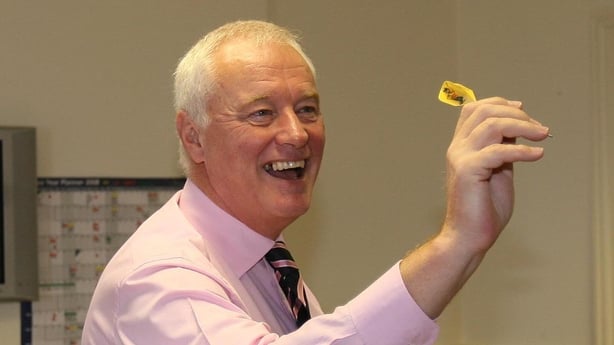
You can’t overlook the fact that one of the drivers of the PDC for decades has been sports promoter Barry Hearn – who is a master at creating spectacle and hype around pretty much anything.
And his son, Eddie, who is now chairman of the organisation, is cut from the same cloth.
Both seem to have a genuine understanding of the game – and have been clever enough to make sure it hasn’t strayed too far from its origins in pub and working men’s clubs.
In saying that, they’re also not afraid to tinker around the edges if they think it will make it a better product, or one that has a broader appeal.
The boozy and smoke-filled halls have been replaced by large, slickly-designed venues – like how the World Darts Championship has moved from Essex’ Circus Tavern to London’s Ally Pally, and will next year broadcast from its even bigger Grand Hall.
But the Hearns have also built out a whole calendar of competitions and tournaments at various levels, to give fans something to watch through the year – and to give players more opportunities to earn money.
That includes the likes of the Premier League, which kicks off next week and travels all around the UK and Ireland – so it comes to the fans rather than the other way around.
Modern management also very much encouraged the kind of carnival atmosphere among the live audience – crowds are given implicit permission to dress up, sing along to walk-on music, mess and joke, and even boo a player when they miss a nine-darter.
But there is something beyond darts that also helps to explain its growing appeal.
The average punter is increasingly being priced out of most sports – with soccer being a great example of that. Traditionally a working class sport, soccer – at the top level in the likes of the UK at least – is now far too expensive for most people to engage with on a regular basis.
The recent controversy over the price of World Cup tickets has really highlighted that fact.
But if compare that to the darts and the world championship – where a ticket to an early stage match was £65, and a ticket to the final was £100 – you can see that it’s still pretty attainable for most.
And in the age of the high performance athlete, darts players are still pretty relatable too…

Absolutely – to continue the earlier comparison, the average punter has pretty much nothing in common with a professional soccer player nowadays. In terms of their fitness, their diet, their finances – they may as well be aliens.
And if you have any aspirations of being a professional soccer player, but you’ve not been picked up by a club by the time you’re out of primary school, unfortunately it’s not looking too good for you.
Meanwhile with darts, you have a game that’s easy to understand, easy – and cheap – to start playing - and it has the fatal allure of seeming like it’s easy to master (until you start playing).
And the players still seem like normal people – from their attainable physiques to the fact that they’re willing to show off a bit of personality and even character. They’re not heavily media-trained like most elite athletes are nowadays.
(Littler chatting back to the fans that booed him is a great example of that.)
You have people like Gary Anderson - who’s 55 - playing alongside Littler and Van Veen – which shows the upper tier is not just for young players. Meanwhile the likes of Fallon Sherrock, Beau Greaves and Noa-Lynn van Leuven have shown it's not just a game for the lads.
And even financially, the players still feel within touching distance of the average person.
Even Littler – who is the top player in the world, and has earned nearly £2.8m from competitions over the past two years – would be considered pretty poorly paid by English Premier League standards.
He’d definitely be in the bottom half of the earnings bracket, anyway.
And earnings drop quite quickly as you go down the rankings. By the time you get outside the top 50 darts players you’re into pretty average annual earnings. And while Littler has bagged a significant deal, it’s not like there are lots of big endorsement paycheques available to many others in the game.
And all of that means that even the top players have more than a little in common with the people who are coming to see them. They also have to put the work in and stay on the circuit – which means they still have to go toe-to-toe with pros, semi-pros and amateurs regularly.
And there’s still a good link between the top of the game and the grassroots – even if it’s something as simple as Littler turning up to a darts club in Cabra just a few weeks after he lifted the world championship for the first time.