
A different world will confront Ireland in 2026.
In no particular order, our Economics and Public Affairs Editor David Murphy examines five threats.
1 - Defence
Ireland's underinvestment in defence compared to its European neighbours is nothing new. But it is now a major national and international story generating headlines in the Financial Times and Wall Street Journal.
There is a new world order where an increasingly aggressive Russia is conducting a hybrid war against Europe and Ireland appears to be the EU's weakest link.
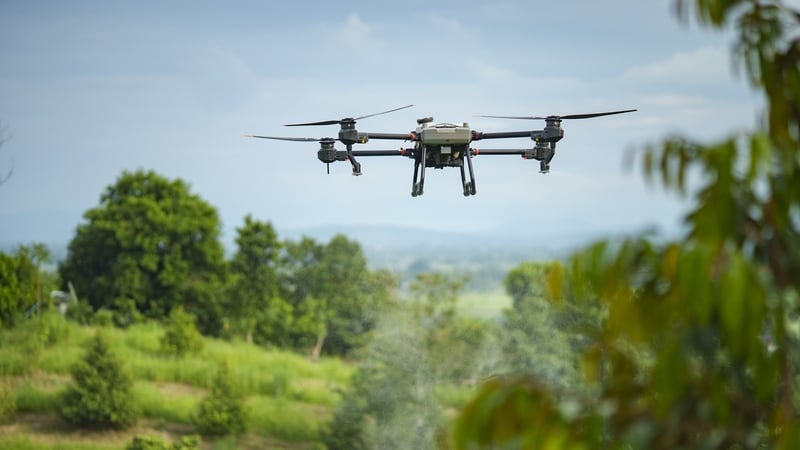
Concern about unidentified drones flying near Ukrainian President Volodymyr Zelensky's plane following his recent visit to Dublin, plus Ireland holding the EU presidency from next July, have forced the issue to the top of the agenda.
Consultancy Deloitte and the International Institute of European Affairs produced a detailed paper outlining defence deficiencies.
It described the vulnerability of gas pipelines and electricity interconnectors as "acute".
Ireland is also home to 30% of all EU data and three-quarters of all subsea cables in the Northern Hemisphere pass near or through Irish waters.
The paper said any attack had "potential for significant cascading effects throughout the Irish economy and daily life due to internet outages."
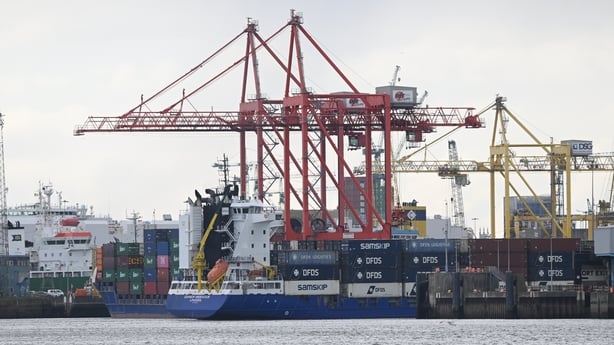
It highlighted the threats to Ireland’s ports. It said Dublin Port was a "a significant single point of failure in the national supply chain, and that food would start to disappear from shop shelves within three days if there was a material adverse event there".
The report said 90% of Irish companies had been hit with financial losses or disruption due to cyber-attacks (the HSE is still cleaning up after its systems were hacked by Russian criminals in 2021, costing an estimated €102m).
Threats to Ireland cover the banking system, utilities and internet access. And there is growing concern about espionage and disinformation.
While the Government increased spending on defence in the Budget from €1.3 billion to €1.4 billion, it is a fraction of expenditure by Ireland's EU neighbours. For example, Denmark, with a population of 5.9 million compared to Ireland's 5.5 million, spent €4.8 billion in 2024.
2 - Housing
During 2025, housing problems worsened.
Homelessness, rents and house prices steadily increased. Workers in well-paid jobs struggled to find rental properties or get on the housing ladder. Those on low wages found it even harder.
Home-building lags behind demand, which is driven by a strong jobs market, rising population and rapidly expanding economy.
Progress on the construction of residential units has been mixed. Despite some years of growth, 2024 was a disappointment with a 2,500 fall in homes built - just over 30,000 were completed. That was partly due to a 24% slump in new apartments.
Figures for the first nine months of 2025 are slightly better with 24,000 homes completed. But they are far below the more than 50,000 per annum needed to address the 250,000 shortfall.
The Government announced a plethora of changes to stimulate building and encourage foreign funds to invest in the market.
Among them were a VAT cut on apartment sales, changes to rental rules and building standards for apartments.
There were also measures to deal with bottlenecks holding back urgently needed water, electricity and transport projects.
The coalition of Fianna Fáil, Fine Gael and Independents will be judged on housing, and evidence of an improvement will be important in 2026.
3 - President Trump
US President Donald Trump's introduction of tariffs was not as negative for Ireland as had been feared in early 2025. Despite his repeated ultimatums, there are no duties on pharmaceuticals or computer chips, which are huge Irish exports to the US.
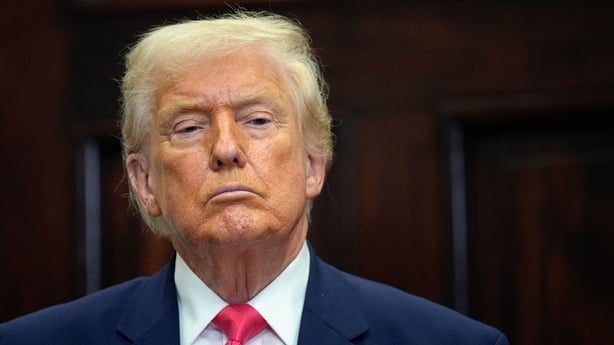
However, other sectors have not escaped unscathed. Irish whiskey has a 15% tariff imposed on its exports to the States. Other food products such as butter are also hit.
Tariffs are now raising huge sums for the US government. That means they may remain in place long after Donald Trump finishes his term in the White House.
The unpredictable nature of his economic policy remains a significant worry for Ireland given its heavy reliance on foreign direct investment.
4 - Climate
The climate is changing rapidly. The World Meteorological Organization said 2024 was the first year in which global temperatures reached an average of more than 1.5C degrees above pre-industrial levels.
Each year over the past ten years was individually the warmest on record.
It means unprecedented ocean heat, accelerating sea-level rise, Arctic and Antarctic ice at historic lows, and record-breaking greenhouse gas concentrations.
Despite those facts, Donald Trump told the United Nations in September: "This 'climate change,' it's the greatest con job ever perpetrated on the world, in my opinion."
While his climate scepticism may influence some political leaders, many countries are locked into binding targets to reduce emissions. Ireland is one of those countries. The problem is that while it has made a lot of progress it is not moving quickly enough.
The Environmental Protection Agency says: "Additional measures and accelerated implementation of existing measures is necessary to meet both national and EU targets."
The Sustainable Energy Authority of Ireland says: "Energy-related emissions are currently only falling at an average of 2.7%, which is well short of the more than 5% pace needed to meet our 2030 climate commitments."
Agriculture is a problem, too. Unless all the necessary changes are implemented, farming emissions will increase by 2030 instead of falling, according to the EPA.
5 - AI
The CEO of Google and Alphabet, Sundar Pichai, said the invention of AI "may be bigger than the internet itself".
But what will the technology mean for Ireland?
Recently, the Economic and Social Research Institute outlined two specific negative consequences. Firstly, if there is an AI bubble which bursts it may affect Ireland more seriously than other countries because of our heavy reliance on US multinationals.
If things go wrong and those companies retrench, that could affect employment in tech companies and corporation tax paid to the State.
Secondly, while AI may result in an increase in productivity, it may also introduce more labour replacement technologies which could hit jobs - particularly in multinational companies in Ireland.