


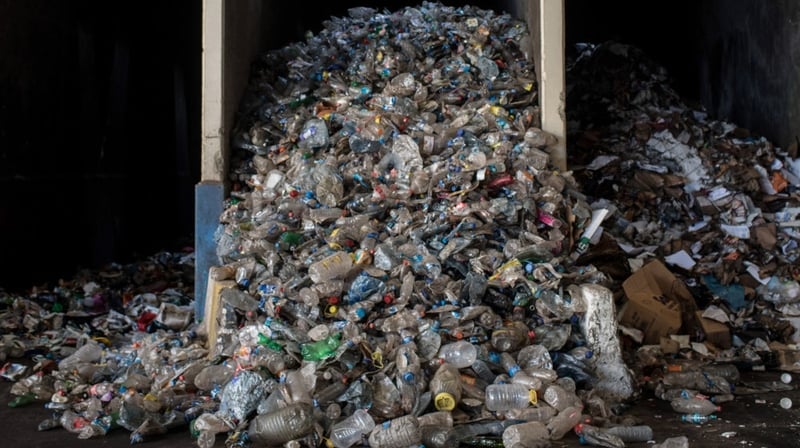
The European Union has unveiled proposals to help the bloc's plastic recycling sector, which is struggling against competition from China and other parts of Asia.
One of the measures suggested by the European Commission is to bolster investment in chemical recycling -- which involves heating plastics to high temperatures to recycle them -- despite it being energy intensive and more polluting than mechanical techniques.
But it could be useful for dealing with food packaging like yoghurt pots, Brussels believes.
That proposal would involve new rules on identifying recycled content in PET (polyethylene terephthalate) single-use plastic bottles that can be handled by chemical processes.
Another measure wants to cut red tape and harmonise rules across the 27-nation bloc so recycled plastics could more easily be traded.
The overall aim of the commission's proposals is to "accelerate Europe's transition to a circular economy", in which recycled plastics are treated "as a valuable secondary raw material rather than waste, benefiting both the economy and the planet."
Currently, that ambition is lagging badly, even as global production of plastic continues to rise.
More than half of plastics produced - 57% -- come from Asia, with 35% coming from China.
With such a supply of cheap plastic, Europe's recycling sector is under severe challenge.
The sector had a recycling capacity of 13 million tons in 2023.
But growth has been slowing even as plastic waste has been rising. In 2021, capacity grew at 17%, then in 2022 it slowed to 10%, and in 2023 it was 6%.
By the end of 2025, the commission said, recycling capacity is "expected to turn into a net decrease of around one million tons".
"This capacity reduction poses challenges not only from an environmental compliance perspective, but also for industrial competitiveness, economic growth and job retention," the commission said.
The proposals include tougher checks on imports, to prevent the dumping of cheap plastics on the European market.
The commission said its proposals - presented as "a first set of pilot actions" - were open to input from the public and stakeholders until January 26.
