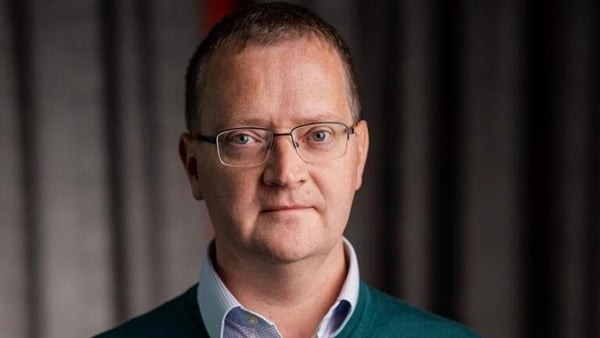

The Irish SME Association (ISME) is warning that the grid upgrade must not mean higher energy costs for business or consumers.
Earlier this week the regulator for the sector said electricity users will face higher bills to pay for a major upgrade to the national grid which could cost almost €19 billion.
Domestic users will pay 55% of the costs and businesses 45%.
ISME says small business is caught up in the energy price debate in exactly the same way as consumers, with some exemptions such retail, accommodation, hospitality and nursing home which are high energy users.
"It is an unavoidable cost of business, and not withstanding what the regulator said this week about the necessity to invest in the network, we know we have to invest in the network, but we do not accept the narrative that prices to consumers and businesses have to rise," said ISME Chief Executive Neil McDonnell.
"There is a lot of fat in the system. There is a lot of room to absorb the cost of network development elsewhere," he said.
Mr McDonnell said the key issue is the lack of competition in the energy market.
"We don't see suppliers competing on price," he commented.
We need your consent to load this rte-player contentWe use rte-player to manage extra content that can set cookies on your device and collect data about your activity. Please review their details and accept them to load the content.Manage Preferences
If Ireland is going to make the green transition and deal with the needs of an increased population, Mr McDonnell agrees the network has to improve.
"But the money for that is going to come from the increased turnover in the system, not by charging consumers more money," he warned.
Eurostat data consistently show Ireland has either the highest or second-highest energy prices in the European Union.
SEAI figures also show that the largest component of Irish energy prices is the cost of the energy itself, not network charges.
ISME says there is little transparency around why Irish prices remain so far above EU norms.
"A lot of the time that's blamed on our peripheral location out in the Atlantic, but if it was purely down to peripherality, we would expect Malta and Cyprus to be up there with us and they're not, so there's something else going on," said Mr McDonnell.
"The energy price component, the price of the gas or other source of energy that's in there and the price that's charged to the end customer, it actually makes up 72% of the wholesale price, depending on how you slice a very, very complex cake.
"We do know that in future the wholesale price is going to come down, so what we see is a rebalancing of the tariff. Yes, there are going to be higher network distribution and transmission charges in there, but we expect wholesale prices to fall, and at worst we expect the price to be the same, but in reality, we expect unit prices to business and consumers to fall in the years to come," he added.