


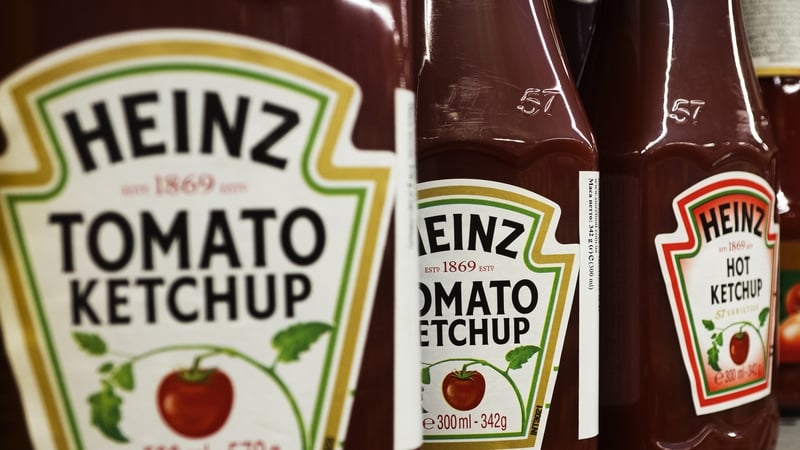
Kraft Heinz has named former Kellogg chief Steve Cahillane its new CEO, tasking the industry veteran with leading the packaged food giant through a planned split into two standalone companies after years of sluggish growth.
The company decided to break up in September into two units, one focused on condiments like Heinz ketchup and the other on grocery food brands like Oscar Mayer, after years of declining sales and as consumers have increasingly turned away from heavily processed foods.
Legacy food companies are also being challenged by upstart competitors often selling products at lower prices.
Cahillane, 60, joins a growing list of global consumer goods companies to make top-level changes this year. He begins his role on January 1, succeeding Carlos Abrams-Rivera, who will serve as an advisor until March 6.
In an interview with Reuters, he endorsed the company's split and said he had the right to improve upon those plans. "I'm looking forward to executing it, I think it's absolutely the right thing to do."
Cahillane is expected to serve as CEO of the sauces and spreads unit after the split, which aims to reduce operational complexity and improve focus on each business as high inflation and economic uncertainty hobble demand.
Some analysts have said the split may be a precursor to selling the condiments business - which is being referred to as the "taste elevation" unit - to another company.
Abrams-Rivera, who became CEO in 2024, was pegged to head the grocery unit after the split, which is expected to be completed by the second half of 2026. But Kraft Heinz said the board would initiate a CEO search for the business.
Shares of the company have lost about 75% of their value from a 2017 peak of $97.77, and are down nearly 30% since Abrams-Rivera took the helm in January 2024. The stock was up fractionally in trading yesterday.
The forward price-to-earnings multiple of its stock, a key valuation metric, is 9.73, compared to 17.67 for PepsiCo, 22.04 for Coca-Cola and Mondelez's 17.21, according to LSEG data.
Cahillane told Reuters he plans to fix the lack of organic growth that has led to the market discounting its valuation when compared with its peers.
Kraft Heinz had in October cut its annual sales and profit targets as budget-conscious consumers continued to prefer cheaper private label brands.
The sauces and spreads business had sales of about $15.4 billion in 2024, while the other company, which would consist of processed foods and ready-meal brands, had about $10.4 billion in annual sales.
Packaged food companies like Kraft Heinz have been under pressure from the rising adoption of weight-loss drugs and the "Make America Healthy Again" movement led by Health Secretary Robert F Kennedy Jr, who blames artificial ingredients for chronic childhood diseases.
"I think it (GLP-1 drugs) has an impact on the portfolio, there's no doubt about it," Cahillane told CNBC.
Cahillane had led Kellogg through its separation in 2023 and was CEO at Kellanova, the global snacking business, until it was acquired by Mars for about $36 billion this year. He has also worked with Coca-Cola and AB InBev.
"This move further fans investor speculation about Taste Elevation being a potential deal target," Jefferies analyst Scott Marks said in a note.
