
For a time it felt like the high water mark of 'unscripted TV' was the late 1990s and early 2000s.
That was when we had an onslaught of shows like Big Brother, Pop Idol, Who Wants to Be A Millionaire, Survivor, The Weakest Link and so much more.
But it turns out, we’re currently in the actual golden age of the programming category.
Because a lot of those older formats are still going today – but they’ve been joined by so many others in recent years. Think of the likes of Strictly Come Dancing (or Dancing with the Stars as it’s known in most countries), The Voice, Gogglebox and - of course - The Traitors.
And they’re now more important to broadcasters than ever – and extremely appealing to audiences too.
When you look at the weekly and annual lists of the most watched programmes – not just in Ireland, but in the UK and the US too – you now tend to see the same things always ranking well.
They are soaps, live sport, and unscripted programmes like reality TV and gameshows.
So why are they so attractive?
If you look at it from a broadcaster’s point of view – the TV landscape has changed dramatically in recent years. In fact it’s a totally different world now than it was even 20 years ago, when a lot of the unscripted formats we’re familiar with were just finding their feet.
For a start, it’s so much harder to get audiences to tune in live to TV. Audiences are increasingly watching their TV on demand - either on catch-up services or players, or as recordings on their set-top-box.
And that’s assuming they’re watching at all – because audiences have also become so much more fragmented than they were in decades before.
TV stations are now competing not only with each other for audience eyeballs – but also social media, YouTube and gaming. Not to mention all of the big, multinational streamers that are churning out new films and shows on a daily basis.
Simply trying to convince audiences that they need to sit down and watch something is incredibly difficult. Especially if they know they can just go back and watch it at any stage in the future.
But that trend doesn’t apply to a handful of things – for example sport. That’s because part of the enjoyment in that is watching it as it happens.
People will also want to tune in live to that so they’re in the loop when the match becomes the main talking point in work the next day – or even on their WhatsApp groups at that very moment in time.
And that’s the other thing – they’re compelled to watch it live because, if they don’t, there’s a good chance they’ll have the result spoiled for them before they get a chance to catch up.
And a good unscripted format follows the exact same pattern as sport. If a show is big enough to be in the cultural conversation, people are motivated to watch it live – because otherwise they’ll be out of the loop, or they’ll see something online to tell them who got voted out before they have a chance to find out for themselves.
That communal element is important too, though, isn’t it?
Definitely – because audiences are as aware as broadcasters that their habits have become fragmented compared to their friends or colleagues, or even immediate family. Many people will remember the shows that they used to sit down and watch with their siblings and parents – and it’s something that’s become much rarer in our viewing habits today.
So there’s a desire among viewers for formats that will bring people together – especially formats that have a broad appeal, and are of interest to younger viewers and older viewers alike.
And while that can mean everyone sitting down in front of the TV together, it can also be about tapping into the fun of having a running commentary over the group chat while the show is going out.
After all, who doesn’t enjoy blasting a mis-step in a Paso Doble while scoffing their special curry on the sofa?
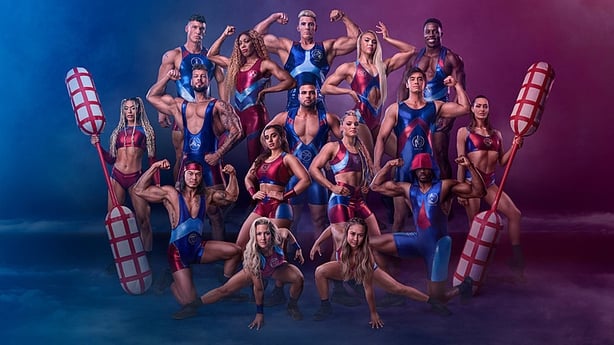
In a recent interview Kate Phillips, chief content officer at the BBC, said that reaching a broad audience was one of the key drivers in them deciding to revive Gladiators – which comes with an added element of nostalgia for certain people now.
This also explains why so many of the more modern reality TV show formats are so much kinder than what we saw 20 years ago.
Shows like The Weakest Link and X-Factor had nastiness baked into the format – but things like Strictly and The Traitors are nice by design… even when the themes may be around murder and deceit.
(Though it should also be said that part of the shift to niceness is down to some of the hard lessons learned from some of the more exploitative TV formats of the noughties).
Another key element of a good, modern format is that it’s fairly easy to understand and follow. After all, you don’t want a high barrier to entry, and you want audiences to feel comfortable in order to keep them coming back.
It helps too if it’s very clipable and memeable, so it has a second life on social media. And, on that, also it helps if it’s a format that’s easy enough to follow while second screening on a phone.
Can a broadcaster benefit beyond getting a good audience?

Yes - and this is how unscripted formats have become really important to broadcasters – and more attractive than other types of programming.
Because they’re not just ratings winners, they’re also potentially big money spinners in their own right.
Because if you come up with a TV format that does well, not only can you do well by making a successful show - you can also coin it by selling the format around the world.
Strictly is a great example of that. It’s owned by the BBC and, through their commercial arm BBC Studios, they’ve licenced the format out to around 60 other countries – including Ireland – under the Dancing with the Stars brand.
The US version just completed its 34th season – and its finale was watched by more than nine million people. It’s consistently been one of the most watched shows in the country, with its performance among younger viewers, who are much sought after by broadcasters, particularly strong.
However more often than not, especially here in Ireland, the format is not owned by the broadcaster - but instead owned by a production company.
The Irish rights to The Traitors, for example, are held by an Irish production company Kite Entertainment. So they would have pitched it to RTÉ, and then gotten commissioned to make the programme.
But even though RTÉ doesn’t own the format it can still benefit from the success of the Irish version - beyond the fact that it drew in big audiences. That’s because they, and Kite, will make money from any sales of the actual Irish series to other broadcasters. That includes the BBC, which has bought the Irish episodes with a plan to show it on their player and BBC Three.
The feeling is that the likes of The Traitors will sell well internationally because other broadcasters that make their own version will look to fill in the gaps between their series with foreign versions. (That’s the same reason why the RTÉ Player has series from the UK and US available to viewers here.)
And that revenue is sure to be welcome, because these kinds of shows are expensive to make…
Absolutely.
TV in general is very expensive to make, but it’s particularly expensive to get a format up off the ground. That’s because it involves a lot of investment in new sets and props, and it generally requires a huge team of people to actually film, edit and produce what the viewers see.
So it’s a really high-risk endeavour.
Broadcasters will try to manage that risk in a couple of ways – like adopting a format that has proven to be a hit in other markets. Adopting one that they think will also sell abroad helps too.
There’s also the use of product placement. We saw a bit of that with The Traitors recently; meanwhile the US version of Dancing with the Stars went a step further, with themed Disney, TikTok and Wicked nights through its recent series.
Broadcasters are also increasingly sharing resources. For example when the BBC first picked up The Traitors, it did so as a co-production with NBC – which ultimately broadcast the US version.
Both used the same Scottish castle – with the same sets and props – which allowed them to split a lot of the production costs.
Perhaps the most extreme version of this resource-sharing was a show called Total Wipeout in the UK. It was a contest built around a water-based obstacle course, and ran on the BBC for around 10 years.
But the set it used was actually in Argentina – and broadcasters would book it out for a period of time, ship their crew and contestants over, and film their series. Once they were done, another broadcaster would move in and do the same.
Something like 40 different versions of the show were made using that one location in Argentina. ITV’s I’m A Celebrity does a similar thing with its Australia-based location.
And it should be said that Ireland has been a beneficiary of this kind of format tourism.
People may remember earlier this year when the actor Rob Lowe revealed that the game show he hosts – The Floor – which features American contestants and airs on an American channel - is actually filmed in Ireland.
He was talking in the context of the rising cost of Hollywood productions, and said it was now cheaper for a US studio to ship an entire show – contestants and all – over to Ireland to film it here, than doing it in LA.
And the incentive to do this will have gotten bigger in recent months, because in last year’s budget the Government announced a corporation tax credit for unscripted TV productions. That was approved by the European Union earlier this year and could reduce the tax bill of a production by up to €15m – so very attractive to producers.
So who makes the best formats?
The Dutch are heavy hitters in this realm.
The Traitors is originally a Dutch format, for example – called Der Verraders.
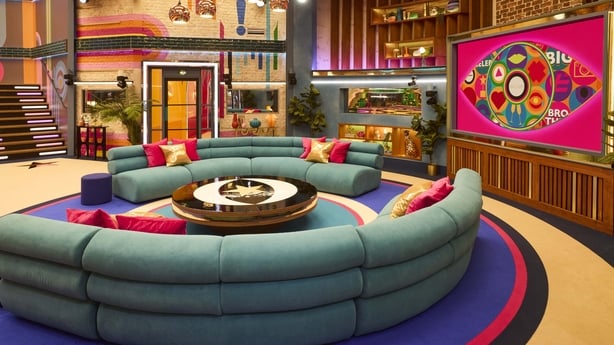
Big Brother originally aired in The Netherlands too, so did The Voice. Deal or No Deal also comes from there, as does that Rob Lowe gameshow The Floor – which has more than 20 versions internationally.
Britain has been a good source of global formats too, of course.
They’ve given us the likes of Bake Off, I’m A Celebrity, The Weakest Link, Who Wants to Be a Millionaire, Gogglebox – and, of course, Strictly.
And America has had plenty too – like Next Top Model and Ru Paul’s Drag Race, not to mention The Apprentice.
But despite its size the US seems to struggle to create formats that export well – they also seem to struggle to create the kind of kinder and more gentle programming that’s in demand today.
We’ve clearly imported a lot of exports – has Ireland exported any?
Yes we have had a few successes on the global format scene.
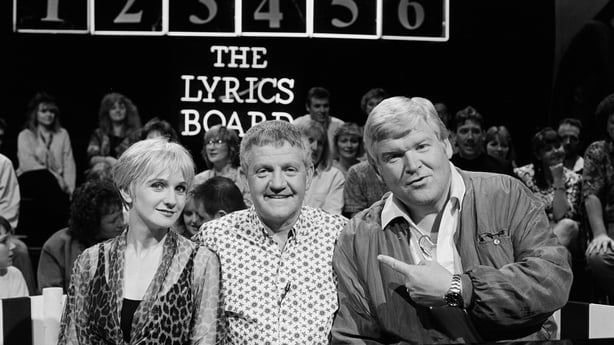
The Lyrics Board is one that comes up time and again – it first broadcast on RTÉ in 1992, and was made by a production company called Like it Love It.
In the years that followed the format was exported to 25 other countries. The Norwegian version, called Beat for Beat, is still going to this day – and apparently still a big ratings winner.
More recently, Ireland’s Fittest Family has also had some success abroad.
It’s made by Kite Entertainment – the same company that made The Traitors here, as well as the Irish version of Gogglebox on Virgin TV.
Fittest Family has been picked up in a number of countries including Germany, Sweden, Chile, Croatia and Slovenia.
But even if a show is extremely popular locally there’s not always a guarantee that the format will get picked up globally.
For example the Tommy Tiernan Show is regularly a ratings winner here – but he’s spoken before about the fact that absolutely no other broadcasters seem interested in trying to replicate their ‘secret guest’ concept that has worked so well with Irish audiences.