


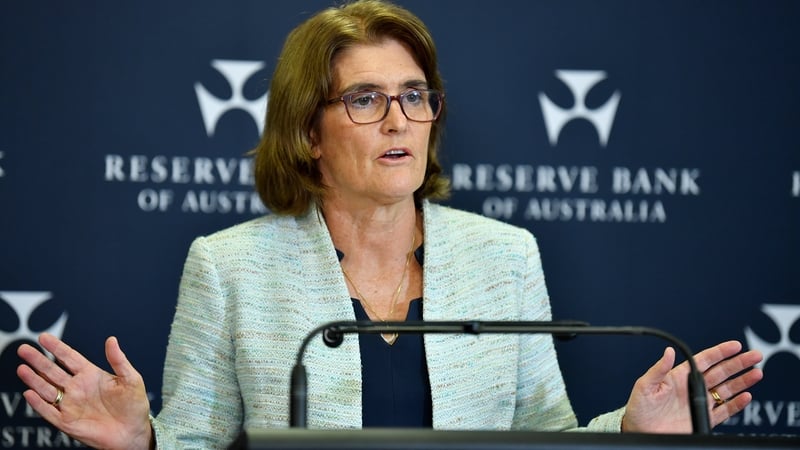
Australia's central bank has today ruled out further policy easing after holding interest rates steady at 3.6%, warning the next move could be up if inflation pressures prove to be stubborn.
Wrapping up the last policy meeting of the year, Governor Michele Bullock said the board did not explicitly discuss the case of a rate hike, but it did discuss the circumstances under which rates might need to be raised again.
"What I would say at this point is what we know at the moment, I don't think there are interest rate cuts in the horizon for the foreseeable future," Governor Bullock said at the post-meeting press briefing.
"The question is - is it just an extended hold from here, or is it a possibility of a rate rise? I couldn't put a probability on those," she added.
Investors have brought forward bets for rate hikes next year, with a move in February seen as a 28% probability, while March has moved closer to 50%. There is a total tightening of 47 bps expected next year, equivalent to two rate hikes.
"The recent data suggest the risks to inflation have tilted to the upside, but it will take a little longer to assess the persistence of inflationary pressures," the RBA board said in a statement.
"There are uncertainties about the outlook for domestic economic activity and inflation and the extent to which monetary policy remains restrictive," it added.
The Reserve Bank of Australia has cut interest rates three times this year but inflation is rearing its head again, having climbed for four months in a row to 3.8% in October. The trimmed mean measure of core inflation ran at 3.3%, above the mid-point of the target band of 2%-3%.
The board said there is uncertainty about how much of a signal the new monthly CPI numbers provide.
"Nevertheless, the data do suggest some signs of a more broadly based pick-up in inflation, part of which may be persistent and will bear close monitoring," the statement added.
The economy, which could be running near its speed limit, grew at the fastest pace in two years last quarter, fuelled by spending by businesses, governments and consumers. The labour market also stayed resilient, with the jobless rate edging lower to 4.3% in October, from 4.5%.
The mood among consumers, long stuck in the doldrums, has turned positive in a boost to the outlook for household spending. Home prices surged to new record highs, home loan growth jumped and upbeat stock markets suggest that financial conditions might not be as restrictive as previously thought.
"Our sense is that it won't take much for the RBA to respond to evidence of a more persistent inflation trajectory," said Sally Auld, chief economist at the National Australia Bank.
"For now, we see the RBA on hold next year, but February is now a live meeting should forthcoming inflation data on 7 and 28 January validate the RBA’s fears," she added.
