
Bertie Ahern's famous economic analysis that the "boom is getting boomier" is an apt description for what is happening in Ireland now.
This week, a range of indicators showed activity in the multinational sector is moving at a breakneck pace now that the threat of US tariffs has receded.
An astonishing rise in pharmaceutical exports is part of the story, much of it from US drug company Eli Lilly's plant in Kinsale, Co Cork.
"Almost all of the €40 billion surge in pharmaceutical exports from Ireland to the US in the first five months of 2025 was due to the active ingredient for Eli Lilly’s blockbuster weight-loss drugs, manufactured in Ireland," according to watchdog the Irish Fiscal Advisory Council.
Of the top ten pharmaceutical companies globally, eight have operations in Ireland. It means the country is the third largest exporter of drugs in the world.
"The new drugs, which are really profitable, are produced here and exported not just to the US, but to the rest of the world," says Trinity College adjunct professor John FitzGerald.
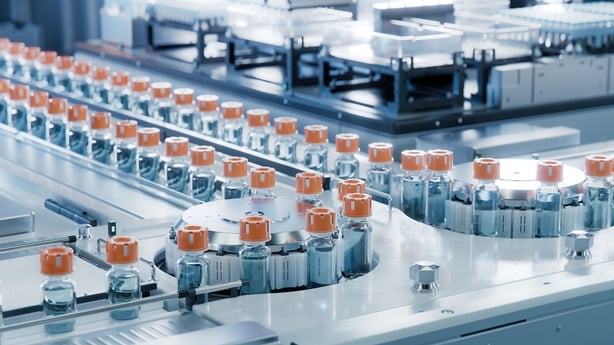
Many observers believed a huge rise in pharmaceutical exports at the start of the year was driven by large drug companies shifting product to the US ahead of the imposition of the Trump administration’s tariffs.
However, the elevated level of exports has continued throughout 2025 and drugs have remained tariff-free despite US President Donald Trump's multiple threats.
One reason is a deal Pfizer agreed with the White House recently to sell some products at huge discounts directly to US consumers from next month through the Trump administration's website TrumpRx.
It addressed one of President Trump’s bugbears - that American consumers are paying too much for drugs.
In return, Pfizer will not be subject to tariffs for the next three years. AstraZeneca reached a similar deal and others are expected to follow suit.
But multinationals in the technology sector, too, are delivering a huge increase in exports.
The part of the Irish economy dominated by foreign-owned companies grew by a stratospheric 31.2% in the first nine months of this year compared to the same period last year.
It means Gross Domestic Product, the measure of the economy which includes multinationals, ballooned by 15.8% in the same period.
As a result, the amount collected in tax from foreign-owned companies is soaring.
Figures this week showed €10 billion was paid in corporation tax in the month of November alone. That was more than the State collected in an entire year just a decade ago.

"There is a promise of even more to come next year because the corporation tax receipts are based on what happened the previous year," said Professor FitzGerald.
"So the fact that multinationals are doing great this year means corporation tax receipts will be up next year," he added.
The bonanza flooding into the public finances won’t last forever, but is the Government using it wisely?
The Irish Fiscal Advisory Council calculates the proportion of that money being saved is falling, with only 15% being set aside next year - down from more than 30% this year.
"Given the Government is collecting huge amounts of corporation tax, it has an opportunity to save today to prepare for future challenges, like an ageing population and climate change," the Council said.
The worry that the Coalition is overly reliant on this money for day-to-day spending is going far beyond Budget Day commitments.
The fact that the multinational sector is booming doesn't necessarily benefit everyone on the ground.
But the latest figures from the Central Statistics Office show the domestic economy is also healthy, with growth of 4.1% in the first nine months of 2025 and consumer spending up 2.9%.

The State has collected more money in income tax and VAT than it expected so far this year indicating that the jobs market remains strong and the broader economy is in good shape.
Economically, Ireland is performing exceptionally well.
The question is whether the Government, while in the fortunate position of being the envy of other countries with the resources at its disposal, is squandering a golden opportunity to make Ireland a better place for the future.