
Five years ago Jacob and Harley Nelson – better known as the Spud Bros – took over the running of their family's baked potato-focused food truck business in Preston, England. They quickly became something of a viral sensation.
Today have around 4.8 million followers on TikTok, more than a million on Instagram, and they’ve set up outlets in multiple locations around the UK on the back of that success.
But the pair recently hit the headlines for a far more negative reason – after they were accused of trying to stamp out the competition.
It emerged that another potato-based food truck, the Spud Father in Portsmouth, had gotten a legal letter ordering it to stop using its name, because it had been trademarked by the Spud Brothers. This was a threat to the business, according to the Spud Father team, because of the money they had spent developing menus, signage and marketing materials using that name.
What came next was an inevitable internet pile-on directed at the Spud Bros – with many accusing them of trying to stamp out a smaller rival.
But they quickly came back in an attempt to clarify the situation, They said they weren’t threatening legal action against anyone, but they lodged a trademark for Spud Father. This, they said, was a reference to their dad – and the name was also used on one of their menu items.
Taking this kind of protection on a name was standard practice, they said – in fact they pointed out that their lawyers only became aware of the issue when the Spud Father team themselves tried to lodge a trademark of their own. And, the brothers pointed out, had the Spud Father simply run a trademark check at the start of the process they would have spotted the issue before they incurred any costs or stress.
Last month the Spud Father team announced they had changed their name to Spud Fusion – so that should settle the matter. Though there are a lot of people who clearly feel like the Spud Brothers weren’t playing nice against a smaller competitor.
And the case once again highlights the thorny issue of trademarks and copyright enforcement. Something that happens a lot in the world of food.
What other big trademark battles have we had?
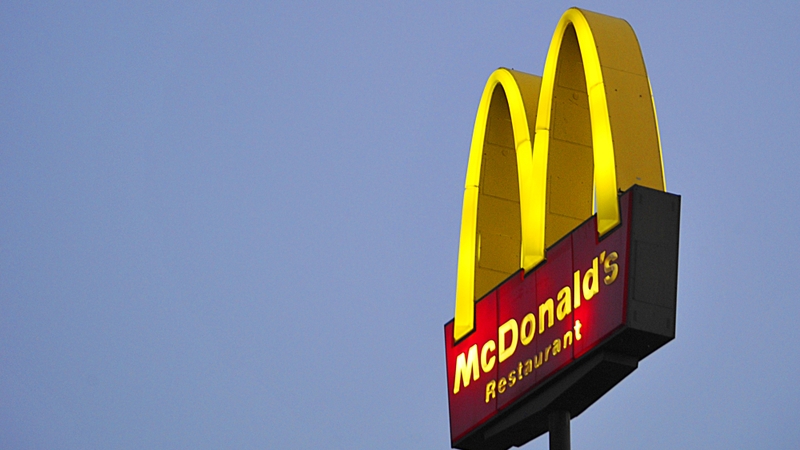
One that’s close to home – and a real David Vs Goliath story – is Supermacs vs McDonalds. And this case took decades to resolve.
Its origins go back to the mid-90s, when McDonalds first registered trademarks like 'Big Mac’ in Europe. In the years that followed it also sought an automatic trademark on using the ‘Mc’ prefix on a long list of food, drink and restaurant services.
What’s striking about that is how it took them so long to try and get those kinds of trademarks. McDonalds started opening outlets in Europe in the 70s and the first one in Ireland opened on Dublin’s Grafton St in 1977 - a year before the first Supermacs opened in Galway.
Regardless of that, in 2017 Supermacs applied to the European Intellectual Property Office asking for McDonalds’ trademarks to be revoked.
It accused the US chain of ‘McBullying’ - using trademarks to try to limit and pressure rivals. For example it said McDonalds had registered the trademark ‘snackbox’, even though that wasn’t a product it sold (though it is one Supermacs sold). And it said their trademarks were stopping it from expanding into other European countries under its own branding.
Supermacs’ legal case essentially centred on two points – firstly, that thee ‘Mc’ prefix is quite common in Ireland and the UK, and elsewhere. As a result there are many businesses, like pubs and restaurants, that use a ‘Mc’ surname. The idea, they said, that any company could lay claim to that was silly.
It also argued that McDonalds never used the ‘Mc’ prefix on its own – it was always in conjunction with another word. After all, it’s not a ‘Mc Chicken Nugget’ – it's a ‘McChicken Nugget’.
And its argument was successful – McDonalds lost the blanket trademark on ‘Mc’ in 2019, and then last year it also lost the exclusive right to the name ‘Big Mac’ as the court found that it had not made genuine use of it in the previous five years.
So now the way is clear for snackboxes and curry chips to sweep across continental Europe.
Why is food such fertile ground for trademark cases?
Ultimately the idea of a trademark is to let customers know who made a certain product and the most obvious way that that can be done is with a logo or a brand name.
But there are other ways that brands and products can be identified, and things can get a bit fuzzy once you get into those details. A company might launch a trademark infringement case if they feel another brand is getting too close to the look of their products – be it the product itself, or the packaging – or even the colour scheme.
For example, back in 2011 bread-maker McCabridge took a case against Brennans over a wholewheat bread product it had brought out. McCabridge’s contention was that the packaging was too similar to its own, and could confuse customers.
In the end the court did side with McCabridge, but its claim that Brennans had intentionally set out to copy its design was dismissed.
Last year in the UK Tesco was forced to change its marketing material relating to its Clubcard pricing – because of a case taken by Lidl.
Tesco had been displaying the Clubcard price with a yellow circle on a blue background – which was deemed to bear more than a passing resemblance to Lidl’s logo.
But the discounters are often on the receiving end of these trademark cases – given how close their own-brand versions often sail to the branded product they’re "inspired" by.
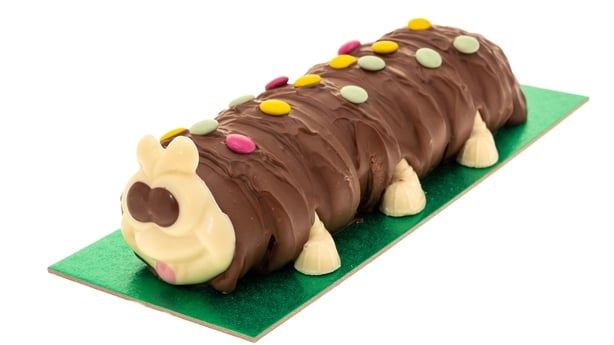
Aldi has had its fair share of trademark cases over the years – most notably the infamous Colin versus Cuthbert case, where Marks and Spencer accused Aldi of copying its Colin the Caterpillar cake.
In the end a truce was called and both continue to sell their own caterpillar cakes (so do many other retailers, it should be said).
M&S also took a successful case against Aldi over a light-up gin bottle, while cider-maker Thatchers won a case relating to its drinks. Fruit drink maker Robinsons has taken a trademark infringement case against the retailer, while in the US Oreo-maker Mondelez has recently lodged a case. And in Australia a court said Aldi were guilty of a ‘flagrant’ infringement relating to a baby food brand there.
What about the row between Gucci and Guess?
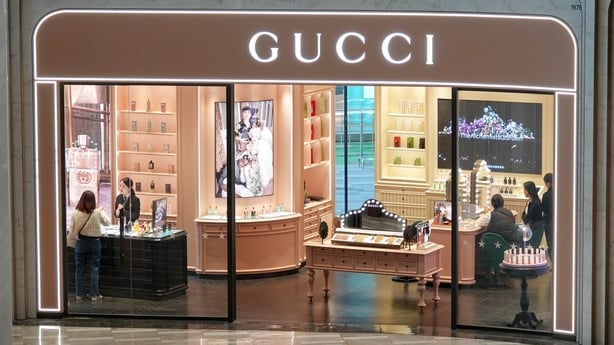
This one goes back to 2009 and it was a far more visual case than these things often tend to be. It was focused on product designs and logos rather than names and prefixes.
First and foremost, clearly, both brands’ names start with a ‘G’ - and that was one of the elements of the dispute.
Because Gucci’s logo is two interlocking Gs – and it took issue with Guess bringing out some products which also featured interlocking Gs as part of the branding.
The dispute quickly expanded beyond that, though, to a number of other products – including a pair of shoes that, it has to be said, bear more than a passing resemblance to the Gucci version.
Gucci claimed this copy-cat behaviour was hurting its sales, and it initially went looking for $221m in compensation... in the end it got less than $5m.
The European Intellectual Property Office also ruled against its claim that the interlocking ‘Gs’ on some Guess products were problematic – the office said because Guess used four ‘Gs’ as opposed to Gucci’s two; and the Guess logo looked more like an abstract pattern as a result, rather than a copy of Gucci.
Ultimately the two brands reached an agreement to settle all cases globally – the exact terms of that deal were kept confidential though.
Often these cases come down to something as simple as a name…
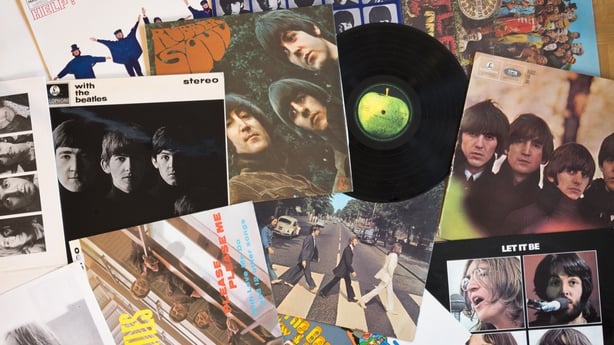
This was a very long-running dispute between Apple Computers and Apple Corp – the record company set up by the Beatles.
They initially sued Apple Computers in 1978 – two years after the computer company was formed – saying their name infringed on their brand.
In 1981 the case was settled – with Apple Computers paying Apple Corp $80,000. They also agreed to stay out of the music business; and Apple Corp promised to stay out of the computer business.
But the dispute reignited just a few years later – when Apple added music playing and recording capabilities in one of its computers. Apple Corp said it violated their agreement, and sued again.
And that clearly put Apple’s legal team on edge.
In 1989 they blocked the use of a chime notification that an engineer had created for the operating system because it was ‘too musical’. In the end they created a new, much more blunt notification and called it ‘sosumi’ as a jab against the record label.
Eventually the second suit was settled – this time with Apple Computers paying out $26.5m. A new agreement was struck meaning Apple products could "reproduce, run, play or otherwise deliver" music – but they had to steer clear of actually making or releasing actual music products, like albums or singles.
But when Apple launched the iTunes Music Store in the early 2000s, Apple Corp sued once again – claiming breach of contract.
This time, though, the court found in favour of the computer company – and ordered the record label to pay them costs.
And the bad blood between the two sides seems to have been fully put behind them now – The Beatles launched their back catalogue on Apple Music, and other streaming platforms, ten years ago this year.
As an aside – this row did also give us one of the great cultural moments of the internet age. It was the Apple v Apple dispute that led BBC News to accidentally bring taxi driver Guy Goma on-air as a supposed tech expert in 2006, which became a meme that still lives on to this day.
Which one of the Kardashians had a high-profile trademark dispute?
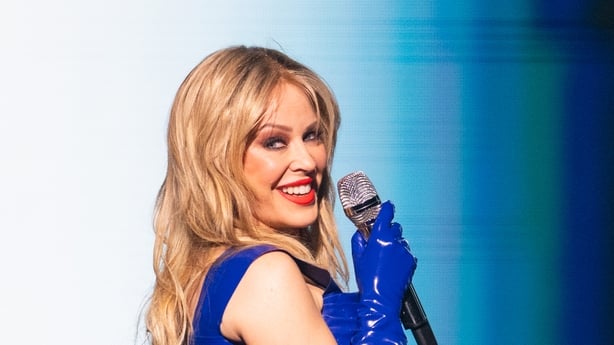
Kylie Jenner became subject to a trademark dispute after she tried to register the rights to her name in 2015. She launched her Kylie Cosmetics shortly afterwards.
But lawyers for the other - many would say original - Kylie, Kylie Minogue, filed their opposition. And their submission was fairly damning.
It said Kylie Minogue was an "internationally renowned performing artist, humanitarian and breast cancer activist" – and pointed out she already owned Kylie-related trademarks, and the website kylie.com.
Meanwhile Kylie Jenner, they said, was "secondary reality television personality" who engaged in "photographic exhibitionism and controversial posts" on social media.
In the end Minogue was successful in blocking the trademark – afterwards she said she’s spent her whole life building her brand so it was just something she had to do.
Kylie.com was an important part of Minogue’s case – but a website was also at the heart of a different trademark royal rumble…
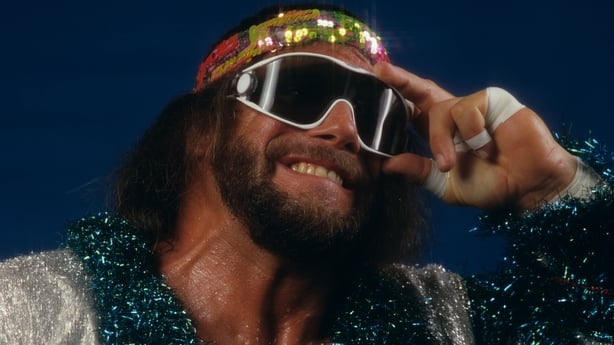
This was the battle of the WWFs – the World Wrestling Federation and the World Wildlife Fund for Nature.
The wildlife fund trademarked the acronym all the way back in 1961 – the wrestling company pre-existed that but under a different name; and only became the World Wrestling Federation in 1971.
The wrestlers did file their own trademark, which the wildlife fund tried to block – and eventually the two sides struck a shaky truce in the late 1980s.
They then followed that up with a new deal in 1994, with the wrestlers essentially promising not to write out the acronym, or even say it – outside of limited cases. Their logo was still made up of the letters ‘W-W-F’, but the fund was okay with it because they felt like it looked like it said ‘WF’.
And that deal held for a few years – but the row kicked off again in the late 90s, when the wrestlers changed their logo – and registered the domain ‘WWF.com’.
This prompted the fund to launch a new lawsuit in 2000 – which ultimately led to the wrestlers tapping out, and rebranding the company Word Wrestling Entertainment, or WWE.
But it took some time for everything to be settled – because, for example, there were DVDs and video games in production at the time of the ruling, that still used WWF.
The wrestlers were also initially legally required to blur and bleep out references to WWF in any archive footage they published – which became a bigger issue as they started making more and more old content available digitally.
However a deal struck a little over a decade ago means they don’t have to censor the old footage anymore.
By the way, the wrestlers were required to give up the wwf.com domain name but they weren’t required to hand it over to the fund. They let it lapse in 2002 and someone else managed to snap it up before the wildlife charity got their hands on it.
As things stand it’s registered to someone in the Bahamas, but there’s no website at all to see at the address.