


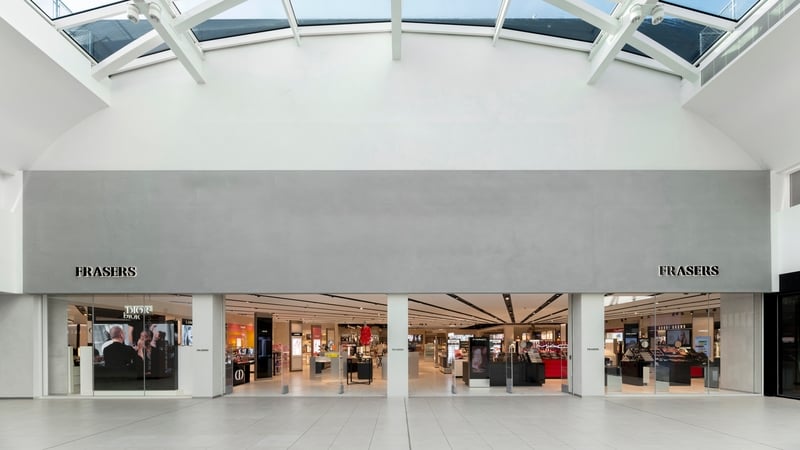
Frasers, the British sportswear and fashion retailer, said market conditions were tough, consumer confidence very subdued and excess inventory was weighing on the industry as the company reported a 2.8% fall in first-half profit.
The FTSE 100 group, majority owned by Mike Ashley, did, however, reaffirm its full-year profit forecast, saying its strategy was working.
Frasers' shares were down 2% today, paring 2025 gains to 16.4%.
The group, whose brands include Sports Direct, House of Fraser and Flannels, said while trading had improved compared with last year's government budget-affected period, it was still weaker than the same period in its 2023/2024 year, with excess inventory in the sector leading to increased promotional activity.
Official data published last month showed British retail sales tumbled in October, while a closely watched gauge of household sentiment fell this month, adding to signs of waning consumer spending ahead of finance minister Rachel Reeves tax- raising budget last week.
Frasers' chief financial officer Chris Wootton said constant speculation of various government measures in the run-up to the budget was "incredibly annoying".
"It would be a lot more helpful if it wasn't so chaotic," he told Reuters.
Frasers made adjusted profit before tax of £290.9m in its first half to October 26, on revenue up 5% to £2.58 billion.
It said Sports Direct performed well, while margins strengthened in the premium and luxury division, particularly at Flannels.
The group is pursuing what it calls an "elevation strategy", focused on strengthening relationships with brands including Nike and Adidas, development of its own brand business and investment in flagship stores, automation, online and expansion overseas.
Frasers has also built significant stakes in a raft of other retailers, including Hugo Boss, AO World, Mulberry, ASOS and Debenhams.
For the full-year, Frasers, which has more than 1,500 UK stores, expects adjusted pretax profit of £550-600m, which compares with the £560m it made last year, helped by plans to offset higher costs with efficiencies.
