Despite soaring taxes flowing into the Government's coffers from US multinationals, the State's fiscal watchdog says the proportion of the windfall revenues being set aside by the Cabinet is falling.
In a stark warning, the Irish Fiscal Advisory Council (Ifac) says the Government was "budgeting like there's no tomorrow".
It says there are no budgetary forecasts beyond 2026 and the Government has yet to submit a revised medium-term fiscal plan to the European Commission.
Ifac says Government needs to move away from year-to-year budgeting.
Moving to multi-annual budgeting would give government agencies more certainty over their future funding, it says. This would aid better planning and delivery of public services.
Ifac says the share of corporation tax that is being saved will drop from 32% this year to 15% in 2026.
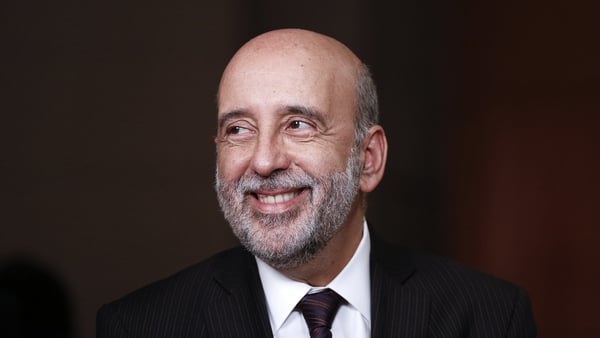
The council's chairman, Seamus Coffey, said the "Government plans to run a smaller surplus next year".
The watchdog warns that spending is set to grow by over 11% in 2025, which it described as "much faster" than was sustainable.
It also said that expenditure was rising quicker than tax revenue, leading to an underlying deficit of €7 billion this year and deteriorating to €14 billion next year, when volatile corporation tax receipts are excluded.
The taxes paid by a small number of large US multinationals are seen as a highly unreliable source of revenue but are being used to sustain day-to-day spending.
Watch: Taoiseach says Govt putting 'substantial funding aside'
The watchdog is also highly critical of the Government's track record on adhering to expenditure limits announced on Budget Day.
The Fiscal Council said: "Spending forecasts have been repeatedly revised up."
It said expenditure in 2025 will be €12.5 billion more than the €96.6 billion set out in the Budget in 2024.
It said the previous government published limits on growth in spending to 5.1% for this year and 6.5% for next year.
But spending is now expected to be 8.6% and 7.7%, respectively.
Tánaiste says medium-term economic plan 'number one priority'
In response to the report, Tánaiste Simon Harris said his "number one immediate priority" as Minister for Finance is to produce a medium-term economic plan.
Mr Harris said he intends to have this work completed by the end of the year.
He said there is a need to move beyond "the temptation for short-termism" and "to anchor both our spending and taxation plans for the years ahead in this medium-term framework".
The Minister for Finance said he held a "really good meeting" with Ifac last week and welcomes the council's analysis and input.
Meanwhile, Taoiseach Micheál Martin said the Government is putting "substantial funding aside", adding that the Opposition wants the Government to spend "like there's no tomorrow".
However, Mr Martin said that the "level of expenditure in the last number of years has been high".
He said recent spending has come in response to the Covid and energy crises along with the growth in population and tariff issues.
The Taoiseach added that the bulk of future spending is focused on capital expenditure.
Watch: Harris says medium-term plan to be completed by end of year
Government making extremely expensive decisions, says Sherlock
Labour leader Ivana Bacik has said that Ifac has pointed out that the Budget is a "work of fiction".
"You don't even have a fiscal plan beyond next year," she told Mr Martin during Leaders' Questions.
"Were you a CEO coming before a board of directors, it's hard to see how you would be allowed to continue in your role."
Ms Bacik said the report provides further evidence regarding the Government's "failure to plan for the future".
In response, Mr Martin said Ifac produced a research note on the effect of US tariffs, in which it said there has been "permanent increase in activity here".
Mr Martin said the Government will be submitting a medium-term fiscal plan to Europe.
"We do have to get it right," he said.
He added that the plan needs to reflect reality and population growth.
Meanwhile, Labour TD Marie Sherlock said that Fine Gael is "lurching from budget to budget with no clear plan".
Speaking on RTÉ's Today with David McCullagh, she said: "I think the key thing here is it's extraordinary that Fine Gael, who trade on being prudent, effectively are lurching from budget to budget with no clear transparency or no clear plan."
"For me, the critical thing here is not what you're spending, and that's obviously important, but how you're spending it.
"I think many people this morning will be wondering, with the record levels of spending going on in our economy at the moment, what does this Government have to show for it?
"The reality is Government has been making extremely expensive decisions."
Ms Sherlock described Government spending in areas such as health, housing and hospitality as "financial recklessness".
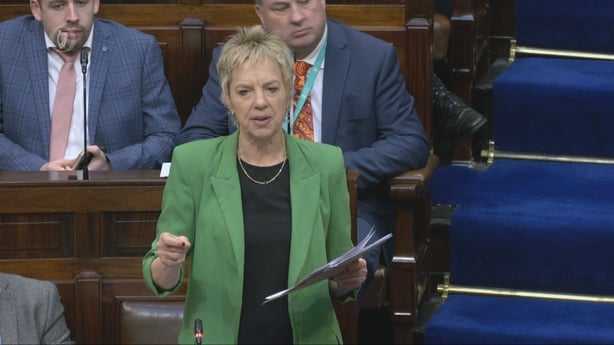
"In taxation, the Government made a decision to effectively put money into some major, big businesses. The VAT cut that we saw in this Budget was effectively, the bigger the business, the more you got," she said.
"That is financial recklessness in our view, and not looking after the businesses that it should be looking after, which is small and medium cafés and restaurants in our towns and villages."
Ms Sherlock said that this would lead to bigger problems down the line if no changes were made.
"The critical thing here is that if we don't spend properly now, then we're storing up even greater problems or greater expenditure in the future," she said.
Ifac chair questions Govt over lack of fiscal plans
Mr Coffey has said that he does not accept the Government's reasoning for not producing a medium-term fiscal plan to the European Commission.
Speaking on RTÉ's Morning Ireland he said: "There should be plans setting out just over a period of four or five years. All EU countries were required to produce more in the last year and pretty much most EU countries did.
"It's a requirement under EU legislation to publish that. Even if there is uncertainty, we should be able to set out a sort of a baseline scenario, what we think is happening beyond the end of next year.
"We have a budget that does not have figures for 2027," he added.
Mr Coffey said that there was a "lack of credibility" in the Government's figures.
We need your consent to load this rte-player contentWe use rte-player to manage extra content that can set cookies on your device and collect data about your activity. Please review their details and accept them to load the content.Manage Preferences
"Some of it is due to overruns in various departments like Health and Education. We can see the pressures building up in those areas and they should be more fully accounted for," he said.
"Some of it is to do with within-year policy decisions, where there are changes made to the amount of spending that happens and some of it is due to an inability to include things we can see coming.
"Last week, we saw the Government put through €2 billion of supplementary spending estimates for 2025. We're in November and we still don't have the figure for 2025.
"We're trying to work out what the budget is for 2026, and the Government has no numbers for 2027."
Mr Coffey said that current spending undermined the credibility of the budgetary process.
"It completely undermines the limited figures the governments are putting into their budgets," he said.
"It's not to say that this spending is anyway incorrect, but if we're going to do it, put it into the budget from the start and also ensure that it is funded on a sustainable footing.
"That isn't fully clear given the reliance we now have on corporation tax."