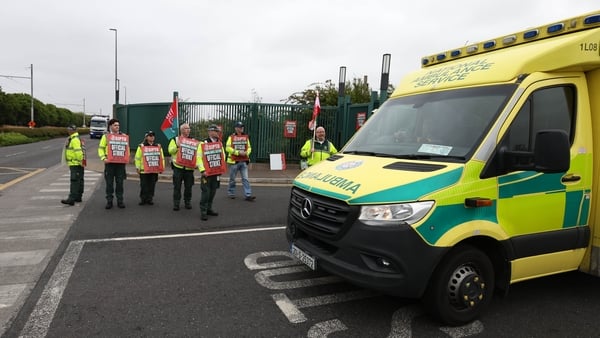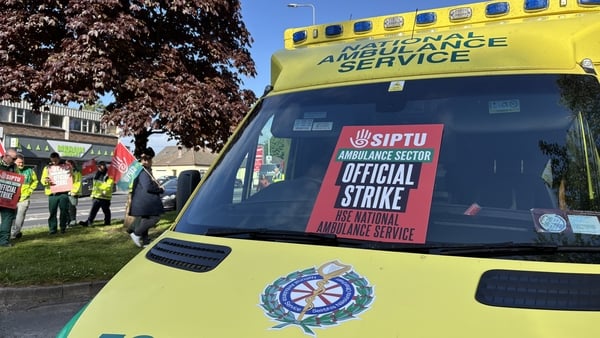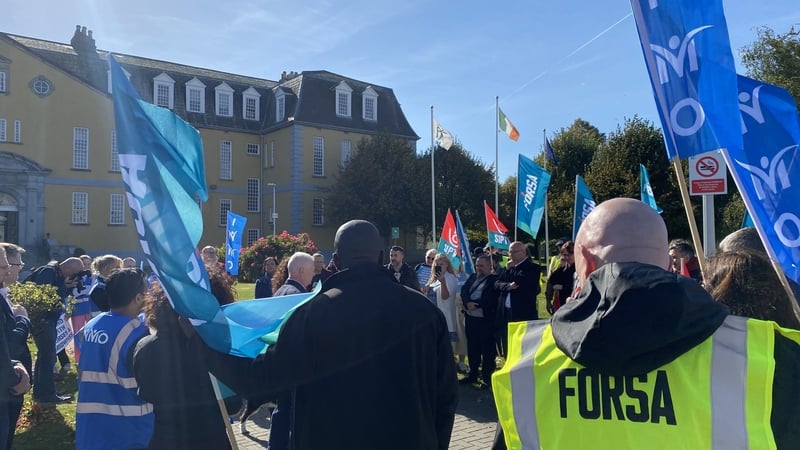

The Irish Nurses and Midwives Organisation and Fórsa are balloting healthcare workers for industrial action in a dispute over staff shortages.
A series of lunchtime protests have been staged by healthcare unions in recent weeks to highlight recruitment restrictions in the health sector which they say are putting patient services under enormous strain.
The unions said that the Health Service Executive's recruitment moratorium means that thousands of unfilled vacancies have effectively been scrapped, resulting in staff shortages that are having a detrimental impact on patient care.
According to the INMO, many nursing posts in cancer, palliative, paediatric and rehab care are being left vacant.
The union said this is leading to increasing demands from HSE management on staff to work on days off, stay on for significant unpaid periods after a rostered shift ends and deal with increasing levels of frustration from the public who are waiting longer for services.
"Care that is provided from the start of life until the end is now compromised due to the HSE's so-called recruitment caps, which are a moratorium by any other name, nursing posts are remaining vacant in hospitals and in the community right across the country," said INMO General Secretary Phil Ní Sheaghdha.
Speaking on RTÉ's Today with Claire Byrne, Ms Ní Sheaghdha said that members were absolutely terrified that they will not be able to provide safe care.
We need your consent to load this rte-player contentWe use rte-player to manage extra content that can set cookies on your device and collect data about your activity. Please review their details and accept them to load the content.Manage Preferences
"It is unfortunate that it is down to the workforce again to blow the whistle and say, 'You know what? This is unsafe. This is the wrong strategy'. We need to do better, and that's why we're calling, for example, for HIQA to be given legislative power to determine what is the appropriate safety critical measurement of staff that is required, not the employer."
Ashley Connolly of Fórsa’s Health and Welfare division said continuing employment restrictions in the health sector are putting patient services under enormous strain.
"Health workers are determined to take a stand, because they experience, first-hand, the negative effect it’s having on waiting times," Ms Connolly said.
The HSE described the action as "regrettable" against the background of additional funding for the health service.
It said that its Pay and Numbers Strategy has enabled it to stabilise its workforce numbers and also allowed it to increase to 129,000 whole time equivalent staff by the end of 2024 (excluding disability services), which it said was unprecedented.
"We welcome the additional developments to be funded in 2025, which will add additional HSE staff to our overall workforce," a HSE spokesperson said.
"Each of the six HSE Health Regions and each national service has now been provided with its own specified number of whole time equivalent staff, and can within that approved number, replace and recruit staff according to the priorities in their regions."
"Against the background of such funding it is regrettable that the unions have given notice of protests, and of their intention to ballot," the HSE said.
The Department of Health said that an additional 1,729 staff have been hired to date this year by the HSE, including 1,338 nurses and midwives.
"As of August 2024, there were 27,901 more staff working in our health service than there were at the beginning of 2020," a spokesperson said.
"This represents a 23% increase, which includes 9,375 nurses and midwives, 6,184 management and administrative staff, 4,092 health and social care professionals, and 3,330 doctors and dentists among other groups."
"The recruitment pause that had been in place was lifted in full on 15 July of this year and any obstacle to normal recruitment or replacement of staff, within agreed whole time equivalent limits, has been removed," the Department said.