


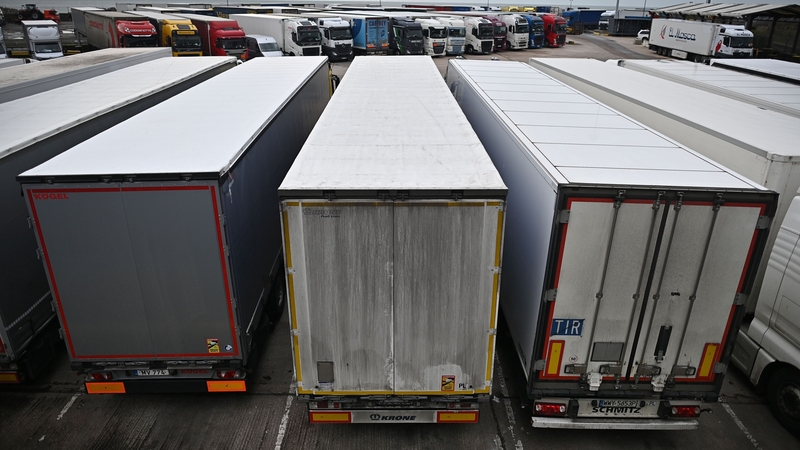
New post-Brexit customs checks belatedly come into force tomorrow for animal and plant products arriving in Great Britain from the European Union following several postponements by the British government.
Here are five things to know about the controls following Britain's formal departure from the EU in January 2021 - and which businesses fear will increase costs and cause supply shortages.
Changes to controls
Currently, sanitary and phytosanitary certificates are compulsory for animal and plant products arriving from the EU that are deemed "medium" and "high" risk.
These include types of dairy products, meats, flowers, plants, wood and aquatic animals.
From tomorrow, the controls will be toughened, with border checks at ports.
The British government has postponed such rules on five occasions since Brexit came into effect, concerned of their impact on the economy.
The latter has struggled in recent years for various reasons, including the Covid pandemic and soaring inflation.
By contrast, the 27-nation European Union has already toughened controls on goods arriving from the UK - and many analysts have also blamed Brexit as a reason behind the UK's sluggish growth.
Minimum checks
The UK government has said that while the new border checks will start tomorrow, they "will be scaled up to full check levels in a sensible and controlled way".
The long-term objective is to inspect each shipment of "high-risk" products and up to 30% of goods classified as "medium risk".
Ahead of the changes, several professional organisations contacted by AFP said they expected very low levels of targeted controls at the start.
The checks won't impact on goods moving from Irish ports to Great Britain. That's because there are different implementation dates for ports on the west coast of Britain, as the infrastructure needed is still not in place.
An announcement on a date for physical checks for those locations will be made shortly but in order to provide traders time to prepare these checks the British government has said they will not be introduced before Spring of next year.
Cost to business?
An importer will have to pay up to £145 each time it takes delivery of goods arriving at the ports of Dover and Folkestone on England's southeastern coast.
"This really impacts much more massively upon small and medium-sized businesses", William Bain, head of trade policy at British Chambers of Commerce, told AFP.
Such companies face paying an extra £300 per shipment of goods when the cost of certificates is added, according to Bain.
The UK government has stated that the country could face total additional costs of £330m a year on such imports.
"The main issue is the effect it will have on the price of food and additional administrative burden," noted Nan Jones, technical policy manager at the British Meat Processors Association.
Bain said companies could look to limit costs by increasing the amount of goods imported at a time, which could affect the freshness and variety of offerings.
Disruptions?
In addition to cost concerns, some sectors worry about disruption to supply chains.
"We think there could be significant problems in the early days due to the government's lack of time and planning to inform and get businesses up to speed," said the Cold Chain Federation, an industry body for temperature-controlled logistics firms in the UK.
"We could see shortages and disruption but the general feeling is that they will try and tough it out in the coming weeks and see what happens in the longer term."
Horticultural professionals have expressed concern about damage to their flowers and plants during border inspections.
Here in Ireland, businesses that are importing goods from continental Europe via the British land bridge might find that they are subject to inspection and any related delays.
But so far, major disruption to supply chains into and out of Ireland is not anticipated.
Personal imports
Imports for personal consumption are not subject to the new controls.
Tourists, for example, can return across the English Channel with French cheeses and Italian meats without facing additional costs.
"Further details on new rules for what you can and can't bring into the UK for personal consumption will be provided in due course," the UK government said.
