


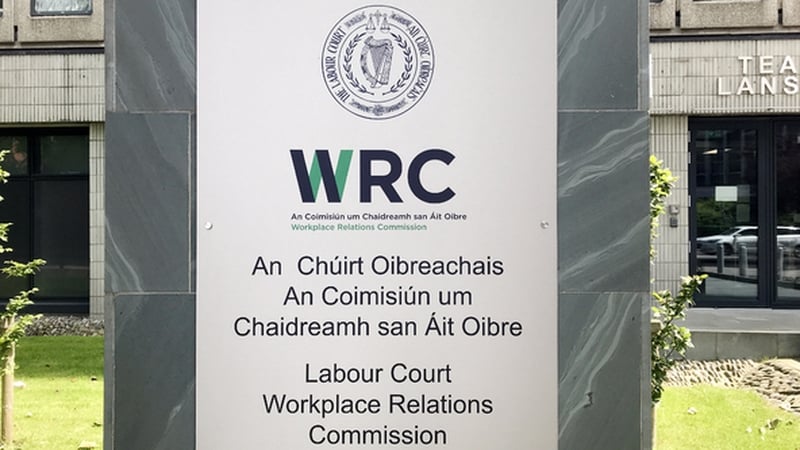
A chef who had to evacuate the Workplace Relations Commission with his solicitor because of a hoax bomb threat during his case has won a claim for constructive dismissal against a Dublin restaurant group.
Norman Tanju, who worked as a development chef for PBR Restaurants Ltd, the operator of the Fish Shack chain of restaurants in Dublin, told the tribunal his employer tried to make him switch from working weekdays at its head office to weekend shift work in one of its restaurants in October 2022, subjected him to bullying when he took sick leave for stress, and then failed to address his complaints.
In a complaint under the Unfair Dismissals Act 1977 against his former employer, he argued he was left with no choice except to quit the following month, a position accepted by the WRC in a decision.
The company denied the complaint, with its representative, Billy Wall of Peninsula Business Services, arguing there was a "clear and unambiguous" contract of employment in place for Mr Tanju requiring his attendance at any of five different locations in Dublin.
Mr Tanju's solicitor, Barry Crushell, said his client "strongly objected" to being moved from the firm’s head office in Stillorgan on Dublin’s southside to the firm’s restaurant in Malahide in the north of the county. It meant a difference between a five-minute walk from Mr Tanju’s house and a commute of between 90 minutes and two hours, it was submitted.
A grievance process followed, rejecting Mr Tanju’s complaints.
The company then wrote on 8 November telling Mr Tanju that as it had not heard back from him on an earlier request for medical documentation it considered his absence "unauthorised". It added that it would launch disciplinary action against him unless he agreed to meet with a manager to "discuss the situation" within two days.
Mr Tanju resigned the same day.
He wrote in his letter that the company had breached his contract by failing to give 28 days’ notice of a change to his terms of employment. "I also find it unacceptable that you want to change my working pattern without my agreement," he wrote, going on to state that a company director was "harassing me and bullying me while I was out on sick leave".
"Because of his actions towards me, I am leaving," Mr Tanju wrote, adding that his view was that the grievance meeting "was not satisfactory" and he considered his position "untenable".
In his decision on the case, adjudicator Michael MacNamee noted the firm’s view that Mr Tanju’s grievance "could be handled internally" and remarked: "The best that can be said that it was not, in fact, handled very well internally."
In rejecting the grievance, the company’s appointed investigator found that Mr Tanju had refused to see a company doctor or let one speak to his GP. However, Mr MacEntee said there was no evidence the investigator’s understanding of the situation was put to Mr Tanjue for his response.
The adjudicator also said the company grievance investigator had not stated why it considered a "strict interpretation" of Mr Tanju’s contract of employment would override the complainant’s assertion of an entitlement to a particular working pattern over the prior two years of employment.
He said the way the company handled the dispute was "inadequate and unfair" and that Mr Tanju had been justified in his "lack of faith" in PBR Restaurants’ ability to address his grievance.
The adjudicator added that without having obtained a medical assessment for Mr Tanju before the grievance process was launched, there was "no realistic possibility" of coming to a workable solution.
"Before it could even get to that point, the complainant’s grievances were dismissed peremptorily," the adjudicator added.
Mr MacNamee found that Mr Tanju had met the threshold for constructive dismissal and awarded him €10,769 for lost earnings up to the point the worker found new employment in March 2023 at a lower salary, and a further €2,500 for a year’s continuing losses to the worker, a total of €13,269.
It is the third award made by the WRC under the Unfair Dismissals Act against PBR Restaurants Ltd since the exit of its founder Padraig Hanley from the business.
Two of Mr Hanley’s sons have secured €50,000 between them in dismissal cases now under appeal to the Labour Court by PBR Restaurants. A dismissal claim by the businessman’s middle son, Stephen Hanley, is awaiting an outcome at the WRC.
Mr Hanley failed in a Labour Court appeal of the rejection of his dismissal claim, however. The WRC was later told that on the day the appeal was heard, the company had a car seized from the businessman while he was at the hearing.
'Hoax’
On the day Mr Tanju’s case first heard on July 27 last year, Mr MacNamee was approached outside the hearing room in Lansdowne House in Dublin 4 during a short break in proceedings by a member of the WRC’s staff and told: "We’re evacuating the building."
Those in attendance for the hearing learned as they exited the building there had been "a bomb threat to the Department".
An Garda Siochána later said in a press statement that the security alert, which prompted the evacuation of Lansdowne House and other Department of Enterprise buildings in Dublin that day had been a "hoax".
There is no suggestion the alert had any connection to Mr Tanju’s case. The matter resumed and was heard in full later in the year.
Reporting by Stephen Bourke
