

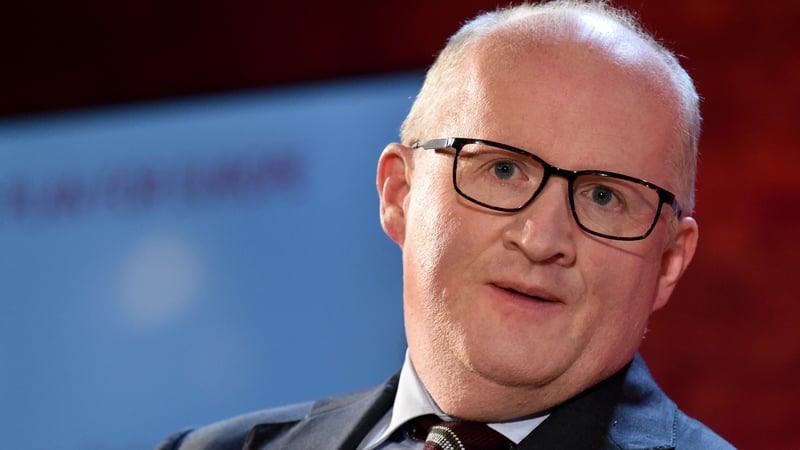
Targeted and temporary measures are key to addressing rising inflation, the Chief Economist of the European Central Bank has said.
Philip Lane said there is "a lot of uncertainty" with regard to the spiraling cost of living, but said he is confident that inflation will stabilise later this year.
Speaking on RTÉ's The Business, the former governor of the Central Bank said: "We think the inflation rate will start to come down in the second half of the year.
"We tend to focus on the overall inflation rate for the year. We have it at 5.1% for the year. It's above that number now and it will be above that number for the next few months, but we think it will start to come down.
"It will be a little bit above 2% next year and falling back to 1.9% in 2024. When we say inflation next year will be around 2%, it doesn’t mean prices are going to fall but it does mean that this momentum will level off."
Mr Lane said in mid-November the price of oil was $80 a barrel, but it is now at $120 a barrel.
"With that 50% increase in the price of oil in recent months, we do think that between now and the summer, inflation will continue to climb," he said.
"The exact design of how you implement measures will vary country by country. From a macro- economic point of view, if someone on a high income has to pay more for their energy, they may just reduce their savings rate.
"For those on a low income, they don't have savings to fall back on. They will reduce their consumption which hurts the economy. From the economic point of view, targeted and temporary are our key messages," he added.
We need your consent to load this rte-player contentWe use rte-player to manage extra content that can set cookies on your device and collect data about your activity. Please review their details and accept them to load the content.Manage Preferences
Mr Lane said prices increases are real, describing it as a "very major economic event" which is hurting a lot of people.
He said it will be reversed and looking at 2023 and 24, "we think inflation will still be a lot higher than it was before the pandemic but an inflation rate of about 2% is very different to an inflation rate of around 4 or 5%."
He added: "For firms and workers trying to make reasonable pay agreements, there has been this surprise inflation, people have seen a loss of their living standards and that does have to be a factor in wage negotiations. But there is a difference between that and saying we think we are in a new high inflation era like the 1970s.
"It's very important that Europe and Ireland take into account what happens if the price of oil stays around $120 indefinitely. What happens if there are further increases? People on lower incomes have less spare cash and they spend a bigger fraction of their overall weekly spend on food and energy.
"There may be a role for broad-base measures on a temporary basis. What’s happened has happened pretty quickly and in a large-scale way. I think it’s reasonable to have temporary measures to allow the economy to adjust but I think the main focus should be targeted measures."
