


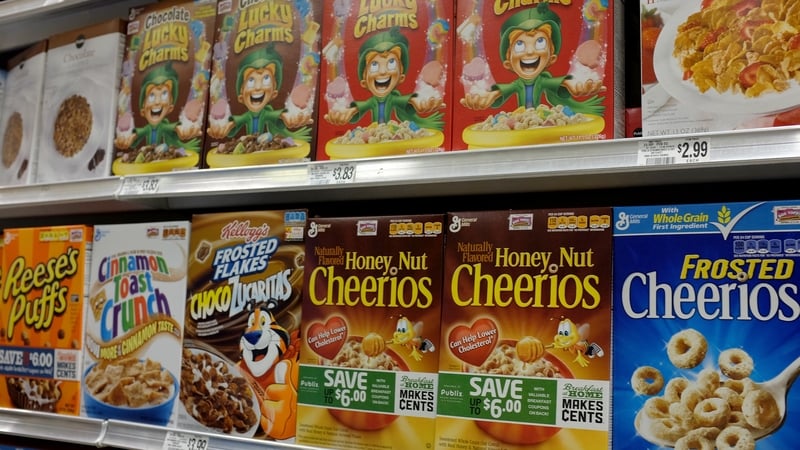
US food company General Mills has today forecast a boost to its earnings this year as consumers stock up on its cereals, frozen foods and pet food in the face of the global coronavirus pandemic.
General Mills, whose products include Cheerios cereals and Yoplait yogurt, said the pandemic led to higher orders from retailers mainly in North America, Europe and Australia.
The pandemic, which originated in Wuhan, China in late December and spread quickly around the world, has locked down several cities, disrupted businesses and kept people largely indoors, raising fears of a recession.
"It's been so long since we had a recession and especially here in the U.S. But certainly, during that time, people tend to eat in more, and General Mills did quite well," chief executive Jeff Harmening said on a post earnings call.
"But that was a decade ago. We'll see how it plays out this time," he added.
The company said it now expects constant-currency adjusted profit per share in 2020 to rise 6% to 8%, compared with an earlier projection of an increase of 3% to 5%, citing higher demand for packaged goods.
General Mills said the financial impact due to the coronavirus fallout was uncertain, but its new forecast surprised Wall Street analysts.
Its ice cream brand Häagen-Dazs, however, suffered from store closures in China and lower traffic at outlets in Asia due to the quick spread of the flu-like virus. That forced the company to keep its organic net sales forecast intact.
Harmening said on the call that the company expects short-term stock up demand to remain elevated in the current quarter and added that any decline in demand would happen in fiscal 2021.
Excluding items, the company earned 77 cents per share in the third quarter that ended on February 23, beating analysts' expectation of 76 cents, according to IBES data from Refinitiv.
However, net sales slipped to $4.18 billion from $4.20 billion, missing the average analyst estimate of $4.21 billion, as growth in pet food sales was not enough to cushion the blow from lower sales of cereal, yogurt and snacks in the US.
