


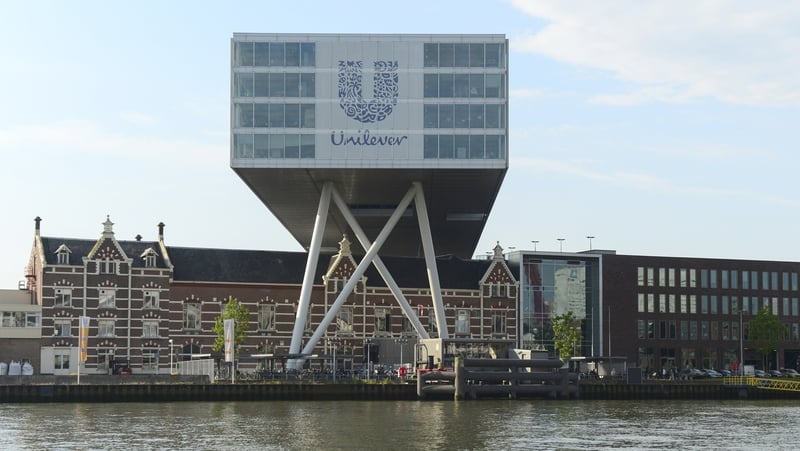
Unilever executives today scrapped plans to move the company headquarters to the Netherlands in the face of a shareholder revolt, keeping one of Britain's most valuable businesses in London ahead of Brexit.
The climbdown came just three weeks before planned votes on the proposal.
It marked a victory for shareholders who opposed a change which would have removed the maker of Marmite, Dove soap and Ben & Jerry's ice cream from the benchmark FTSE 100 index.
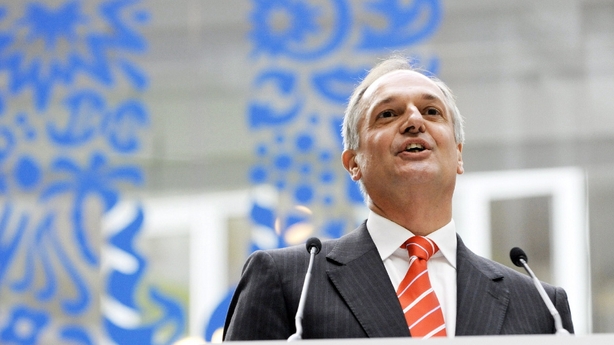
Unilever's board, led by Chairman Marijn Dekkers and fellow Dutchman Paul Polman, the chief executive, agreed to scrap the plan during a call early today.
They made the decision after it became clear that the plan could fall short of the approval needed, a source familiar with the matter said.
Unilever had decided to collapse its Anglo-Dutch structure following a review sparked by last year's failed $143 billion takeover approach by Kraft-Heinz.
The stated aim was to make it more efficient and agile in a consumer market rocked by e-commerce, social media and upstart rivals.
But at least 10 shareholders, which collectively own around 12% of Unilever, had publicly opposed the move.
They were worried about the effective forced selling of their shares with no premium, uncertainty around the future tax treatment of Dutch dividends and a perception that the move was partly aimed at securing greater takeover protection under Dutch law.
Unilever's U-turn comes at a sensitive time for the British government, which is battling to protect jobs and investment as Prime Minister Theresa May fights for her proposed divorce plan from the European Union.
"The UK is one of the best places in the world to grow a business, and our modern Industrial Strategy commits us to being an open and competitive economy and a great place to locate global headquarters," Business Secretary Greg Clark said.
Even with a single corporate entity domiciled in the Netherlands, Unilever was keeping two of its three business units in Britain, allowing it to maintain its UK staff of 7,300.
In the Netherlands, the decision has triggered political fallout for Dutch Prime Minister Mark Rutte over his unpopular proposal to scrap a withholding tax on dividends that was seen as helping to woo Unilever.
He said today the government was reconsidering the plan.
Deputy Finance Minister Menno Snel said the Dutch cabinet was meeting to discuss the consequences. "We would have liked to have seen this turn out differently," he told reporters.
Unilever's exit from the FTSE would have forced funds mandated to track the index to sell their shares. That may have pressured the price for the remaining shareholders, some of whom worried that shares in the new Unilever would be less liquid.
The plan's highest hurdle was that it needed backing of a majority of UK shareholders, holding at least 75% of the shares. Those two conditions meant that small shareholders, often overlooked, could have swung the vote.
As such, a number of independent investors holding their shares in nominee accounts had contacted their administrators in recent days to make adjustments needed to vote themselves, according to two trading platforms.
The Investor Forum, which works to escalate investor concerns to companies, said it worked with over 20 institutions on this issue.
Unilever took the unusual step of putting a full-page advert in the UK press to try to sell the idea to sceptical investors, and executives gave a round of interviews last week to make their point.
But today Unilever recognised that the proposal had not received support from a significant group of shareholders.
"The board will now consider its next steps and will continue to engage with our shareholders," Dekkers said, adding Unilever will proceed with the plan to cancel its Dutch preference shares.
Earlier this week, influential proxy advisory firm PIRC recommended shareholders vote against the move.
Another service, IVIS - the corporate governance research service of the Investment Association - issued a "red top" recommendation on the move on Friday, its strongest level of concern.
Unilever's Anglo-Dutch structure dates back to 1929 when British soap maker Lever Brothers combined with Dutch margarine company Margarine Unie. Unilever sold its margarine and spreads business earlier this year to KKR.
The company's board said today it still believes that simplifying its dual-headed structure is the best choice for the long term.
For now, investors are likely to focus on the company's operational performance. It will report third-quarter results on 18 October.
Analysts said the company's biggest performance drivers currently are US interest rates and difficulties in emerging markets, particularly related to currencies.
They said today's change should not really affect the group's near-term operation, although it may lead to a faster pace for CEO succession planning.
CEO Polman will mark his 10th anniversary as CEO in January, and speculation about succession has swirled for the last year.
