


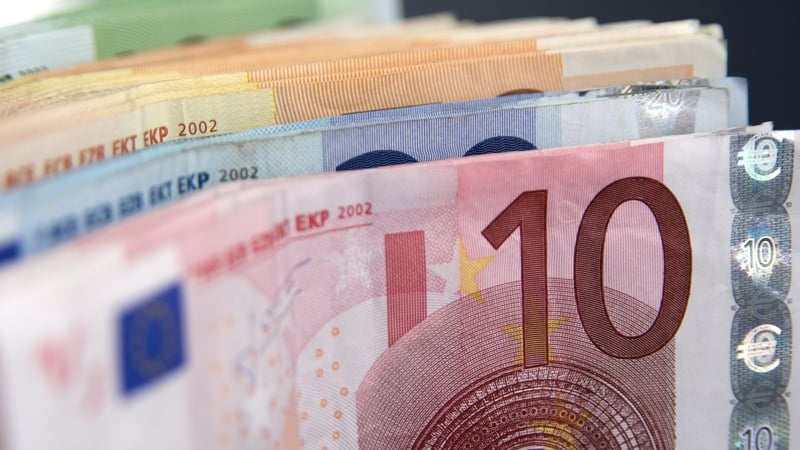
The Living Wage technical group - which is made up of researchers and academics - has increased the threshold by 20 cent to €11.70 per hour. This was the third update for Ireland after the concept was introduced here in 2014.
Dr Micheál Collins of the UCD School of Social Policy, one of the members of the technical group, explained that the living wage was a different concept to the minimum wage which is set by the Government's low pay commission. "The Living Wage is set by the answer to the question of how much does an individual - working full time - need to earn to have a basic but decent standard of living, taking taxes and all costs into account."
We need your consent to load this rte-player contentWe use rte-player to manage extra content that can set cookies on your device and collect data about your activity. Please review their details and accept them to load the content.Manage Preferences
At €11.70, there is a significant difference between the Living Wage and the minimum hourly wage which is set at €9.25. "It gives an insight into the challenges facing those earning between the two rates," Dr Collins said. "Those earning below the living wage are cutting back on certain things or doing without even though they're working full time."
The Living Wage is calculated by taking about 2,000 goods and services into account plus the impact of the tax system. "Some things got cheaper like food, clothing and health insurance, but other things got more expensive, for example home heating oil, but the big factor was the increase in housing costs," Micheál Collins explained.
"A single person in Dublin experienced rent increases of €15 per week on average. It was a bit less at €6 per week in rural Ireland and €12 in towns. But those are big increases," he stated.
It is estimated that about 20% of employees are earning less than the Living Wage. That amounts to about 300,000 to 350,000 workers.
***
MORNING BRIEFS - Volvo has announced that it will only make electric cars from 2019 onwards, making it the first mainstream carmaker to eliminate the internal combustion engine. From the year after next, it will only make three types of cars - pure-electric, plug-in hybrids, and 'mild' hybrids, which combine a small petrol engine with a large battery. The Swedish carmaker was purchased by Chinese company Geely in 2010. China is already the world leader in electric car sales.
*** Microsoft is expected to unveil a business reorganisation plan today - its fourth such plan is as many years. The tech giant is shifting its focus to the cloud, and it is expected to announce cuts to its global workforce as part of the restructuring. The company employed 114,000 people at the end of its latest fiscal year.
*** The US Federal Reserve will release minutes of its June meeting today. The Fed opted to increase rates by a quarter of a percent at that meeting. The minutes will be closely scrutinised for hints about when the next increase might come. That could have an impact on the dollar, which has had a pretty torrid time of late. This morning, the euro is trading at $1.135 cents and 87.9 pence sterling.
