


Brexit is likely to have a "negative and material" impact on the Irish economy in the short and long term, according to the Central Bank.
Its latest Macro Financial Review says that risks remain to the country's output growth, particularly due to the high level of global uncertainty that currently exists.
It says that the impact of Brexit has already been felt in the euro-sterling exchange rate, while changes in British demand for Irish goods - and the potential for trade barriers - could have an adverse effect in the longer term.
Other external threats facing the Irish economy include possible changes to international tax, as well as shifts in trade policy in certain countries.
The Central Bank also says that problems remain in the European banking sector, though improvements have been made in this area.
However not all of the risks highlighted by the Central Bank are external, with the report singling out a number of internal issues as well.
It says that, while households are paying down debt, indebtedness remains high with people aged 30-44 under a particularly heavy burden.
This means that many would be vulnerable in the event of rate rises in the future.
Meanwhile the Central Bank report notes the steady rise in house prices since the end of last year, with future increases expected in the medium term.
A scarcity of housing is contributing to this increase, which is also helping to push rental prices higher.
Despite this the Central Bank is forecasting Ireland's GDP will grow by 3.5% this year and 3.2% in 2018, while it also expects 'modest' global growth in this year and next.
Meanwhile, the head of financial stability at the Central Bank said today that houses prices are not currently overvalued despite quite strong rises in the market.
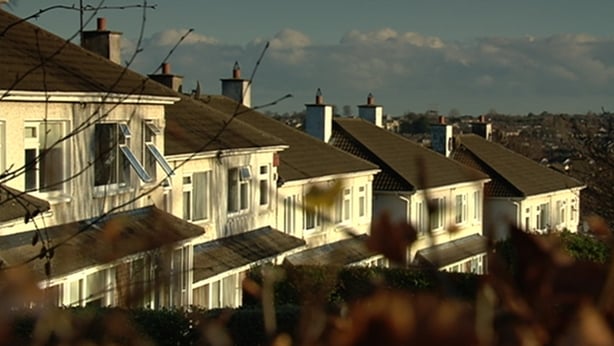
House prices climbed 10.5% in the year to the end of April, their highest annual growth rate in almost two years, amid a severe shortage of supply.
But they remain 31% below the peak hit a decade ago at the height of the property bubble.
"One method we look at is the level of houses prices compared to where we think they should be at this stage. The work we have published that we will be updating suggests that house prices are not currently overvalued, albeit that price rises are quite strong," Mark Cassidy said today.
