


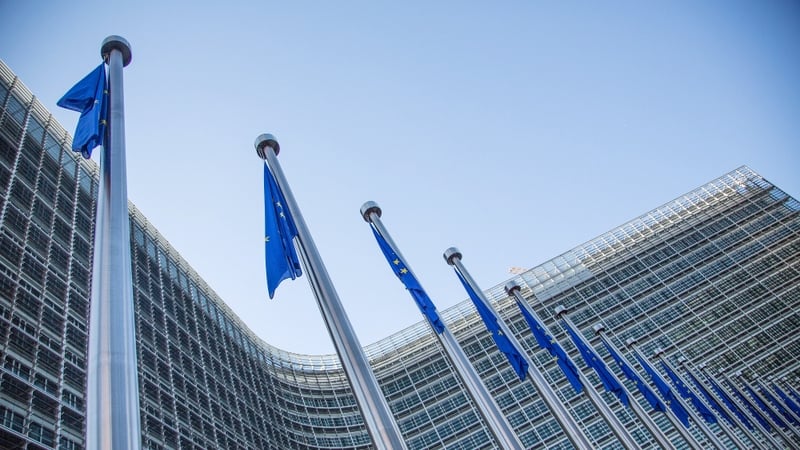
The European Commission has warned of Ireland's exposure to external shocks including Brexit and "persisting vulnerabilities" in the banking system.
In the Irish section of its latest annual report on the economic and social situation across each EU member state, known as the European Semester Winter Package, the Commission points to what it calls "fast-paced, broad-based and employment-rich recovery" in Ireland. But it notes that there are a number of risks facing the country.
The Brexit vote in the UK and "uncertainty surrounding future US tax policies" are both cited as major concerns for Ireland. The Commission is worried that Ireland has relied on a surge in what it calls "buoyant and volatile" corporation tax receipts to fund permanent increases in current expenditure. "Past experience in Ireland during the property bubble demonstrates the dangers of over-reliance on a small number of tax headings," it says.
The report also focuses on the challenges facing the banking sector. "The stock of non-performing loans continued to decline but remains high. The high proportion of long-term arrears is still a concern," it says.
The Commission credits Ireland with "remarkable" success in stabilising the public finances, returning to growth and bringing the budget deficit under control.
But warns about the potential consequences of the high levels of public and household debt in the event of external shocks such as the UK leaving the EU. The cost of servicing government debt which represents just under 80% of annual economic output is "a significant burden," the report notes.
"Ireland has broad based sources of imbalances linked to large stocks of external, public and private debt as well as a high level of non-performing loans, all making Ireland vulnerable to adverse shocks," it concludes.
