


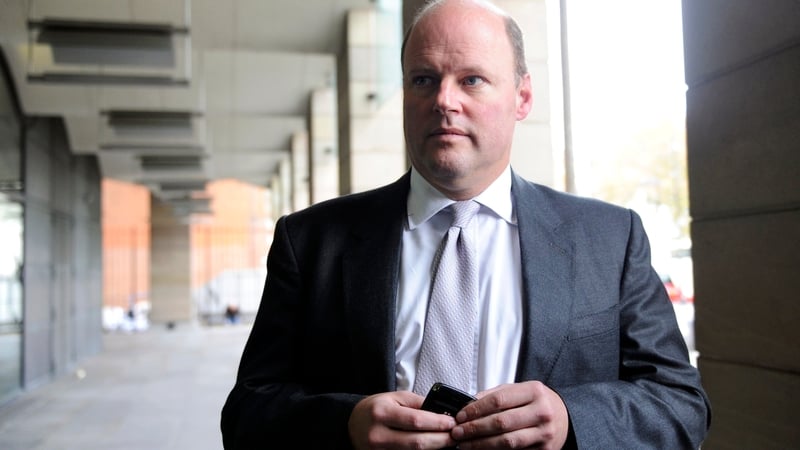
Stephen Hester, the boss of Britain's state-rescued Royal Bank of Scotland, admitted today that he underestimated a row over his huge bonus and said he had considered resigning.
The RBS chief executive bowed to public anger last month and waived his annual bonus of shares worth £963,000 sterling (€1.15m) on top of his £1.2m salary. He wrote to staff yesterday about his decision.
The large bonus, coming amid ongoing government austerity and economic gloom, had sparked outrage among trade unions and opposition politicians because RBS is 82% state-owned after a massive UK government bailout.
"I understand why these issues are controversial, particularly in a time of austerity, and of course we underestimated that," Hester told BBC Radio 4. "The spotlight RBS is in makes our job more difficult and in turn makes it harder for what we have to do for the country but we have to overcome that,'' he said.
While he said he had "great sympathy and understanding" for people concerned about the high rewards in the banking sector, such "societal issues" were a matter for politicians.
"I took the judgment that it was going to be damaging for RBS to stay in the intensity of the spotlight that we had got into," he said, when asked about his decision to waive the bonus.
"In the end the job that I was asked to do, when RBS was collapsing, was about recovering this bank and helping it to succeed and that is what I really wanted to accomplish," he said.
The RBS chief also revealed that he had considered resigning over the deeply controversial issue. "There have been some deeply depressing moments - not just now but over the last three years. In the end, I came to the conclusion that it would be actually indulgent for me to resign and that what I ought to do was to draw on the reserves of strength I have and try and make RBS a success," he said.
Hester added that the current management team was tasked with defusing a balance-sheet "time bomb," after the bank was bailed out with £45 billion of UK taxpayers' cash at the height of the global financial crisis.
"When I was asked to take on this job three years ago, I had to replace the whole senior management team of RBS. We had to go around the world looking for the best people. Not just people to run a bank well - but people to defuse the biggest time bomb in history, in terms of bank balance sheets,' he said.
"Those people are doing a good job. I think they deserve recognition if they do a good job. It is our task to make sure there is a connection between the job that the people are doing and how they get treated," he said.
Hester's comments came as finance minister George Osborne vowed to fight an "anti-business culture" in Britain and warned that a row over executive pay and bonuses was threatening the country's fragile economic recovery.
"Let me say something about the row over bonuses and pay," Osborne said in a speech to the Federation of Small Businesses last night. "Of course rewards for failure are unacceptable - and those who believe in the free market are the first to say so. But a strong, free market economy must be built on rewards for success," he said.
