

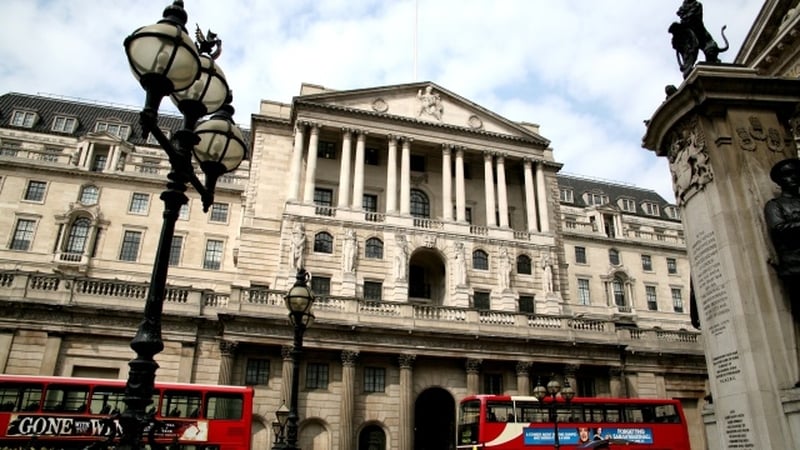
Bank of England policymakers voted 9-0 this month to pump €75 billion sterling into the weak economy, which is expected to grind to a halt in the fourth quarter, minutes from the last meeting showed today.
The bank's Monetary Policy Committee (MPC) also voted unanimously earlier this month to keep interest rates at a record low 0.5% - where they have stood since March 2009 - as it seeks to support economic growth.
In a gloomy warning, the MPC warned that "available indicators suggested that the underlying rate of growth ... would be close to zero in the fourth quarter", or three months to December.
The minutes revealed that the MPC chose to reactivate its quantitative easing policy - more commonly referred to as printing money - to try and address "acute" stresses in bank funding markets.
"There had been increasingly visible symptoms over the month of rising stress in financial markets as concerns about the vulnerabilities associated with the indebtedness of several euro-area governments and banks had intensified," the minutes from the MPC meeting held on October 5-6 said.
"These symptoms had included continued high levels of volatility in asset prices; a reduction in liquidity across a range of markets; signs of pressure on some individual institutions; and a generalised withdrawal from risk taking, reflected in price falls in an array of markets," they added.
The minutes also noted that "short-term funding had become more expensive and difficult to obtain for European banks, including those in the United Kingdom, and investors had continued to shorten the term of the US dollar funding they provided."
Under QE, the bank creates new cash which is used to purchase assets such as government and corporate bonds in a bid to encourage lending and in turn boost economic activity.
Between March 2009 and January 2010, the Bank of England injected £200 billion into the British economy under the radical QE policy, to aid recovery from recession.
The minutes were published a day after official data showed that annual inflation in the UK surged to a three-year high of 5.2% in September due to soaring domestic energy prices. The Bank of England's main task is to use monetary policy to try and keep inflation close to a target of 2%.
