


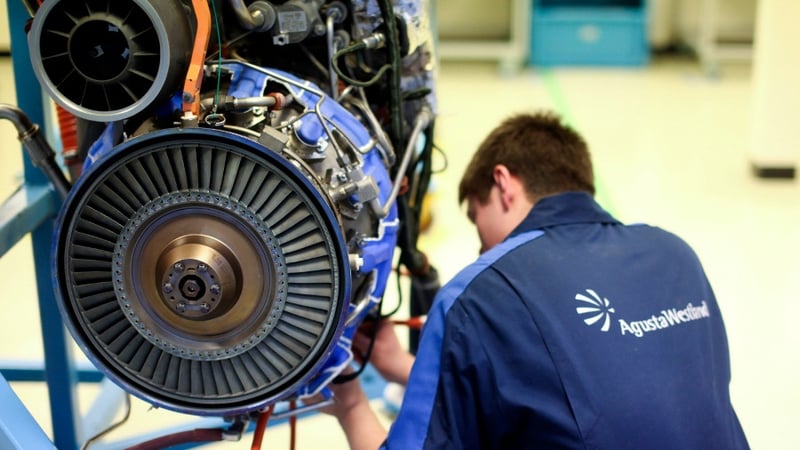
Official figures show that UK factory output unexpectedly fell in June, while the country's trade deficit hit its widest level since December.
The figures offer a grim backdrop for the Bank of England when it unveils new economic forecasts tomorrow. These are expected to show cuts to growth projections for this year and next, and possibly even hint at more monetary stimulus.
The Office for National Statistics said manufacturing output - which does not include utilities or oil and gas extraction - fell by 0.4% in June after a rise of 1.8% in May. Economists had expected a 0.2% June increase.
The broader measure of industrial output was flat on the month, contrary to expectations of a rebound, after May's North Sea oil and gas maintenance work appeared to persist into June.
That maintenance work had a knock-on impact on British trade, with net oil imports rising to their highest so far this year, pushing the total goods and services trade deficit to £8.87 billion, its widest since December.
On the quarter, industrial output dropped 1.6%. This was the biggest three-monthly fall since May 2009, but the ONS said it would have an impact of less than 0.05 percentage points on a second estimate of second quarter GDP data due later this month.
Last month the ONS said Britain's economy grew just 0.2% in the second quarter, following a six-month period in which the economy did not grow at all.
Britain's manufacturing sector had been one of the few bright spots in the economy, benefiting from previous falls in sterling and robust demand from other countries. But industry surveys have shown activity growth steadily weakening since March, and July's PMI index showed the first contraction in the sector for two years.
