


The United States has lost its top AAA credit rating from Standard & Poor's in an unprecedented blow to the world's largest economy. The downgrade came after a political battle that took the country to the brink of default.
S&P cut the long-term US credit rating by one notch to AA+ on concerns about the government's budget deficit and rising debt burden. The action is likely to eventually raise borrowing costs for the American government, companies and consumers.
'The downgrade reflects our opinion that the fiscal consolidation plan that Congress and the administration recently agreed to falls short of what, in our view, would be necessary to stabilise the government's medium-term debt dynamics,' S&P said in a statement.
The outlook on the new US credit rating is 'negative', S&P added, indicating that another downgrade is possible in the next 12 to 18 months.
The move reflects the deterioration in the global economic standing of the US, which has had a AAA credit rating from S&P since 1941, and it could have implications for the US dollar's reserve currency status.
The decision follows a fierce political battle in Congress over cutting spending and raising taxes to reduce the government's debt burden and allow its statutory borrowing limit to be raised.
On August 2, President Barack Obama signed legislation designed to reduce the fiscal deficit by $2.1 trillion over 10 years. But that was well short of the $4 trillion in savings S&P had called for as a 'down-payment' on fixing America's finances.
The political gridlock over addressing the long-term fiscal problems facing the US came against the backdrop of slowing US economic growth and led to the worst week in the US stock market in two years.
US Treasury bonds, once indisputably seen as the safest in the world, are now rated lower than bonds issued by countries such as Britain, Germany, France or Canada.
President Obama was briefed earlier in the day about S&P's intentions, but discussions took place only with Treasury officials and did not include the White House, according to sources quoted by Reuters.
The US Treasury said the rating agency's debt calculations were wrong by around $2 trillion.
S&P confirmed it changed its economic assumptions after discussion with the Treasury Department but said it did not affect its decision to downgrade.
The theme running throughout S&P's analysis is the breakdown in the ability of the Democratic and Republican parties to govern effectively. The agency said that politicians and political institutions had weakened in the past few months 'to a degree more than we envisioned'. This has major implications for the nation's budget and debt problems.
For example, S&P now assumes that tax cuts brought in under President George W Bush in 2001 and 2003 would not, as planned, expire by 2012 because of staunch Republican opposition to any measure that would raise revenues.
China attacks US debt 'addiction'
While the downgrade is a blow to US prestige, it was largely expected and may not have a big impact on trading of US Treasuries and other assets when markets reopen in Asia on Monday.
In fact, Treasuries have rallied this week, driving the yield on the benchmark 10-year note to 2.34%, its lowest level in about 10 months. This reflects a belief among investors that US government debt is still a safe bet at a time when prices of shares and commodities are falling on concern about slowing global economic growth.
But the downgrade has implications for the US financial sector, ranging from insurance companies to government-related firms such as housing financiers Fannie Mae and Freddie Mac.
The downgrade could add up to 0.7 of a percentage point to U.S. Treasuries' yields over time, increasing funding costs for public debt by some $100 billion, according to SIFMA, a US securities industry trade group.
The Federal Reserve and other bank regulators moved last night to reassure global markets that the downgrade would not mean that additional capital would be needed by banks and other institutions holding Treasury securities.
The Fed also said the cut would not impact the operation of its emergency lending window for banks, nor its buying and selling of Treasury securities to conduct monetary policy.
The impact of S&P's move was tempered by a Moody's decision earlier this week confirming, for now, the US AAA rating. Fitch said it was still reviewing its AAA rating and would issue its opinion by the end of the month.
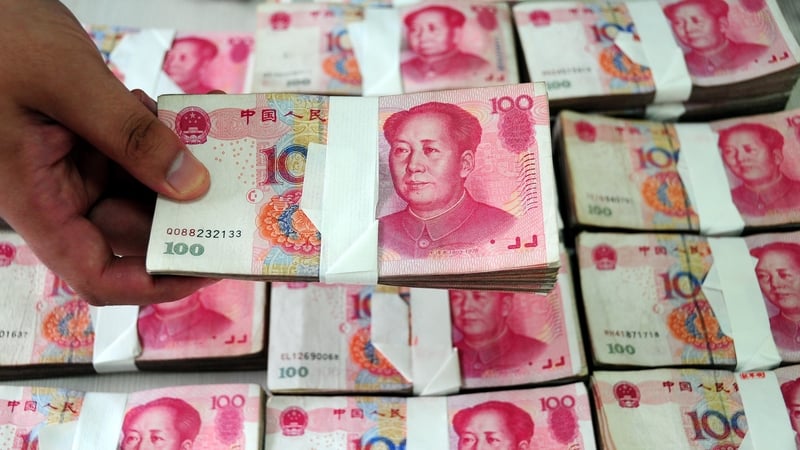
S&P's move is also a concern for foreign creditors, especially China, which holds more than $1 trillion of US debt.
Chinese state media hit out at the US today after the downgrade, saying the world's largest economy needed to cure its 'addiction' to debt. In a stinging commentary, the official Xinhua news agency said China now had 'every right' to demand that Washington address its structural debt problems and safeguard Chinese dollar assets.
