

Bankers could face fines above €5m for rule-breaking under EU plans that would bring other European countries into line with Britain's tougher regime on regulating banks.
A draft law promises a stricter code of penalties not just for banks, but also for individual bankers, if they hide information from regulators or break rules capping the amount of cash paid in a bonus.
It would set the bar higher for fines in Europe and add to momentum for increased penalties in countries that were lax in regulating banks before the financial crisis, such as Ireland, as well the region's biggest economic power, Germany.
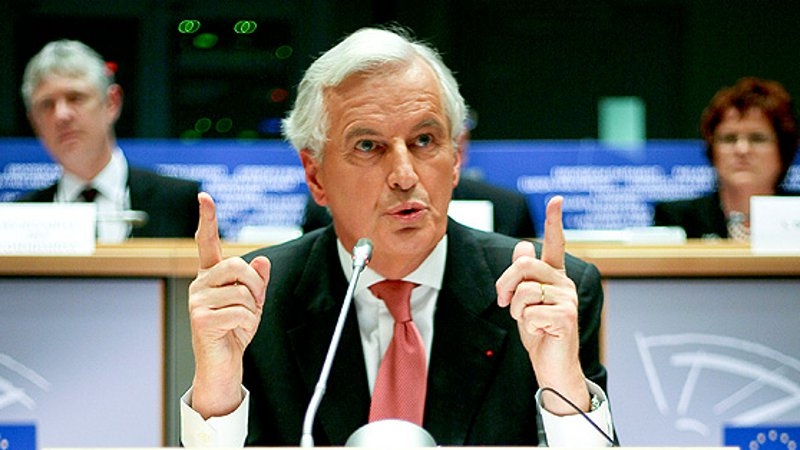
In one of the most far-reaching reforms since bonus curbs were imposed on European bankers, officials working for the EU's top regulatory official, Michel Barnier, have outlined plans for standardising such fines.
They describe a new EU code that would allow EU countries to fine individual bankers up to €5m or 10% of their pay and bonus - whichever is higher. The document also proposes powers for national authorities to penalise banks by up to 10% of turnover.
The rules, if made law, would far outstrip the powers of regulators in Ireland, who can not impose a fine of over €500,000 on individuals, and even Germany, where the maximum penalty on an institution is €1m.
Britain's Financial Services Authority, however, is already able to impose unlimited penalties on banks or their employees and last year fined JP Morgan £33m sterling for failing to separate clients' money from its own.
It has also fined two managers at Northern Rock for playing down the extent of the lender's problems, although the £504,000 penalty given to former deputy CEO David Baker was only a fraction of what is proposed in rules from the EU executive or Commission.
Officials hope EU sanctions would give extra bite to reforms to control finance as well as discourage banks from relocating to countries with softer rules. The draft law will now go to EU member states and the European Parliament for approval before it could become law across the bloc's 27 states.
'A manager of a bank could be sanctioned when he is responsible for a violation, for instance, in case he deliberately decided not to report disadvantageous financial information to supervisors,' said one official with knowledge of the proposal.
'In most cases sanctions will be imposed also on the bank,' he added.
