


The European Commission has warned Greece that 'time is running out' to pass a new austerity programme after political leaders failed to agree on measures to avert another debt crisis.
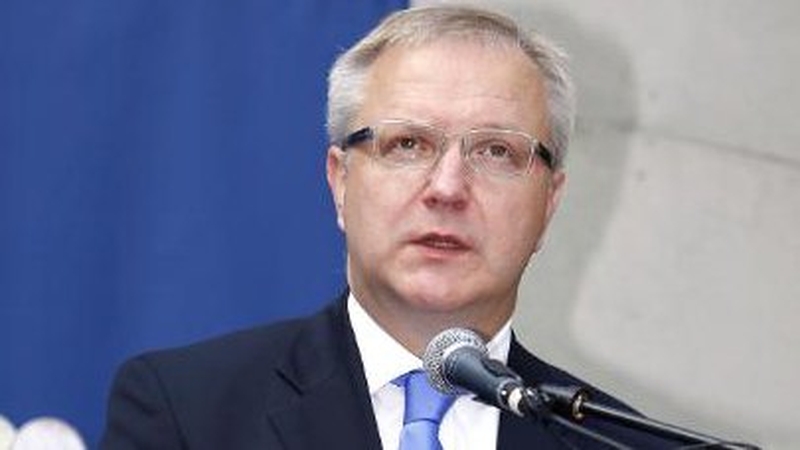
The Commission 'regrets the failure of Greek party leaders to reach consensus on economic adjustment to overcome the current debt crisis,' said EU economic affairs commissioner Olli Rehn.
'We expect that the efforts towards a cross-party agreement to support the EU-IMF programme will continue.
'An agreement has to be found soon. Time is running out,' he said in a statement.
Earlier today, Greek political leaders failed to reach consensus on how to exit the country's severe debt crisis at an emergency five-hour meeting.
'Consensus was blocked,' an official from one of the parties that participated in the meeting told Reuters news agency on condition of anonymity.
Far right LAOS leader George Karatzaferis told reporters after the talks: 'Unfortunately, some people put their chair above Greece.'
An official in his party said he meant there was no agreement.
Meanwhile, Slovenia is only 'a step away from a critical situation' and could be the next euro zone country to fall into crisis, its central bank chief Marko Kranjec warned today.
Due to its budget deficit and increasing debt, Slovenia could follow the path of Greece, Ireland and Portugal, Kranjec was quoted as saying by Slovenian news agency STA at a financial conference in the coastal town of Portoroz.
Slovenia should be aware that, if the current trends continue, it is only a small step away from a critical situation, Kranjec said.
As head of Slovenia's central bank, Kranjec sits on the decision-making governing council of the European Central Bank.
The central bank chief also warned that a rejection by Slovenians of a pension reform at an upcoming referendum on 5 June would lead to deterioration in the country's public finances.
If the pension reform is rejected, the country's debt will increase further as borrowing costs for Slovenia and its companies would certainly rise, Kranjec said.
Last month, the government predicted that the public deficit would amount to 5.5% of GDP this year, much higher than an earlier forecast of 4.8% and well in excess of the 3.0% limit laid down by the EU.
The upward revision was due to additional state aid to Nova Ljubljanska Banka.
Slovenia, which joined the euro zone in 2007, saw its overall accumulated public debt ratio rise to 37.9% in 2010 from 23.4% in 2007 but this was still within the EU limit of 60%.
