


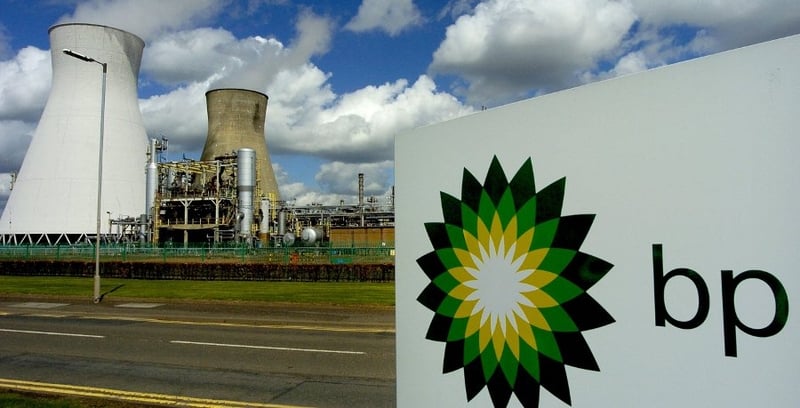
An arbitration tribunal last night blocked British energy giant BP's Arctic oil tie-up with Rosneft in a decision that could hit Russia's hopes of expanding its share of the world energy market.
The Stockholm Arbitration Tribunal ruling upholds a freeze on the tie-up issued by a London court in February and formally puts a halt to the $16 billion deal.
The British firm immediately issued a statement saying it 'remains committed to partner with Russia' and would seek other ways of completing the historic deal.
The news appeared to catch Russian officials off guard and is likely to cloud the immediate outlook of the country's largest oil company - a state-held firm that is urgently seeking international investors' support.
The unprecedented share-swap and Arctic exploration agreement was announced with much fanfare by the Russian government in January and was soon followed by a similar agreement between Rosneft and the US oil major Exxon Mobil.
The deal would have handed Rosneft 5% of BP's ordinary voting shares in exchange for approximately 9.5% of the Russian company's stock.
The two firms also agreed to jointly search for oil in Rosneft's three licensed blocks in the Arctic - a 125,000 square kilometre region said to contain five billion tonnes of oil and three trillion cubic metres of gas.
Rosneft has been seeking a Western partner to provide it with the know-how and technology to develop the forbidding region and the Kremlin eventually gave the nod to BP - a company with a long but sometimes troubled history in Russia.
The agreement was personally blessed by Russia's powerful prime minister Vladimir Putin and hailed by BP as an important part of its expansion plans following the humiliation it suffered during last year's Gulf of Mexico oil spill.
But its implementation has been blocked in the courts amid arguments by BP's current Russian joint venture TNK-BP that the Rosneft tie-up violated its own shareholder agreement with the British company.
BP was technically committed to perform all its operations in Russia through its TNK-BP venture but was already working on its own in the vast energy project the country is developing in the Pacific Sakhalin Island.
It used the Sakhalin argument when it was presenting its case to the Kremlin and Putin himself later admitted to being surprised that the agreement was having such difficulties in the courts.
Russia's energy tsar Igor Sechin - a close ally of Putin - even warned in one interview ahead of the decision that Rosneft would estimate its losses from the unrealised deal and 'require compensation' from BP if it were blocked.
BP's statement last night said it would still look to complete the share swap without the joint Arctic exploration part of the pact - a move that could potentially keep it out of litigation.
The small group of billionaires making up the Russian half of the TNK-BP joint venture - collectively known as AAR and led by Alfa Group chief Mikhail Fridman - said the ruling left them satisfied but still concerned.
