


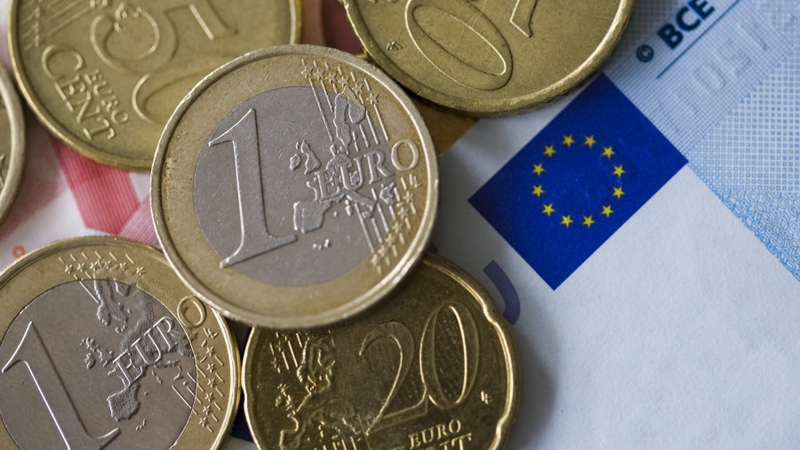
Estonia launched a media campaign yesterday to introduce euro banknotes and coins to Estonian public ahead of the country officially joining the euro zone next January.
European Central Bank president Jean-Claude Trichet handed over a symbolic 'euro star' to the governor of the Bank of Estonia, Andres Lipstok, at a ceremony yesterday evening in the capital Tallinn.
'The introduction of the euro is a historic moment for any EU member state,' Trichet told the audience, as the ceremony was broadcast live on television.
Estonia's forthcoming membership showed that the euro zone was not a closed shop, he added. 'Its doors are open to the EU member state that fulfils the necessary preconditions in a sustainable manner,' he added.
The 'euro star' he handed over, a transparent pentagon with euro banknotes on it, symbolised the fact that Estonia was set to become the 17th member of the euro zone countries on January 1, 2011.
The media campaign aims to introduce euro banknotes and euro coins and their security features to Estonian population. Lipstok, for Estonia, paid tribute to the nation's currency, the kroon, that in 1992 replaced the Russian ruble.
'We are switching from one stable currency - Estonia kroons - to another,' he said. 'I hope the nostalgia Estonians have for our current currency will transfer into euros too,' he added.
Estonia, with a population of only 1.3 million, is the smallest of the Baltic states. But it is already a member of the European Union and the North Atlantic Treaty Organisation, joining both in 2004. It will become the first former Soviet repubic to join euro zone.
After joining the EU, Estonia's economy flourished until sliding into recession in the first quarter of 2008 as domestic demand withered and the global crisis battered exports.
After weathering a severe downturn, Estonia formally emerged from recession in the fourth quarter of 2009 as output grew 2.5% compared with the previous three months. In August, the Estonian government doubled its 2010 growth forecast to 2%.
