


Britain has unveiled sweeping changes to its system of financial regulation, handing more power to the Bank of England and abolishing the framework set up by the last government.
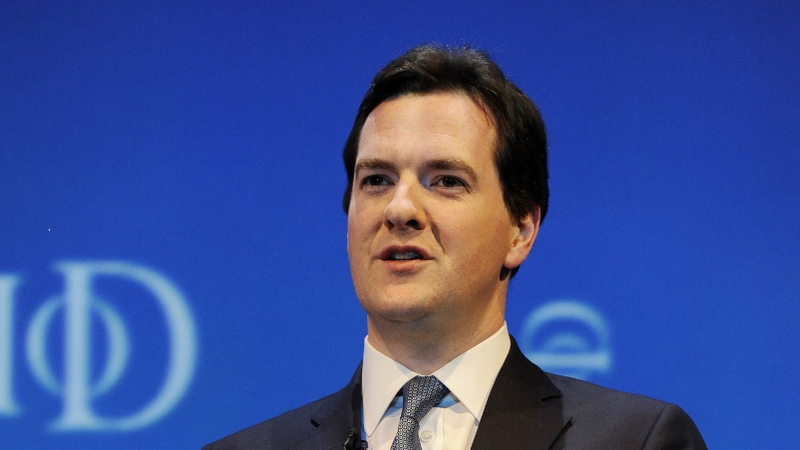
George Osborne, the new finance minister, said in a speech last night that the Bank of England would get powers to regulate individual financial firms, in addition to its remit to monitor the overall health of the economy.
The Financial Services Authority (FSA), which regulates the City of London but came in for heavy criticism for its failure to foresee the near-collapse of Britain's banking system, would be abolished.
Some of its responsibilities would be handed to the Bank of England, while others would be injected into new organisations.
The 'tripartite' system - which shares responsibility for regulation between the Bank of England, the FSA and the finance ministry - would be ended, said the chancellor. It was set up by the previous Labour administration.
Osborne said the financial crisis, which plunged Britain into its worst recession since the 1930s, showed powers to monitor both individual firms and the general state of the economy needed to be centralised at the Bank of England.
'Because central banks are the lenders of last resort, the experience of the crisis has also shown that they need to be familiar with every aspect of the institutions that they may have to support,' he said.
'So they must also be responsible for day-to-day microprudential regulation as well,' he added.
He said the proposals amounted to 'a new system of regulation that learns the lessons of the greatest banking crisis in our lifetime'.
Osborne detailed the shake-up at his first Mansion House speech, an annual address to business leaders that is one of the most high-profile in the finance minister's calendar.
The decision to concentrate oversight powers at the Bank of England was aimed at better coordinating responses to future crises, the minister said. 'When the crunch came, no one knew who was in charge,' he explained.
The Conservatives had vowed to overhaul regulation of the financial system when they were fighting to win power from Labour at the May 6 elections.
Giving detals of the break-up of the FSA, Mr Osborne said the part that monitors financial institutions would become a 'prudential regulator' and would operate as a subsidiary of the Bank of England.
Some of the FSA's powers would be injected into a separate consumer protection and markets authority, while others would be put into an agency for fighting economic crime. The chief executive of the FSA, Hector Sants, would stay on to oversee the transition which would be completed in 2012.
Bank of England governor Mervyn King welcomed the reforms, saying the previous set-up at the FSA had not been effective.
'In a crisis, decisions must be made quickly and decisively and the central bank, working with government which is always responsible for any use of public money, needs to be in charge,' he said. 'That was one of our painful lessons,' he added.
Osborne also confirmed plans for a tax on banks and said the coalition would 'demand further restraint on pay and bonuses.'
He said it was only fair that banks pay a levy after the amount of money taxpayers spent on bailing them out. Details of that will be in next week's Budget.
The government would also establish an independent commission to study whether big banks should be broken up and their investment and retail arms separated, the chancellor said.
