


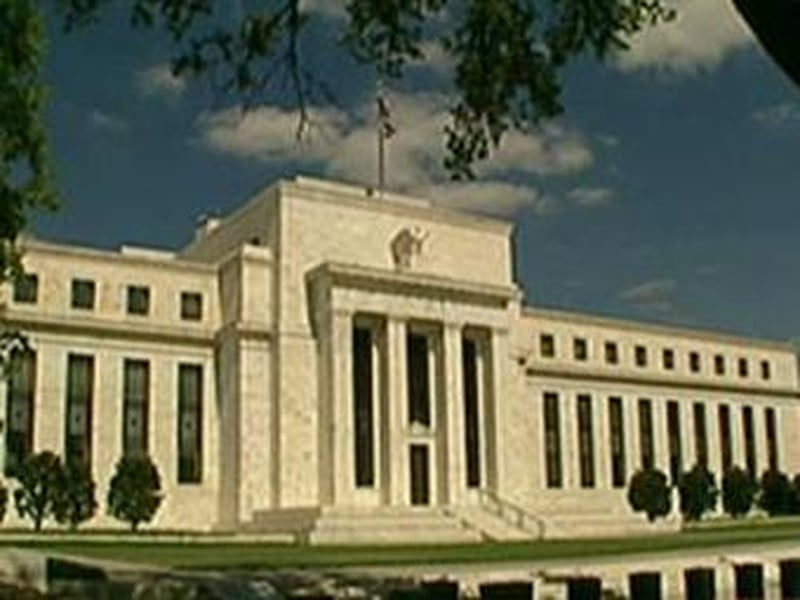
The Federal Reserve said last night that the US economy remained 'vulnerable to adverse shocks', with the weak labour market of 'particular concern'.
In minutes released from the Federal Open Market Committee meeting on August 11-12, the central bank said that 'most participants saw the economy as likely to recover only slowly during the second half of this year, and all saw it as still vulnerable to adverse shocks.'
'Labour market conditions remained of particular concern to meeting participants,' the minutes said.
The publication of the FOMC minutes came ahead of the government's employment data for August due on Friday. The Labor Department jobs report, seen as one of the best indicators of economic momentum, is expected to show job losses slowed and the unemployment rate rising to 9.5%, from a 26-year high of 9.4% in July.
Payrolls firm ADP reported yesterday that the private sector shed 298,000 jobs in August, the smallest number of jobs since September 2008, adding to data indicating an improvement in the albeit dire jobs market.
Members of the policy-making FOMC commented about the continued 'poor' conditions in the labour market that were expected to improve only slowly.
'Business contacts generally indicated that firms would be quite cautious in hiring when demand for their products picks up,' the minutes stated.
The Fed policymakers agreed that the incoming data and anecdotal evidence since the previous meeting on June 23-24 'had strengthened their confidence that the downturn in economic activity was ending' and that growth probably would resume in the second half of the year.
Though participants expected the pace of recovery to pick up in 2010, they expressed a range of views, and considerable uncertainty, about the likely strength of the upturn - 'particularly about the pace of projected gains in consumer spending and the extent to which credit conditions would normalise.'
With prospects of only a gradual improvement in economic activity amid weak demand and subdued inflation, the FOMC decided to hold its key target interest rate at near zero.
The FOMC also agreed to maintain its programme of asset purchase to support the recovery, but decided to slow the pace of a $300 billion programme to buy Treasury securities and extend the wind-down of that programme to the end of October 'to help promote a smooth transition in markets.'
