


The United Nations today revised its 2009 global economic growth forecast down sharply, accounting for a deeper financial crisis that threatens to push unemployment past the 50 million mark.
In a mid-year update to its World Economic Situation and Prospects 2009 report issued in January, the United Nations now expects a global economic contraction of 2.6% this year, compared to its prior worst case scenario of a drop of 0.5%.
'The global credit crunch has continued straining the real economy worldwide,' the report said.
A mild recovery in the World Gross Product is possible for 2010, but the UN Department of Economic and Social Affairs (DESA) warned that risks of slow recovery remained.
'If financial markets do not unclog soon and if the fiscal stimuli do not gain sufficient traction, the recession would prolong in most countries with the global economy stagnating at lower welfare levels well into 2010,' the report said.
DESA is forecasting 50 million unemployed over the next two years, a figure that 'could easily double if the situation continues to deteriorate.'
World trade volumes are expected to drop 11% this year, the largest annual decline since the Great Depression, the UN said. The report also suggests that if there was a more coordinated response to the crisis, the recovery would be stronger and swifter.
'At present the stimulus is very unbalanced. 80% of the stimulus is concentrated in developed countries, while most developing countries lack the fiscal space to provide social protection and counteract the consequences of the crisis,' the report said.
DESA believes a more balanced response would bring an additional $500 billion for development finance to fund counter-cyclical policies in developing economies.
The Group of 20 club of big developed and developing economies agreed in April on a plan to provide some $1.1 trillion in aid to combat the worst financial crisis since the Great Depression.
Just seven countries are expected to have gross domestic product per capita growth of 3% or more in 2009 - Bangladesh, China, Democratic Republic of Congo, Cuba, India, Iraq, and Uzbekistan.
The financial collapse caused investors to pull capital out of emerging markets to shore up their balance sheets, increased business borrowing costs, drove world trade levels down sharply, and cut commodity prices and worker remittances.
Developing nations have been hit hard by a collapse of major parts of the international financial system which resulted in massive government bailouts of banks and heavy industries at taxpayer expense.
Developing nations also are feeling the impact because their economies depend on the exports of raw materials and energy products, two things industrialised nations do not need as much of at the moment.
DESA estimates that between 73 and 105 million more people will remain poor or fall into poverty compared with a situation in which pre-crisis growth would have continued.
Hardest hit will be east and south east Asia, with between 56 and 80 million people affected, about half from India. Another 12 to 16 million people will remain in poverty in Africa and another 4 million in Latin America and the Caribbean, the report says.
UN postpones global economic crisis conference
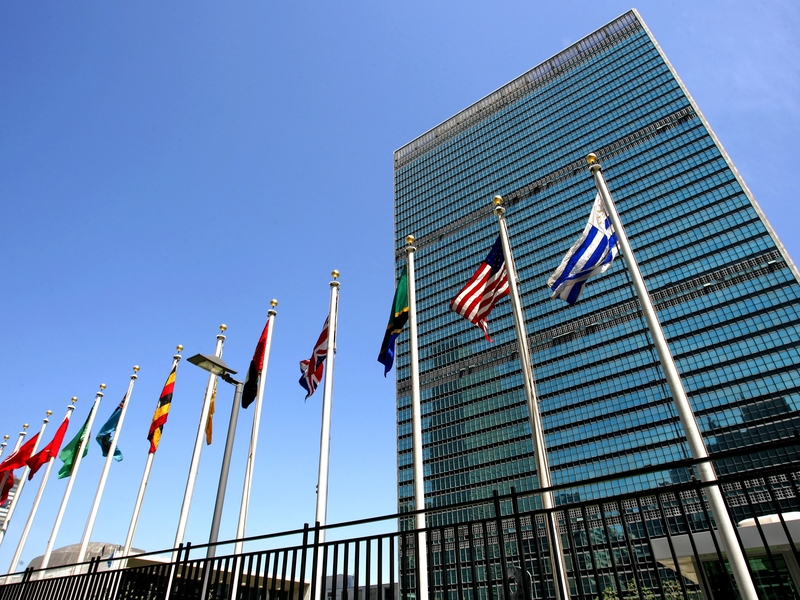
Meanwhile, the United Nations has postponed a conference on the global economic crisis for several weeks at the request of several heads of state, a spokesman said.
The UN General Assembly will now hold its United Nations Conference on the World Financial and Economic Crisis and Its Impact on Development at UN headquarters in New York June 24-26. It was initially scheduled for June 1-3.
The UN spokesman said the the decision was made after several delegations had pointed out how little time remained to forge the document's final resolution. The General Assembly first decided in April to hold such a meeting.
The conference, which was suggested in December by world leaders during talks on financing and development in Doha, aims to tackle the impact of the world economic crisis, as well as reform of global financial institutions.
