


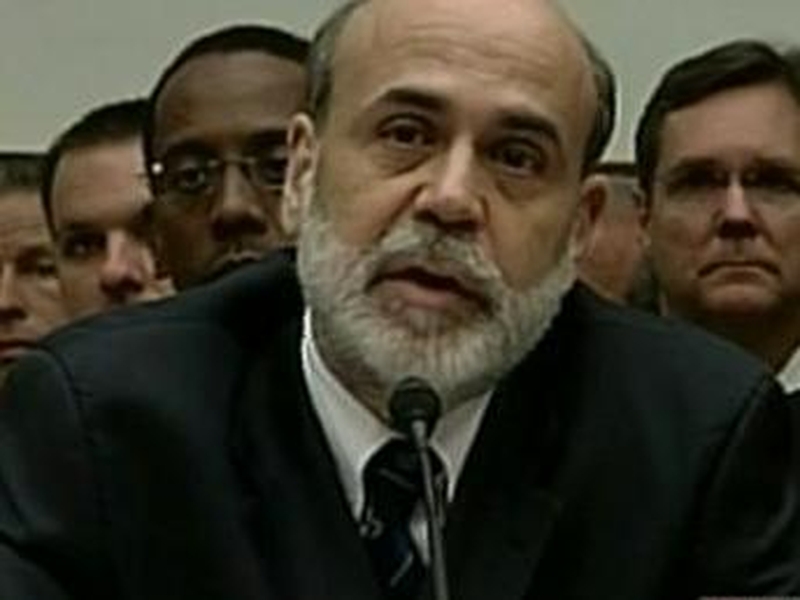
US Federal Reserve chairman Ben Bernanke has told Congress the three-year slump in country's housing slump may be near a bottom and that he expected the recession to end this year barring a relapse of the financial crisis.
But Bernanke acknowledged that growth would remain subdued and unemployment high after the recovery begins.
He also said 'stress tests' to assess the capital needs of the 19 largest US banks will provide an accurate reflection of the firms' financial positions, and he expected those which need more funds to raise the money from private sources.
US regulators were expected to brief banks today on the findings of the stress tests, which aimed to determine whether the firms have enough capital to withstand a deeper downturn. Regulators will announce results on Thursday.
Bernanke said estimates that banks may need hundreds of billions of dollars in additional capital overstated the 'call' on government resources, pointing out that the Obama administration has said it does not expect to seek more bail-out money from Congress.
'I've looked at many of the banks and I believe that many of them will be able to meet their capital needs without further government capital through either issuance of new capital, or through conversions and exchanges, or through sale of assets and other measures that would raise capital,' he said.
He also said the Fed would soon release more details on the various lending programmes it has launched to try to ease the credit crisis
The Wall Street Journal said today that 10 of the 19 banks subject to the tests may need to raise more capital.
The exact number of banks required to raise more funds has not yet been determined, the financial daily said, but those affected could include banking giants Wells Fargo, Bank of America and Citigroup.
The number of banks thought to need more funds had been 14 out of 19 at one point, the Journal said, citing sources familiar with the matter.
The tests will cap a period of suspense that began when President Barack Obama's administration unveiled in February its overhaul of the bank bail-out in a bid to restore stability to the financial system of the world's largest economy.
Service sector fall not so steep
A survey has shown that the US services sector shrank less severely in April and was back to its October 2008 level. The figure adds to evidence that the world's largest economy is nearing the bottom and moving closer to recovery.
The Institute for Supply Management's non-manufacturing index rose to 43.7 from 40.8 in March. Any reading below 50 means activity fell. Economists had forecast a smaller rise.
The services sector represents about 80% of US economic activity, including businesses like banks, airlines, hotels and restaurants.
The details of the ISM report also reflected a positive trend, with substantial improvements in gauges measuring employment and new orders.
Despite the improvement, however, the employment index remained mired in a slump, at 37 against 32.3 in March.
