


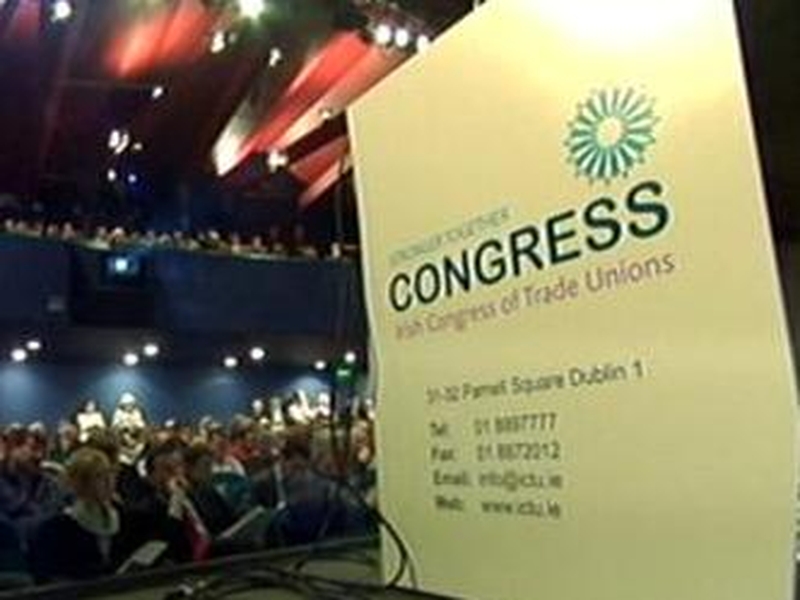
The Irish Congress of Trade Unions has decided to hold a national strike on March 30 where employers - including the Government - are not abiding by the national wage agreement.
After a two-hour meeting, the ICTU executive council said it had hoped that its 10-point plan on tackling the economic problems could be the basis for a three-year agreement to take society through the crisis.
But it said Congress had so far been unable to persuade Government and employers of the merits of this approach. It said Congress could not accept driving down wages in the economy while profits remained untouched.
It said that from an industrial relations perspective, Irish workers were no longer covered by a national collective agreement on pay and conditions since IBEC, the Construction Industry Federation and the Government had all now resiled from September's national agreement.
ICTU has recommended that affiliated unions should ballot their members for industrial action over the next three weeks.
It says that where employers - including the Government - are not abiding by the national agreement, or are not negotiating an alternative, unions are entitled to take strike action - and will do so on March 30. It remains to be seen how much support that move will get in the non-unionised private sector.
Meanwhile, management and unions at Dublin Bus and Bus Eireann have been invited to attend the Labour Relations Commission tomorrow for exploratory talks aimed at averting strike action which is due to start on Saturday.
The National Bus and Rail Union, which represents around 1,900 drivers in the two companies, is due to stage a one-day strike on Saturday over proposed job losses and cutbacks at the companies.
SIPTU, which also represents a significant number of drivers, is due to begin an indefinite strike from Sunday on the same issue.
