


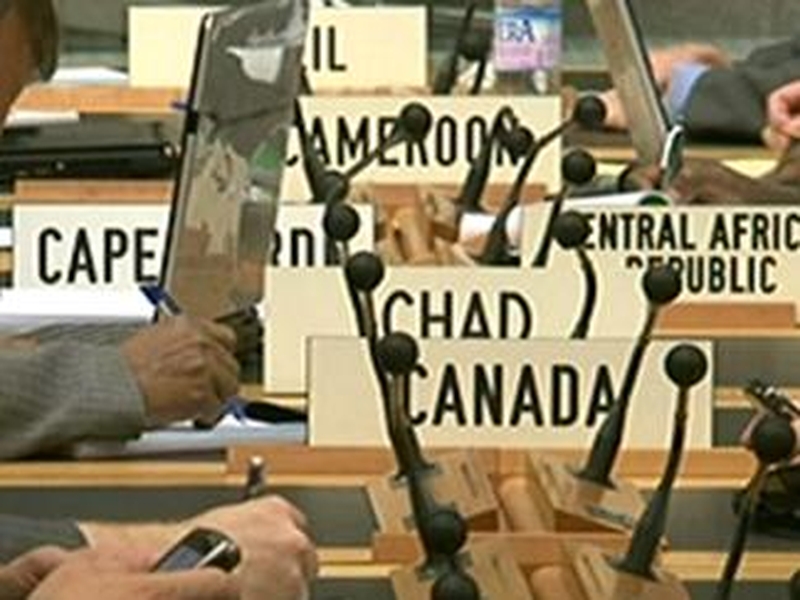
In Geneva, the head of the World Trade Organisation Pascal Lamy stressed today that there should be no going back on advances made at the failed trade talks and that the gains must stay on the table.
Commenting that the negotiations had revealed a ‘new world landscape’ in which emerging economies were determined to make a mark, he said: ‘Let's not go backwards.’
‘We made enormous progress but not quite enough,’ he said.
Lamy said that on agriculture, disagreement was not only between developed and developing countries but also between exporting and importing countries.
This is ‘evidence of a new world landscape in which emerging powers such as India, China and Brazil want to leave their mark on world trade.’
Meanwhile, top trading powers have mourned the collapse of the trade talks.
Economic powerhouses and developing nations have been trading blame for the failure of the negotiations, which crumbled amid a row over food tariffs.
The US and India were sharply divided over a proposed special safeguard mechanism for the agriculture sector, but both are dismayed by the collapse of the talks.
African nations are angry that no deal was reached.
Groups in the US and Japan blamed China and India for insisting on protecting their farmers at the expense of the negotiations.
Ministers had struggled for more than a week to reach consensus on subsidy levels and import tariffs for a new deal under the WTO's Doha Round, which has repeatedly foundered since its launch seven years ago.
The breakdown was cheered by some, including Japanese and South Korean farmers, who fear an influx of cheap agricultural imports.
Irish farm groups have also welcomed the collapse.
Fine Gael, meanwhile, has criticised the Government's handling of the talks.
The Irish Exporters Association said the collapse of the talks marks a bad day for international trade and a bad day for Irish exports.
‘The failure to agree a final package in Geneva will result in a further deterioration of world trading conditions, and with it greater barriers to the cross-border sale of goods and services,' said head of the IEA John Whelan.
'This will have a disproportionate impact on Irish exporters as we rely more heavily than the larger trading nations on the WTO process to ensure regulated markets.
According to the IEA, 97% or Irish exports are in non-agricultural products.
But Tánaiste and Minister for Enterprise, Trade and Employment Mary Coughlan has said the collapse of the World Trade Organisation negotiations on a new global agreement is not a complete disaster for Irish exporters.
