


"I won’t tell you how long the flight is as that will tell you where we’re going," the pilot says with a chuckle as we taxied towards the runway at London Luton Airport.
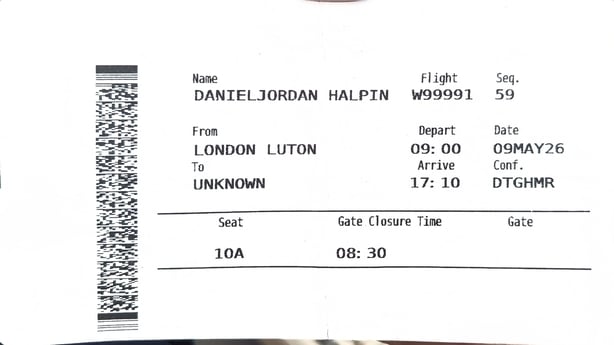
The signs to the gate and our boarding passes had said "unknown" and we’ve been told to pack a mix of warm and wet weather clothing, with the only clues being to expect wine-tasting and some hill-walking, though that could be in any of the five Eastern European countries shortlisted.
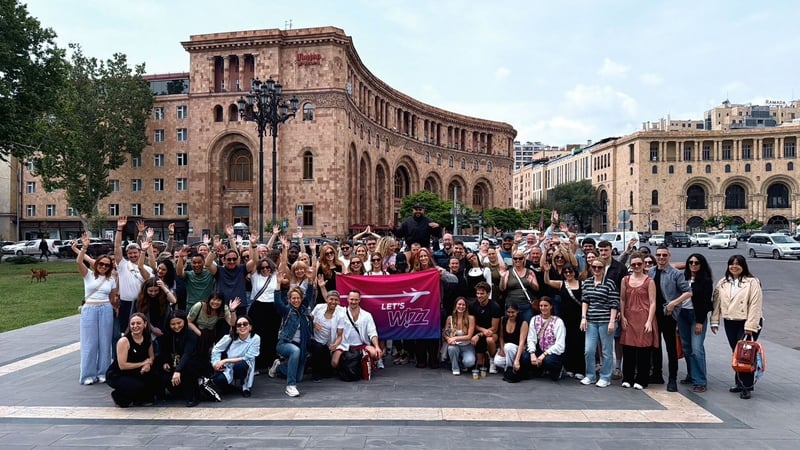
I’m tagging along with a group of 30 competition winners and their plus ones for Wizz Air’s Let’s Get Lost three-day trip to a surprise location that would only be revealed on landing.
When I wake from a nap towards the end of the flight to find the sea blending into ribbons of ice-capped mountains, followed by miles of empty steppe cut with ravines and scrubby grass, I’m not surprised by what the pilot says when we touched down.
"I can now tell you that we’re in Yerevan, Armenia," he announces to whoops and claps from the 100 or so people on board.
At the airport, there are a group of traditional Armenian dancers and musicians who blast the arrival hall with a type of flute called the zurna, which I’m told is used for happier occasions, while the duduk, another type of flute, is used for sadder ones.
The sound is loud and piercing, and, accompanied by two drummers, giving the dancers fuel to hold hands and skip around in a circle and kick.
Despite the dense lanes of traffic, Yerevan is a walkable city, and there is much you can see, especially with the help of a local tour guide. Ours, Sonya Abrahamyan, shows us the old town, though not much has survived, she says, "Because of earthquakes and Soviet urban planning".
I asked her whether Armenia was in Europe or in Asia, and this turned out to be a more complicated question than I had thought.
Technically, it’s part of West Asia, geographically east of Turkey with Iran just to the south, but culturally, the country is closer to Europe.
Yerevan is one of the oldest still-inhabited cities on Earth and will celebrate its 2,808th anniversary in October, according to Sonya, when "the whole city turns into a stage".
It is Christian, like its Georgian neighbours to the north, and has mostly Islamic populations in other directions, while its history of invasions and occupations places it on a cultural crossroads.
For 300 years, Armenia was part of the Persian Empire, and it was also part of Imperial Russia before being absorbed by the Soviet Union in the 1920s.
Now independent, Armenia is seeking to build ties with the rest of Europe and move away from Russia, which is reflected in a split in the second language of its different generations – Russian for those older, English for those younger.
There is Foreign Office guidance not to visit the Azerbaijani border to the east because of a recent conflict between the two countries, but the area around Yerevan feels as safe as any European capital province.
Armenia’s relations with its western neighbour, Turkey, are said to be fraught, though, due to a century-old dispute regarding recognition of the mass killings by Ottoman Turks in 1915 as a genocide.
The city of Yerevan itself occupies a valley surrounded by white-whiskered mountains where temperatures can reach below 0C in winter and higher than 30C in summer, though now in the middle of May it is a much more comfortable 25C.
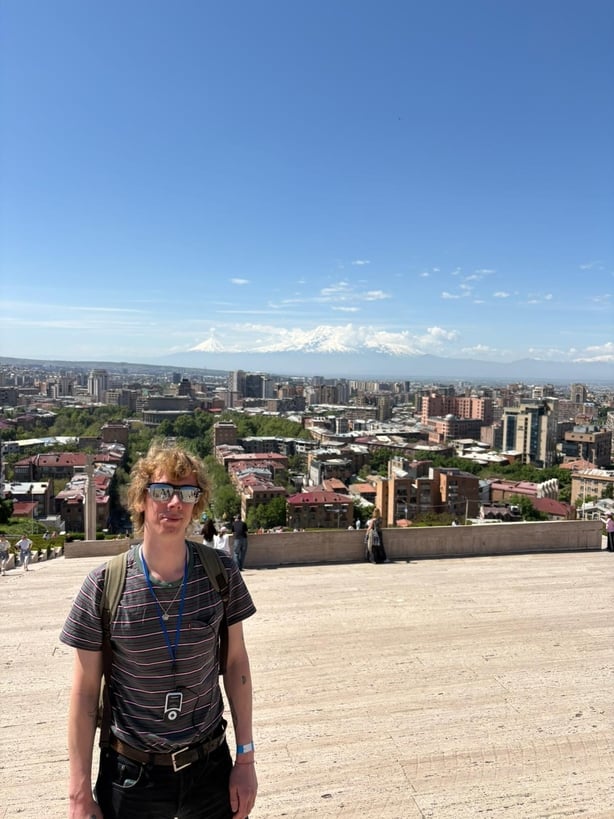
From the top of the Cascade Complex – a theatre of sculptures rising on a sand-coloured staircase designed by the city’s architect Alexander Tamanyan – you can see how the landscape of the city rises and falls in slopes, as if some god shook the ground like a bedsheet and left it crumpled.
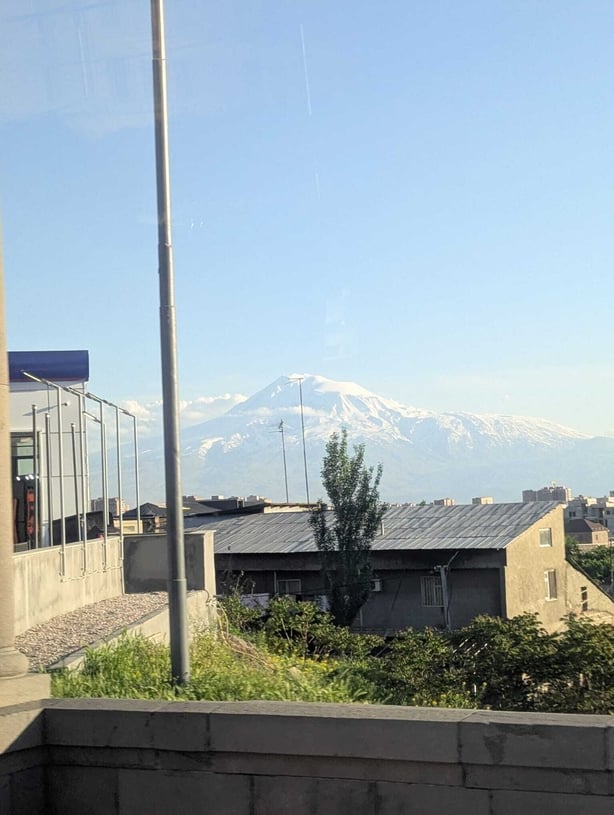
Looming over the city are the ice cliffs of Mount Ararat, a peak that stretches over 5,000 metres into the air and which holds a spiritual significance for many Armenians, though it sits across the border in Turkey.
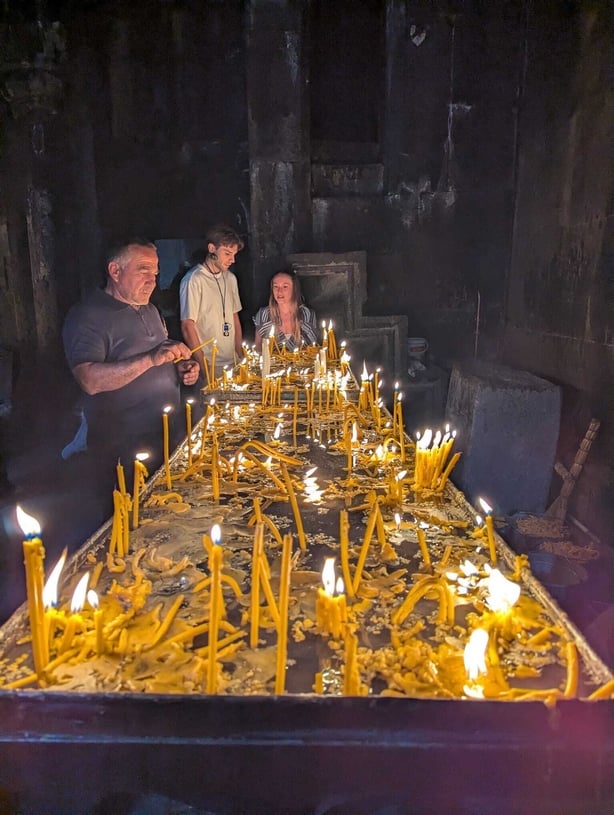
The spiritual history of Armenia can be seen in the pre-Christian Garni Temple and at the Geghard Monastery, which was carved into the side of a cliff in the 13th century and now accommodates tourists as well as worshippers, who all pass stalls of sweet treats and musical instruments on their way to light pencil-like candles in the dark interior.
Armenian food is quite Middle Eastern in nature. There is a lot of barbecued meat, salads of every colour and texture, an unearthly variety of strong cheese and beautiful juices made of anything from strawberries to sea buckthorns.
They love to celebrate their love for bread and every meal comes with a wicker basket of lavash, which I see baked in the traditional way before lunch at the 7 Qar restaurant in Garni.
It is done by spreading dough onto a pillow and slapping it onto the inside wall of a well-like underground oven and baked for around a minute before it is removed, paired with cheese and herbs, and devoured.
Armenia is also one of the oldest regions in the world for producing wine*, which tends to be light and quiet on the tongue. If you visit the Wine History Museum of Armenia, you will learn how people have been turning grapes into alcohol for about 8,000 years.
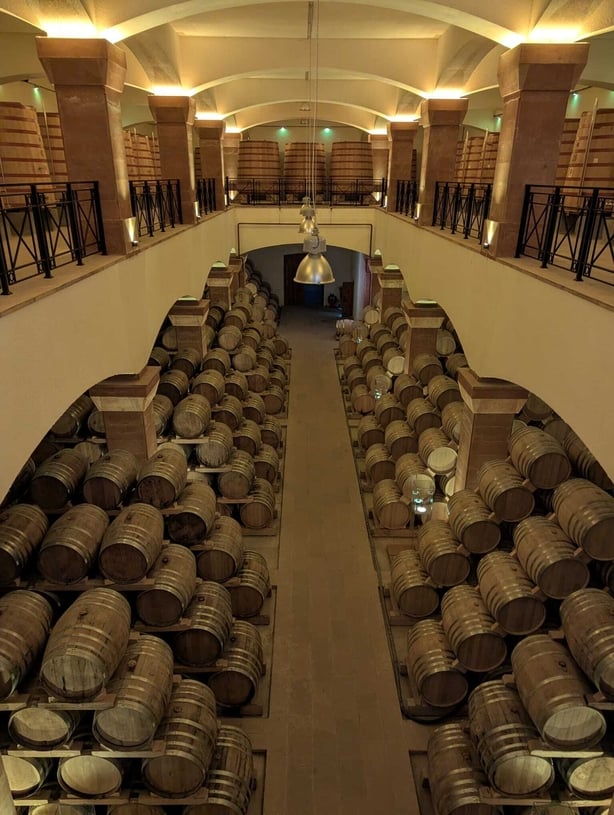
If you prefer something stronger, you’ll find it in Armenia’s various types of brandy. The staff for one brand – named after Mount Ararat – claimed during a tour of their factory that Winston Churchill loved Armenian brandy so much after trying it at the Yalta Conference in the Second World War that he ordered 400 bottles a year for the rest of his life.
Alcohol aside, I find a warm welcome in Armenia, in its weather as well as in its people, and it is a place where history lovers will feast as much as those in its riverside restaurants.
How to book:
There are no direct flights from Ireland to Yerevan, but regular flights to Armenia through Wizz Air will begin on June 8, with two weekly flights on Fridays and Mondays. Fares from London to Yerevan will start from £45.99.
Visit armenia.travel and the Tourism Committee of Armenia for more information.
Let’s Get Lost was only available to competition winners.
