


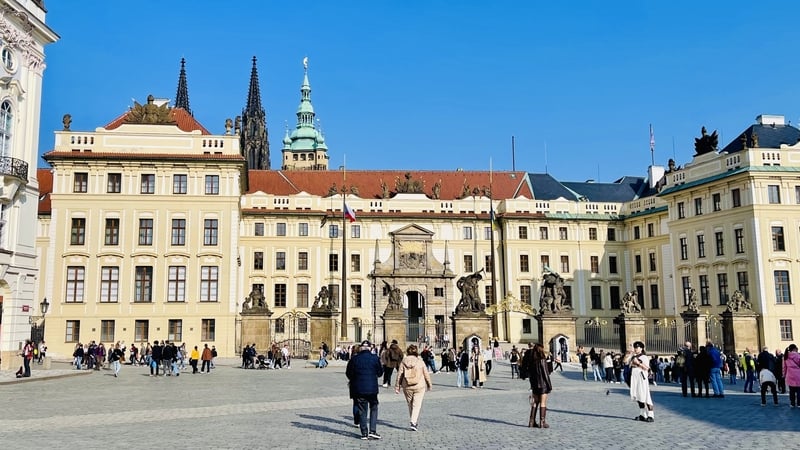

Beyond the beer halls, Prague reveals itself as a city of culture, history and quiet surprises, as Deirdre Mullins discovers over a whirlwind weekend.
Trying to see Prague in 48 hours is a bit like attempting to read Ulysses on your lunch break. This is a city of soaring spires, cobbled medieval streets and baroque architecture. Two days in the Czech capital isn't nearly enough, but it’s plenty of time to discover why the city casts such a spell on its visitors.
With the fall of the Iron Curtain and the rise of low-cost airlines, Prague quickly became one of Europe’s most popular budget weekend destinations. By the early 2000s, cheap beer, lively nightlife and inexpensive accommodation made it a magnet for stag and hen parties.
But in recent years, Prague has been keen to move beyond that reputation, promoting the city as a destination for culture, architecture and food. As a first-time visitor, it didn’t take long to see why the Czech capital continues to captivate travellers, and over a weekend, I didn’t encounter a single stag party.
Friday
My first stop in Prague was the elegant Hotel Paris Prague, a grand Art Nouveau landmark on the edge of the Old Town and the perfect base for a whirlwind weekend. With its polished wood, Art Nouveau interiors and old-world elegance, checking in felt a little like stepping into a Wes Anderson film.
Lunch was at Červený Jelen, a stylish restaurant in a former bank hall, where the menu leans heavily towards grilled meats and hearty Czech-inspired dishes.
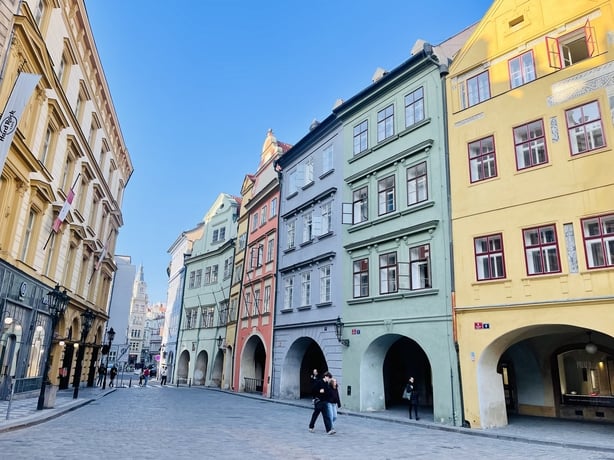
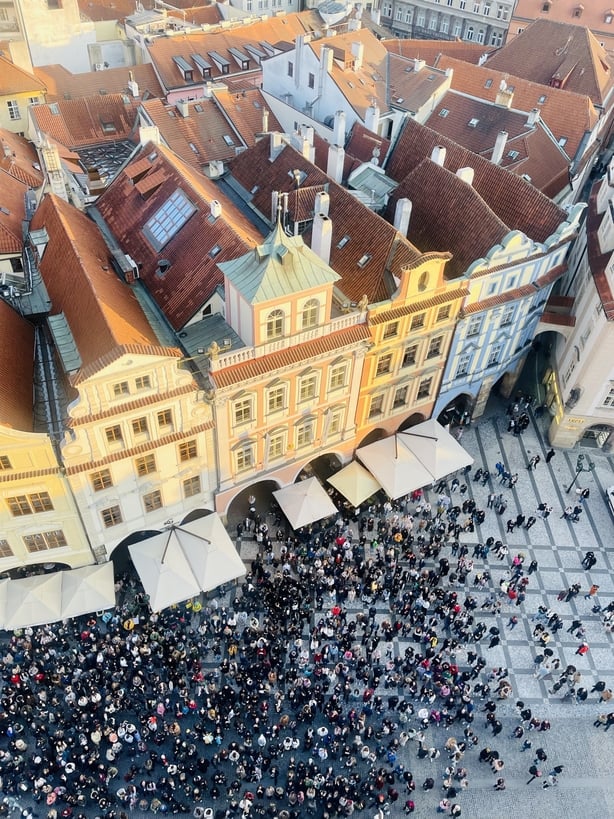
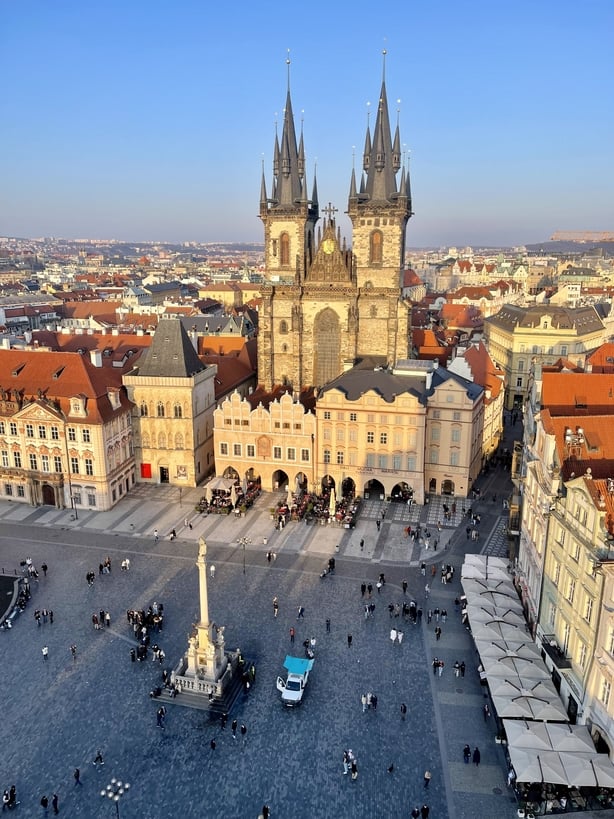
Prague is a city best explored on foot, and, fuelled up, I was ready to take it on. I strolled the narrow lanes of the Old Town, which suddenly open onto the wide expanse of the Old Town Square. Here, pastel façades and gothic towers frame one of Prague’s most famous sights, the Astronomical Clock.
Buskers played to passing crowds while hordes of visitors gathered beneath the tower waiting for the hour to strike, when the clock springs briefly to life and the apostles glide past a tiny window in a short mechanical performance that is famous, if slightly underwhelming.
The hour-long guided tour of Old Town Hall is excellent, particularly because it takes you beneath the building to dimly lit medieval cellars dating from the 12th century. This network reveals what Prague looked like centuries ago, when the city’s streets were several metres lower than they are today.
Afterwards, I climbed the tower above, and the reward was the complete opposite: panoramic views of Prague’s skyline, dotted with church towers and steeples, hence the nickname the 'City of a Hundred Spires’.
I wandered further through the narrow lanes around the square, which have the usual souvenir shops but also a few quirks of their own: neon-lit cannabis shops, absinthe bars promising the ‘green fairy’, and stalls selling chimney cake ice cream dusted with sugar and cinnamon.
Despite the number of cannabis shops, Prague isn’t quite the Amsterdam of Central Europe. Cannabis is decriminalised and widely available in various forms, but there are no licensed coffee shops and far less of the open, organised culture found in the Dutch capital.
Continuing my wanderings, I passed by Charles University, where one of my heroes, Stanislav Grof, studied medicine. The pioneering psychiatrist and creator of holotropic breathwork was born in Prague in 1931.
A short walk away is the striking Franz Kafka Head. Made up of dozens of rotating mirrored panels, the giant sculpture slowly twists and shifts, the fragments eventually aligning to reveal the face of the city’s most famous literary son, Franz Kafka.
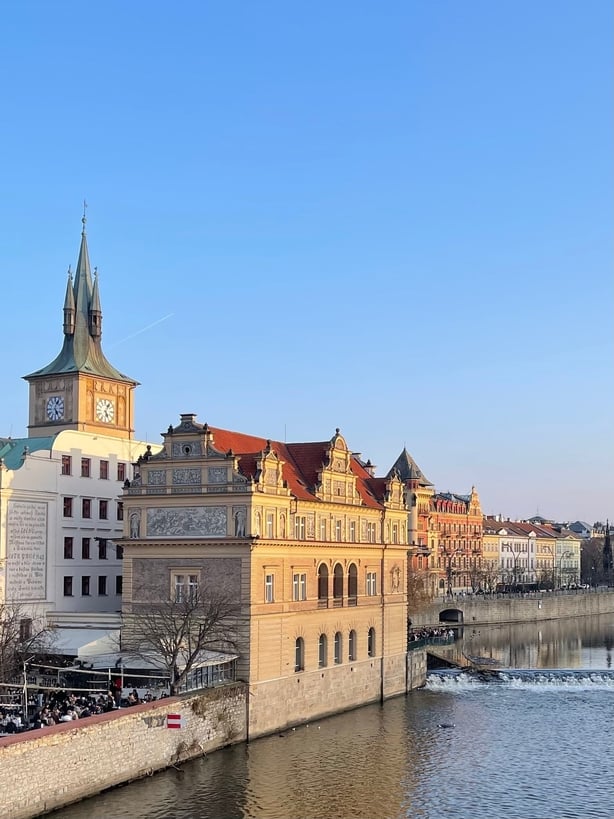
As the afternoon light softened, I made my way towards the iconic Charles Bridge. Lined with baroque statues and spanning the Vltava River, the bridge is one of Prague’s most photographed landmarks. At sunset, the views across the rooftops and towers of the Old Town are spectacular.
Just across the river, dinner that evening was at Kampa Park, a stylish riverside restaurant with front-row views of the illuminated Charles Bridge, a perfect setting for a celebratory dinner and a fitting end to the first day in Prague.
Saturday
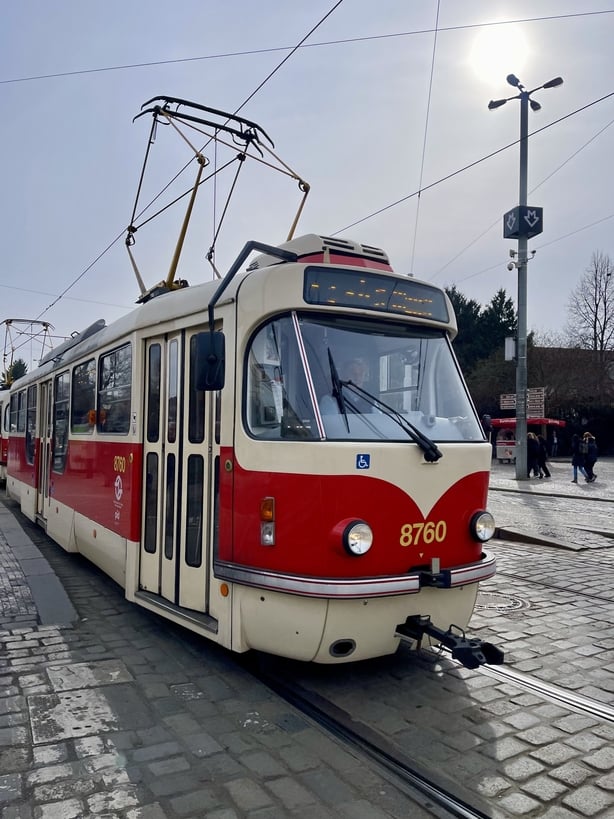
Day two began with a ride on one of Prague’s charmingly rattly red-and-cream trams, which climbed steadily towards Prague Castle. From here, the city opened out below, showing a patchwork of rooftops and towers stretching into the distance.
The castle is more a sprawling complex than a single building; it dates back to the 9th century and is often described as the largest ancient castle in the world. It’s worth arriving early in the morning or later in the afternoon to avoid the crowds.
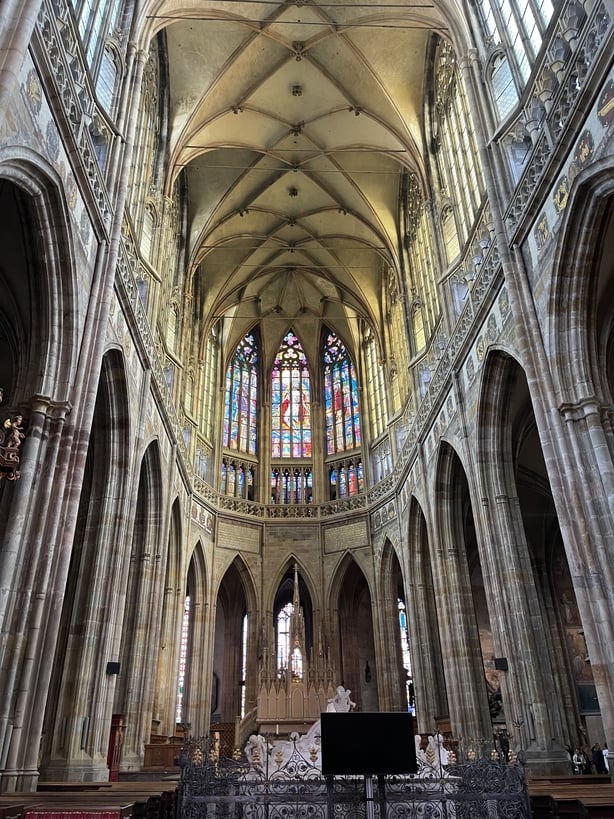
St. Vitus Cathedral is the real showstopper, with its gothic detailing, royal tombs and some of the most beautiful stained glass I’ve ever seen. Nearby, Golden Lane is a row of tiny, colourful houses that were once home to craftsmen and are now small museums and shops.
Also worth exploring are the Old Royal Palace, where Bohemian kings were once crowned, and St. George’s Basilica, dating back to 920AD and one of the oldest surviving buildings in Prague.
The Starbucks in the centre of the castle complex felt jarring. Even here, amid Prague’s stunning and well-preserved history, an American chain has found a foothold. Apparently, it took two years of negotiation to agree on the signage, and while it is subtle and pared back, I couldn’t help but wish for a local Czech café instead.
From the castle, it’s a short walk down to Kunsthalle Praha, a contemporary gallery housed in a former 1930s electrical station. It’s sleek and contemporary, with a calm feel that contrasts perfectly with the castle's busy, gothic grandeur. It hosts rotating exhibitions of contemporary and modern art, with a particular focus on local artists.
The current exhibition, All Things Digesting by Denisa Pohlava, is an immersive look into the messy physical reality of the body. It’s thought-provoking and a little unsettling.
I attempted brunch at Café Savoy, but the grand café was packed. A quick peek inside revealed chandeliers and marble-topped tables in a stunning, light-filled room, with a queue snaking out the door, always a good sign, even if we didn’t get a seat.
Instead, I grabbed something on the go and crossed the Charles Bridge, weaving through a steady stream of street musicians and tourists, before making my way into Josefov, Prague’s Jewish Quarter. Security is tight, a quiet reminder of the current geopolitical situation. It’s an essential and sobering stop.
Dinner that evening is at U Modré Kachničky, set inside a historic building where I was led through a series of small, candlelit rooms that felt more like someone’s home than a restaurant. After winding through the warren of low ceilings and flickering light, my table was set beside a piano player.
Plates of rich, traditional Czech cuisine followed, including a standout roasted duck with apricot, the perfect, indulgent end to a whirlwind 48 hours in the city. No stag parties required.
You can follow more of Deirdre’s travels on Instagram @deirdremullins
